Latest Posts
Building a Vibrant Cultural FutureA Journey Towards ProsperityArab nations face an inevitable declineBlogging Revenue in Pakistan’s 2026 EconomyWhy China is Investing in Pakistan’s Gwadar PortThe Rising Spirit of Pakistani SportsVoice-Over Economy in Pakistan 2026India’s Investment in Iran,Chabahar PortEvent Management Business in Pakistan 2026The Volatile Trajectory of Pakistan-Afghanistan Relations in 2026Why Pakistan Must Overhaul Its InfrastructureEvolution of Goods and Equipment in Modern SportsThe Current Situation of Sports in PakistanGovernment Initiatives for Sports in PakistanAssessing Sports Infrastructure and Facilities in PakistanSialkot and the Renaissance of Pakistan’s Sports Goods IndustryEmerging Sports Trends in 2026Legacy of Popular Traditional SportsJourney Through the Background of Sports in PakistanInfrastructure and Framework Deficits in Pakistani Sports InstitutionsLevelling the Field of SportsThe Roadmap for Pakistan’s Islamic Financial TransitionApartheid Structure in Occupied KashmirThe Strategic Role of the SCO in 2026Complexities of Illegal Immigrant RepatriationPakistan’s Strategic Role in Regional Power DynamicsPakistan’s Strategic Role in the South Asian Power PlayPakistan’s Strategic Tightrope in the US-China RivalryPakistan-China Relations in a Changing Geopolitical EnvironmentForeign Relation of Pakistan with Neighboring CountriesGlobal Response and the Reshaping World Order in 2026Impacts of International Structure on Pakistan’s Foreign PolicyEnduring Conflict Between India and PakistanAncient Roman and Modern EntertainmentCultivating Pakistan’s Future Tech WorkforceBuilding, Champions of the WorldDeciphering the Boundary Between Art and EntertainmentDevelopment of Pakistan’s Entertainment IndustryEntertainment and the Innovative Technology Industry in 2026Flourishing World of Entertainment in 2026How Technology Transformed Our EntertainmentInterrelationship Between Culture and Visual Entertainment MediaPakistan’s Entertainment Industry Set to ThrivePop Culture, Media Representation, and the Architecture of IdentityThe Evolution of Pakistan’s Entertainment IndustryThe Transformative Power of Entertainment on Modern SocietyStrategic Agenda for Pakistan’s Entertainment IndustryThe Economic Impact of the Entertainment IndustryPakistan Was Not in the Room but Was the Reason the Room Existed.

Pakistan Was Not in the Room but Was the Reason the Room Existed.

Pakistan Was Not in the Room but Was the Reason the Room Existed.

By: News Desk 92Pavilion

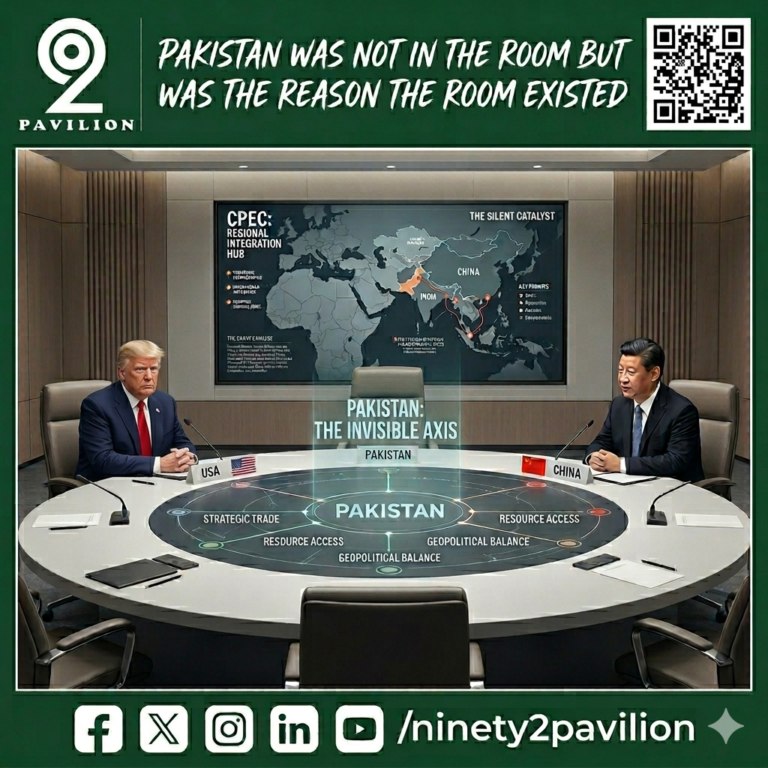
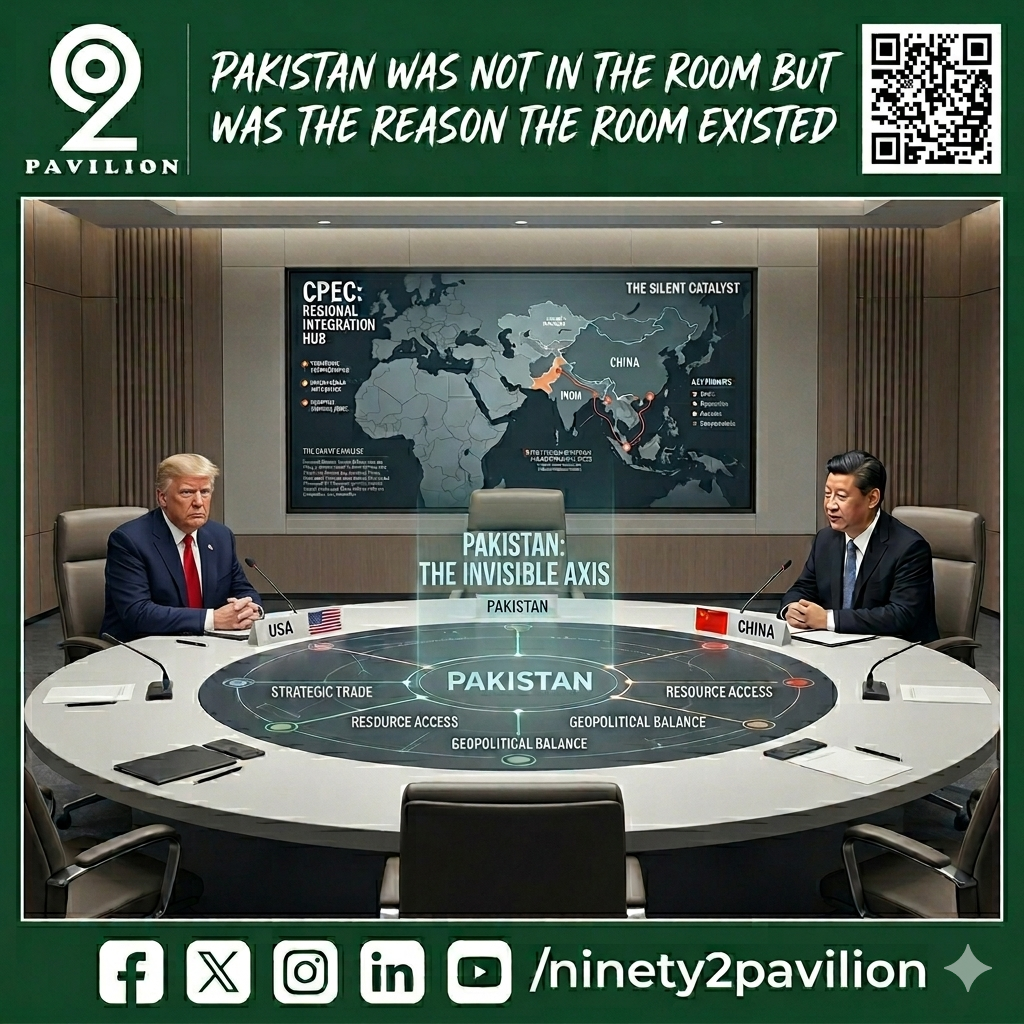
The high-stakes choreography of a United States President landing on Chinese soil is never merely about the red carpets or the stiff handshakes captured by a phalanx of global photographers. It is a calculated chess move in a game that has transitioned from traditional diplomacy to a frantic race for technological and resource supremacy. The story behind this specific visit is not found in the official press releases regarding climate change or trade deficits; rather, it is buried in the silent crisis of the global supply chain and the desperate need for a new “equilibrium of power.” For decades, the West and the East have lived in a symbiotic state of mutual suspicion and economic necessity, but recent shifts in domestic pressures within both Washington and Beijing have forced a sit-down that neither side truly wanted, but both desperately required.

The true narrative here is the “Quiet Realignment.” Behind closed doors, the conversation has moved away from the loud rhetoric of sanctions and toward the quiet reality of interdependence. The U.S. realizes that a total “decoupling” from the Chinese manufacturing engine is a logistical fantasy that could trigger a domestic depression, while China understands that its internal economic cooling requires a steady, predictable relationship with the world’s largest consumer market. This visit was an attempt to install “guardrails” on a relationship that was careening toward a cliff. It was a search for a middle ground where both superpowers could compete fiercely in the AI and semiconductor space without accidentally triggering a kinetic conflict that would bankrupt the planet. The story is one of two giants realizing that they are handcuffed together in a burning room; they don’t have to like each other, but they must cooperate to find the exit.

For Pakistan, the fallout of this visit is a complex tapestry of risk and unprecedented opportunity. Historically, Pakistan has been forced to walk a precarious tightrope between its foundational “all-weather” friendship with China and its critical, albeit often turbulent, security and financial partnership with the United States. When these two giants move toward a thaw, the immediate “fruit” for Pakistan is the reduction of “choice-pressure.” For years, Islamabad has been haunted by the specter of having to pick a side in a new Cold War. A stabilized U.S.-China relationship allows Pakistan to breathe, positioning itself not as a partisan camp-follower, but as a strategic bridge. If the two largest economies in the world are talking, Pakistan’s role as a gateway—leveraging its geography and its unique relationships with both—becomes a massive diplomatic asset rather than a liability.

Is it fruitful? The answer lies in the corridors of infrastructure and finance. As the U.S. and China discuss global stability, the pressure on Pakistan’s debt restructuring and investment climate begins to shift. A cooperative atmosphere means that Western financial institutions and Chinese development projects, like the CPEC, are less likely to be viewed as mutually exclusive. We are entering an era where Pakistan can potentially attract American tech investment while maintaining Chinese industrial support. The “fruit” here is the potential for Pakistan to act as a neutral economic zone where East meets West. This visit signals that the era of “bloc-politics” might be giving way to a more fluid, interest-based diplomacy. If Pakistan can play its cards with the same precision seen in the recent strategic shifts of its mining and mineral sectors—focusing on radical transparency and global integration—it can turn this superpower detente into a catalyst for its own industrial rebirth. The visit wasn’t just about Washington and Beijing; it was a signal to the world that the rules of the game are changing, and for a nation positioned at the crossroads of the future, that change is the greatest opportunity of the century.
Share

Introduction

Pakistan’s political environment in 2026 remains dynamic and highly influential in shaping the country’s future. From parliamentary debates and economic policy decisions to opposition movements and electoral reforms, recent developments are playing a crucial role in determining national direction.

In this report by Eye of Pakistan, we analyze the latest political developments, government strategies, and opposition responses.

Government’s Policy Priorities in 2026

The federal government has emphasized:

  • Economic stabilization

  • Institutional reforms

  • Energy sector restructuring

  • Strengthening foreign diplomatic ties

Recent cabinet meetings focused on controlling inflation, stabilizing the Pakistani Rupee, and implementing fiscal discipline under ongoing economic reform programs.

Officials claim these measures aim to restore investor confidence and ensure sustainable growth.

Opposition’s Response and Political Strategy

Major opposition parties have intensified criticism of government policies, particularly regarding:

  • Rising inflation

  • Unemployment

  • Tax reforms

  • Utility price increases

Opposition leaders argue that economic pressure on the public has increased and demand greater transparency in parliamentary proceedings.

Political rallies and public gatherings have increased across major cities including Karachi, Lahore, and Islamabad.

Parliamentary Developments

Recent National Assembly sessions have seen heated debates over:

  • Budget allocations

  • Electoral reforms

  • Accountability laws

  • Provincial autonomy issues

Lawmakers from both treasury and opposition benches continue to exchange strong viewpoints, reflecting a vibrant yet tense political atmosphere.

Election Reforms and Democratic Process

Discussions around electoral transparency and digital voting mechanisms remain central to political discourse.

The Election Commission is reportedly reviewing:

  • Voter verification systems

  • Polling station security

  • Overseas voting procedures

Analysts believe these reforms could significantly impact future general elections.

Public Reaction and Political Climate

Public opinion appears divided. While some citizens support structural reforms and long-term stabilization plans, others express concerns over economic hardships and governance challenges.

Political analysts suggest that the coming months will be critical in determining whether current policies translate into tangible relief for the public.

Conclusion

Pakistan’s political landscape in 2026 is marked by active debate, institutional reforms, and strategic maneuvering from both government and opposition parties. As policy decisions continue to unfold, their impact on economic stability and democratic processes will remain under close observation.

Stay connected with Eye of Pakistan for reliable and timely political updates.