Latest Posts
Building a Vibrant Cultural FutureA Journey Towards ProsperityArab nations face an inevitable declineBlogging Revenue in Pakistan’s 2026 EconomyWhy China is Investing in Pakistan’s Gwadar PortThe Rising Spirit of Pakistani SportsVoice-Over Economy in Pakistan 2026India’s Investment in Iran,Chabahar PortEvent Management Business in Pakistan 2026The Volatile Trajectory of Pakistan-Afghanistan Relations in 2026Why Pakistan Must Overhaul Its InfrastructureEvolution of Goods and Equipment in Modern SportsThe Current Situation of Sports in PakistanGovernment Initiatives for Sports in PakistanAssessing Sports Infrastructure and Facilities in PakistanSialkot and the Renaissance of Pakistan’s Sports Goods IndustryEmerging Sports Trends in 2026Legacy of Popular Traditional SportsJourney Through the Background of Sports in PakistanInfrastructure and Framework Deficits in Pakistani Sports InstitutionsLevelling the Field of SportsThe Roadmap for Pakistan’s Islamic Financial TransitionApartheid Structure in Occupied KashmirThe Strategic Role of the SCO in 2026Complexities of Illegal Immigrant RepatriationPakistan’s Strategic Role in Regional Power DynamicsPakistan’s Strategic Role in the South Asian Power PlayPakistan’s Strategic Tightrope in the US-China RivalryPakistan-China Relations in a Changing Geopolitical EnvironmentForeign Relation of Pakistan with Neighboring CountriesGlobal Response and the Reshaping World Order in 2026Impacts of International Structure on Pakistan’s Foreign PolicyEnduring Conflict Between India and Pakistan

Levelling the Field of Sports

Levelling the Field of Sports

By: News Desk 92Pavilion

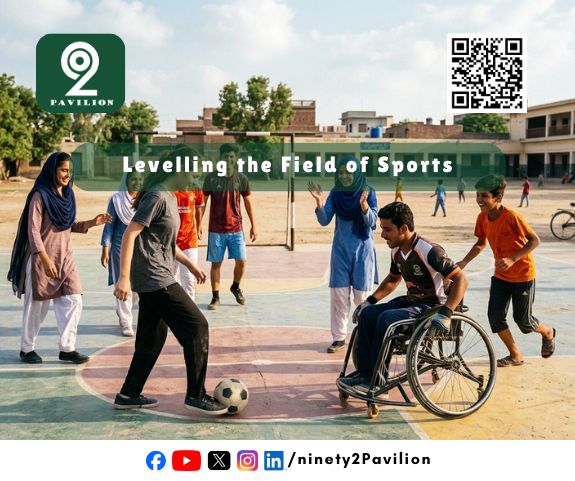
The global conversation surrounding sports has shifted from a narrow focus on podium finishes to a broader recognition of “Sports for All” as a fundamental human right. For Pakistan, a nation with over 230 million people and a burgeoning youth population, the challenge of championing equal access to sports is both a socio-economic necessity and a strategic imperative. As of April 2026, the landscape of Pakistani sports is undergoing a transformative “Inclusivity Pivot.” This movement seeks to dismantle the systemic barriers that have historically excluded women, persons with disabilities, and marginalized ethnic communities from the playing field. By redefining sports as a tool for social cohesion rather than a luxury for the elite, Pakistan is attempting to build a more equitable society where every citizen—regardless of gender, ability, or geography—can reap the physical and mental benefits of athletic participation.

A cornerstone of this transition is the National Sports Policy 2025–2029, which explicitly targets a 30% increase in active participation among women and youth by 2029. This policy moves beyond rhetoric by mandating the development of safe, inclusive sporting “hubs” in underserved urban and rural areas. For the first time, the federal government, in collaboration with international partners like GIZ and the adidas Foundation, is implementing the “Game On! For Equality” initiative. This project, extending through September 2026, focuses on regions like Peshawar and Mardan to challenge gender stereotypes and provide girls with secure spaces to play. By training “Young Leaders” and junior coaches, the program is effectively creating a grassroots architecture that empowers marginalized groups from within their own communities.

The quest for equal access also extends to the realm of Disability Inclusion. In 2026, organizations such as the Disabled Welfare Association (DWA) and UNICEF have pioneered the integration of persons with disabilities (PWDs) into the national sporting fabric. Through massive wheelchair drives and the establishment of district-level networks for local Organizations of Persons with Disabilities (OPDs), the focus has shifted from mere charity to “Mobility for Agency.” Adaptive sports, including wheelchair cricket and para-athletics, are no longer treated as peripheral activities but are being integrated into provincial school games. This structural shift ensures that children with disabilities in provinces like Sindh and Punjab have the same opportunity to compete as their able-bodied peers, fostering a sense of dignity and national belonging.

Furthermore, the “Geo-Economic” lens of sports is being applied to bridge ethnic and sectarian divides. Programs like the DOSTI Project in Karachi and Khyber Pakhtunkhwa utilize community-based football matches to mitigate gang recruitment and foster inter-ethnic dialogue. In Lahore, field studies conducted in 2026 have highlighted the success of “high-intensity circuit training” in low-income neighborhoods, proving that structured athletic development can be achieved even with minimal resources. These “micro-interventions” are essential for marginalized youth in informal settlements, providing them with a constructive alternative to the street while identifying raw talent that can be groomed for the national stage.

Ultimately, the road to equal access in Pakistan depends on the sustained de-politicization of sports governance. The 2026 mandate for transparency within national federations aims to break the “family business” model of sports associations, ensuring that leadership roles are occupied by professionals committed to inclusivity. As Prime Minister Shehbaz Sharif reaffirmed in April 2026, the government’s vision is to make sports a “tool for peace and development.” By investing in the “Power of the Playground,” Pakistan is not just chasing medals; it is cultivating a healthier, more resilient, and unified nation. The success of this journey will be measured not by the trophies on the mantelpiece, but by the diversity of the feet on the field

Share

Introduction

Pakistan’s political environment in 2026 remains dynamic and highly influential in shaping the country’s future. From parliamentary debates and economic policy decisions to opposition movements and electoral reforms, recent developments are playing a crucial role in determining national direction.

In this report by Eye of Pakistan, we analyze the latest political developments, government strategies, and opposition responses.

Government’s Policy Priorities in 2026

The federal government has emphasized:

  • Economic stabilization

  • Institutional reforms

  • Energy sector restructuring

  • Strengthening foreign diplomatic ties

Recent cabinet meetings focused on controlling inflation, stabilizing the Pakistani Rupee, and implementing fiscal discipline under ongoing economic reform programs.

Officials claim these measures aim to restore investor confidence and ensure sustainable growth.

Opposition’s Response and Political Strategy

Major opposition parties have intensified criticism of government policies, particularly regarding:

  • Rising inflation

  • Unemployment

  • Tax reforms

  • Utility price increases

Opposition leaders argue that economic pressure on the public has increased and demand greater transparency in parliamentary proceedings.

Political rallies and public gatherings have increased across major cities including Karachi, Lahore, and Islamabad.

Parliamentary Developments

Recent National Assembly sessions have seen heated debates over:

  • Budget allocations

  • Electoral reforms

  • Accountability laws

  • Provincial autonomy issues

Lawmakers from both treasury and opposition benches continue to exchange strong viewpoints, reflecting a vibrant yet tense political atmosphere.

Election Reforms and Democratic Process

Discussions around electoral transparency and digital voting mechanisms remain central to political discourse.

The Election Commission is reportedly reviewing:

  • Voter verification systems

  • Polling station security

  • Overseas voting procedures

Analysts believe these reforms could significantly impact future general elections.

Public Reaction and Political Climate

Public opinion appears divided. While some citizens support structural reforms and long-term stabilization plans, others express concerns over economic hardships and governance challenges.

Political analysts suggest that the coming months will be critical in determining whether current policies translate into tangible relief for the public.

Conclusion

Pakistan’s political landscape in 2026 is marked by active debate, institutional reforms, and strategic maneuvering from both government and opposition parties. As policy decisions continue to unfold, their impact on economic stability and democratic processes will remain under close observation.

Stay connected with Eye of Pakistan for reliable and timely political updates.