
By: News Desk 92Pavilion
The sporting landscape of 2026 is no longer defined solely by the crack of a willow bat or the roar of a traditional stadium crowd; it is being radically reshaped by a convergence of high-speed technology, social consciousness, and a shift toward individualized, hyper-efficient physical engagement. As we move deeper into this decade, the very definition of “athlete” and “arena” is expanding. The emerging trends of 2026 reflect a global society that is increasingly digital, data-driven, and demanding of inclusivity. From the rise of “Phygital” competitions to the mainstreaming of sustainable, eco-conscious athletics, the world of sports is experiencing its most significant metamorphosis since the dawn of the televised era, creating a future that is as much about the virtual experience as it is about physical grit.
The most dominant trend in 2026 is the total integration of Phygital Sports, a hybrid model that blends physical exertion with digital interfaces. This is best exemplified by the global success of the “Games of the Future” and the Olympic Esports Series, which have moved beyond simple video gaming into “active gaming.” In these arenas, athletes compete in VR-enhanced physical challenges or digital versions of traditional sports like cycling and rowing using smart haptics. This trend has democratized professional sports, allowing a teenager in Karachi to compete against a professional in New York in a synchronized digital environment. The data from 2026 shows that these hybrid models are not just a gimmick; they are the primary driver of engagement for Gen Z and Gen Alpha, who view the distinction between “real” and “virtual” as increasingly irrelevant.
Parallel to this digital surge is the “Individualization of Performance” through advanced wearables and AI-driven coaching. In 2026, the era of “one-size-fits-all” training is over. Emerging trends show a massive shift toward “Bio-Digital Twins,” where athletes use real-time data from continuous glucose monitors, smart clothing, and recovery-tracking rings to create a digital simulation of their own physiology. AI engines then analyze this data to predict injury risks and optimize nutrition on a minute-by-minute basis. This trend has trickled down from elite professionals to the recreational masses, turning every local gym into a data laboratory. As a result, we are seeing a “Longevity Boom” in sports, where athletes are maintaining peak performance well into their late 40s, fundamentally shifting the traditional timelines of professional athletic careers.
Furthermore, “Eco-Athleticism” and Sustainable Sports Governance have moved from the periphery to the core of institutional mandates. In 2026, the “Global Response” to climate change has forced sports federations to adopt “Circular Stadium” models and carbon-neutral travel protocols. Emerging trends include the rise of “Plogging” (jogging while picking up litter) as a competitive discipline and the proliferation of “Green Marathons,” where every aspect of the event—from the recycled-plastic medals to the water-free cooling stations—is designed for zero environmental impact. This trend is particularly significant in South Asia and the Middle East, where extreme heat has led to the development of climate-controlled, sustainable “Active Hubs” that allow for year-round physical activity without the heavy carbon footprint of traditional air-conditioned mega-complexes.
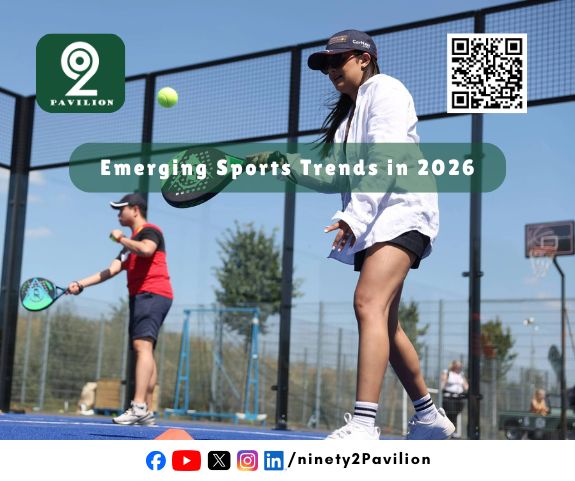
Finally, 2026 is the year of “Niche Mainstreaming,” where hyper-localized or unconventional sports are gaining global footprints through decentralized streaming platforms. Sports like Padel, Pickleball, and Teqball have seen a meteoric rise, largely because they require less space and offer higher social interaction than traditional tennis or football. This trend is a direct global response to the “loneliness epidemic,” with sports being repositioned as “Social Wellness” tools. By championing equal access to these low-barrier-to-entry sports, cities are fostering community resilience. Ultimately, the emerging trends of 2026 prove that the future of sports is not just about faster times or higher scores; it is about creating a more connected, sustainable, and technologically empowered human experience that transcends the boundaries of the physical world