By: News Desk 92Pavilion
The sporting landscape of Pakistan is characterized by a profound and fascinating paradox. It is a nation where raw, unbridled athletic talent frequently collides with systemic institutional deficits, yet continues to produce moments of world-class brilliance that defy the odds. As of April 2026, the current situation is defined by a significant “Transition Era.” The country is moving away from a decade of relative stagnation toward a more modernized, commercially driven, and inclusive model of athletics. While cricket remains the undisputed sun around which the Pakistani sporting solar system revolves, there is a visible and growing “Diversification Wave” fueled by individual Olympic successes and a digital-savvy youth population that is demanding excellence across a wider array of disciplines.
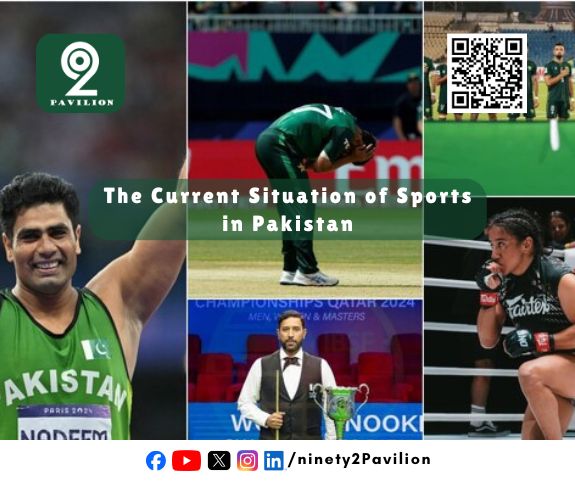
The most dominant feature of the 2026 landscape is the professionalization of cricket through the Pakistan Super League (PSL) and a revamped domestic structure. Cricket has become a self-sustaining industry, attracting international investment and providing a clear, lucrative career path for young athletes. However, this success has created a “Resource Gravity” effect, where the majority of corporate sponsorship and media attention is funneled into a single sport. Despite this, the current situation has seen a remarkable resurgence in individual sports, catalyzed by Arshad Nadeem’s historic achievements in javelin. This has shifted the national narrative from “Team-Only” success to a realization that Pakistan can be a global contender in athletics, weightlifting, and combat sports if individual athletes are provided with even a fraction of the support granted to cricketers.
However, the “Infrastructure and Framework Gap” remains the primary hurdle for the average Pakistani athlete. In 2026, while major stadiums in Karachi and Lahore have been upgraded to international standards for events like the Champions Trophy, grassroots facilities in rural areas and public institutions remain largely neglected. The lack of standardized playing fields and professional coaching in schools has led to a reliance on “Street Nurseries,” where talent is born but often fails to mature due to a lack of technical grooming. The government’s response in 2026, including the “Prime Minister’s 1000 Playgrounds Project,” represents a significant attempt to bridge this gap, but the impact is still in its nascent stages, hampered by the rising costs of equipment and a slow-moving administrative machinery.
A transformative trend in 2026 is the “Gender-Inclusivity Shift.” For the first time, female athletes in Pakistan are receiving sustained national visibility, not just as outliers but as a core part of the national sporting identity. The current situation sees a record number of women participating in international football, squash, and martial arts, supported by targeted government grants and a slowly changing societal mindset. This inclusivity is further bolstered by the “Digital Frontier,” where social media platforms have allowed athletes from marginalized regions to bypass traditional gatekeepers, securing independent sponsorships and building global fanbases. This democratization of fame is forcing national federations to be more transparent and meritocratic in their selection processes.
Furthermore, the “Geo-Economic” situation has impacted sports through international collaborations. In 2026, Pakistan has utilized its strategic ties with China and the Gulf states to facilitate coach-exchange programs and state-of-the-art training for its elite squads. Yet, the shadow of economic volatility remains; the high cost of imported sports goods and the brain drain of talented coaches to foreign leagues are persistent challenges. The local production of sports goods in Sialkot continues to be a beacon of hope, increasingly focusing on high-tech, sustainable manufacturing to meet the “Emerging Sports Trends” of a global market that values eco-conscious production.
Ultimately, the current situation of sports in Pakistan in late 2026 is one of “Resilient Optimism.” The nation is no longer content with being an “unpredictable” underdog; there is a concerted effort to build a system based on data, merit, and infrastructure. While the ghosts of administrative mismanagement still haunt some federations, the pressure from a young, connected population is driving a slow but steady reform. The success of 2026 lies in the fact that the conversation has moved from “Why are we failing?” to “How do we scale our success?” If Pakistan can successfully integrate its institutional frameworks with its boundless raw energy, the next decade could very well see the nation emerge as a multifaceted sporting powerhouse in Asia