Latest Posts
Building a Vibrant Cultural FutureA Journey Towards ProsperityArab nations face an inevitable declineBlogging Revenue in Pakistan’s 2026 EconomyWhy China is Investing in Pakistan’s Gwadar PortThe Rising Spirit of Pakistani SportsVoice-Over Economy in Pakistan 2026India’s Investment in Iran,Chabahar PortEvent Management Business in Pakistan 2026The Volatile Trajectory of Pakistan-Afghanistan Relations in 2026Why Pakistan Must Overhaul Its InfrastructureEvolution of Goods and Equipment in Modern SportsThe Current Situation of Sports in PakistanGovernment Initiatives for Sports in PakistanAssessing Sports Infrastructure and Facilities in PakistanSialkot and the Renaissance of Pakistan’s Sports Goods IndustryEmerging Sports Trends in 2026Legacy of Popular Traditional SportsJourney Through the Background of Sports in PakistanInfrastructure and Framework Deficits in Pakistani Sports InstitutionsLevelling the Field of SportsThe Roadmap for Pakistan’s Islamic Financial TransitionApartheid Structure in Occupied KashmirThe Strategic Role of the SCO in 2026Complexities of Illegal Immigrant RepatriationPakistan’s Strategic Role in Regional Power DynamicsPakistan’s Strategic Role in the South Asian Power PlayPakistan’s Strategic Tightrope in the US-China RivalryPakistan-China Relations in a Changing Geopolitical EnvironmentForeign Relation of Pakistan with Neighboring CountriesGlobal Response and the Reshaping World Order in 2026Impacts of International Structure on Pakistan’s Foreign PolicyEnduring Conflict Between India and Pakistan

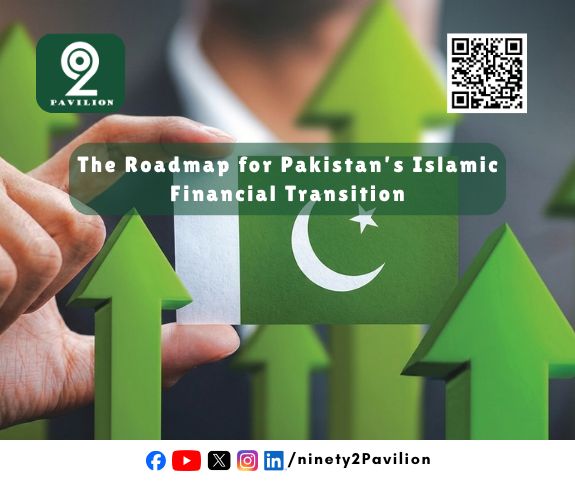
The Roadmap for Pakistan’s Islamic Financial Transition

The Roadmap for Pakistan’s Islamic Financial Transition

By: News Desk 92Pavilion

Pakistan stands at a transformative juncture in its economic history, as the nation aggressively pursues a comprehensive conversion towards a fully Shariah-compliant financial system. This transition is not merely a policy preference but a constitutional and judicial mandate, following the landmark 2022 Federal Shariat Court (FSC) ruling that designated Riba (interest) in all its forms as repugnant to the injunctions of Islam. With a definitive deadline of December 31, 2027, the roadmap for this conversion has moved from theoretical frameworks to intensive operational execution. The current phase of the roadmap focuses on a “Triple-Track” approach: the structural transformation of conventional banking assets, the systemic overhaul of government debt management, and the rapid digitalization of Islamic financial services to ensure economic inclusivity.

The primary engine of this transition is the State Bank of Pakistan’s (SBP) Strategic Plan (2023–2028), which aims to increase the market share of Islamic banking to 35% of total assets and deposits by 2027. As of April 2026, the sector has witnessed a surge in conversion activity, following the successful full-scale transition of institutions like Faysal Bank. The roadmap now dictates a mandatory “Conversion Phase” for the remaining conventional banks, many of which are currently operating through a “Window” model. These windows are being systematically converted into full-fledged Islamic subsidiaries or standalone Shariah-compliant entities. To facilitate this, the SBP has introduced flexible regulatory capital requirements and standardized Shariah governance frameworks, ensuring that the transition does not compromise the liquidity or stability of the broader financial ecosystem.

A critical and perhaps most challenging milestone in the roadmap is the conversion of Pakistan’s massive sovereign debt into Shariah-compliant instruments. The government’s reliance on conventional domestic borrowing has long been the primary obstacle to an interest-free economy. In response, the 2026 roadmap emphasizes the “Sukuk-First” policy, where all new government borrowing is conducted through asset-backed Sukuk structures. The Ministry of Finance has successfully expanded the pool of underlying assets—including airports, motorways, and energy infrastructure—to back these issuances. By shifting from debt-based to asset-based financing, the state is effectively dismantling the interest-based mechanism of deficit financing, replacing it with a risk-sharing model that aligns with Islamic principles of justice and equity.

Simultaneously, the Securities and Exchange Commission of Pakistan (SECP) is executing its Strategic Action Plan 2024–2026, which targets the non-bank financial sector. This includes the conversion of the insurance industry into a Takaful model and the restructuring of asset management companies and microfinance institutions. A key highlight of the 2026 progress is the “Digital Shariah Frontier,” where AI and blockchain are being leveraged to automate Shariah compliance audits and facilitate instant, interest-free micro-transactions for small and medium enterprises (SMEs) and farmers. This technological integration is vital for reaching the “unbanked” population, ensuring that the move toward an Islamic system also serves the broader goal of national financial inclusion.

Ultimately, the roadmap for 2026 and 2027 is a race against time that requires an unprecedented level of synchronization between the judiciary, the central bank, and the private sector. The challenges remain significant, particularly regarding the conversion of existing long-term international debt and the need for a massive retraining of the financial workforce. However, the momentum is irreversible. As Pakistan nears the 2027 deadline, the transition is being watched globally as a pioneering experiment in modernizing a 21st-century economy according to faith-based ethical standards. The success of this roadmap will not only fulfill a long-standing religious aspiration but could provide a resilient, asset-based alternative to the debt-heavy models of global conventional finance

Share

Introduction

Pakistan’s political environment in 2026 remains dynamic and highly influential in shaping the country’s future. From parliamentary debates and economic policy decisions to opposition movements and electoral reforms, recent developments are playing a crucial role in determining national direction.

In this report by Eye of Pakistan, we analyze the latest political developments, government strategies, and opposition responses.

Government’s Policy Priorities in 2026

The federal government has emphasized:

  • Economic stabilization

  • Institutional reforms

  • Energy sector restructuring

  • Strengthening foreign diplomatic ties

Recent cabinet meetings focused on controlling inflation, stabilizing the Pakistani Rupee, and implementing fiscal discipline under ongoing economic reform programs.

Officials claim these measures aim to restore investor confidence and ensure sustainable growth.

Opposition’s Response and Political Strategy

Major opposition parties have intensified criticism of government policies, particularly regarding:

  • Rising inflation

  • Unemployment

  • Tax reforms

  • Utility price increases

Opposition leaders argue that economic pressure on the public has increased and demand greater transparency in parliamentary proceedings.

Political rallies and public gatherings have increased across major cities including Karachi, Lahore, and Islamabad.

Parliamentary Developments

Recent National Assembly sessions have seen heated debates over:

  • Budget allocations

  • Electoral reforms

  • Accountability laws

  • Provincial autonomy issues

Lawmakers from both treasury and opposition benches continue to exchange strong viewpoints, reflecting a vibrant yet tense political atmosphere.

Election Reforms and Democratic Process

Discussions around electoral transparency and digital voting mechanisms remain central to political discourse.

The Election Commission is reportedly reviewing:

  • Voter verification systems

  • Polling station security

  • Overseas voting procedures

Analysts believe these reforms could significantly impact future general elections.

Public Reaction and Political Climate

Public opinion appears divided. While some citizens support structural reforms and long-term stabilization plans, others express concerns over economic hardships and governance challenges.

Political analysts suggest that the coming months will be critical in determining whether current policies translate into tangible relief for the public.

Conclusion

Pakistan’s political landscape in 2026 is marked by active debate, institutional reforms, and strategic maneuvering from both government and opposition parties. As policy decisions continue to unfold, their impact on economic stability and democratic processes will remain under close observation.

Stay connected with Eye of Pakistan for reliable and timely political updates.