By: News Desk 92Pavilion
The Government of Pakistan has embarked on a comprehensive and unprecedented mission to revitalize the nation’s sporting landscape. Recognizing that sports serve as a vital tool for national integration, youth empowerment, and international soft power, the current administration has shifted its focus from ad-hoc patronage to a structured, policy-driven approach. As of April 2026, a series of transformative initiatives are being executed under the banner of the National Sports Policy 2025–2029. This strategic framework aims to dismantle the systemic hurdles that have historically stifled Pakistani talent by prioritizing grassroots development, professionalizing federations, and integrating sports into the national educational and economic mainstream. The global response to these initiatives has been positive, with international bodies noting Pakistan’s commitment to building a more inclusive and resilient athletic ecosystem.
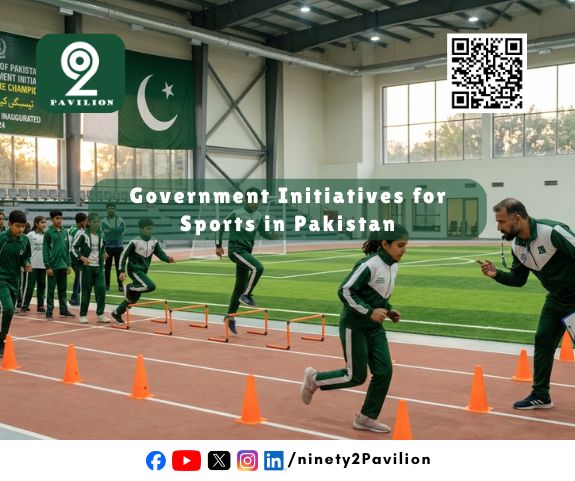
The centerpiece of the government’s 2026 agenda is the “Prime Minister’s Youth Sports Initiative,” which focuses on the “Bottom-Up” development of talent. Unlike previous years where resources were concentrated in elite urban centers, this initiative has mandated the establishment of high-performance academies in 100 districts across the country, including underserved regions of Balochistan and Gilgit-Baltistan. These academies are equipped with modern facilities and staffed by certified coaches, ensuring that raw talent from rural areas is identified and groomed at an early age. Furthermore, the “Khelega Pakistan” (Pakistan Will Play) digital talent-hunt portal has been fully operationalized, allowing young athletes to upload their performance data and videos for evaluation by national selectors. This transparent, data-driven approach has significantly reduced the influence of nepotism, ensuring that the most deserving athletes receive the support they need to compete on the global stage.
Parallel to grassroots development, the government is spearheading a “Structural Overhaul” of national sports federations. In early 2026, the Ministry of Inter-Provincial Coordination introduced the “Federation Accountability Framework,” which ties government funding to specific performance metrics, financial transparency, and the implementation of robust junior-level programs. This move is designed to transition sports bodies away from being “family-run businesses” toward professional organizations managed by sports scientists and administrative experts. Simultaneously, the government has launched a “Sovereign Sports Fund” through public-private partnerships. By offering tax incentives to corporate entities that adopt specific sports or athletes, the state is creating a sustainable financial model that reduces the burden on the national exchequer while ensuring a steady flow of investment into infrastructure and training.
Furthermore, 2026 has seen a historic shift in “Inclusive Athletics.” The government has introduced a mandatory “Gender-Equity Clause” in all provincial sports budgets, requiring that at least 30% of funds be dedicated to female sports programs and infrastructure. Initiatives such as the “Pink Playing Fields” project are building secure, women-only sports complexes to encourage participation in conservative areas. Additionally, the government has expanded its support for para-athletics, providing special grants and specialized training equipment to the National Paralympic Committee. By championing equal access, the government is ensuring that Pakistan’s sporting future is representative of its entire population, fostering a culture where sports are viewed as a fundamental right rather than a gendered or abled privilege.
The government is also leveraging the “Geo-Economic” potential of sports through international collaborations. In 2026, Pakistan has entered into several “Sports Diplomacy” agreements with nations like China, Turkey, and Qatar to facilitate coach-exchange programs and utilize international standard training facilities. Domestically, the “Sports Tourism Initiative” is promoting Northern Pakistan as a hub for winter sports and high-altitude training. By hosting regional tournaments and international exhibitions, the government is not only boosting the local economy but also rebranding Pakistan as a safe and vibrant destination for global athletics. These initiatives, combined with the ongoing modernization of major stadiums for events like the Champions Trophy, are positioning Pakistan as a resurgent force in the international sporting community.
Ultimately, the government initiatives for sports in 2026 represent a visionary attempt to turn the tide of national athletic history. Success will depend on the sustained implementation of these policies and the ability of local institutions to adopt the new framework. By investing in the “Power of the Youth” and the “Integrity of the Game,” Pakistan is building a legacy that transcends the scoreboard. The goal is to create a nation where every child with a dream and a ball has a clear, supported path to the podium. As these initiatives take root, the world can expect to see a new generation of Pakistani champions who are not only technically superior but also products of a system that values merit, inclusivity, and national pride above all else