
By: News Desk 92Pavilion
In an age dominated by high-tech stadiums and globalized professional leagues, the world of 2026 is witnessing a remarkable resurgence of traditional sports. These ancient games, deeply rooted in the soil of their respective cultures, offer a raw and unmediated connection to history, identity, and the communal spirit. Unlike the polished, highly regulated environment of modern Olympic disciplines, popular traditional sports—such as Kabaddi, Kurash, and Sepak Takraw—are defined by their accessibility and their reliance on the natural environment. They are the “organic” athletics of the human experience, preserving the warrior traditions and agrarian rituals of the past while providing a vibrant alternative to the commercialized sports of the 21st century.
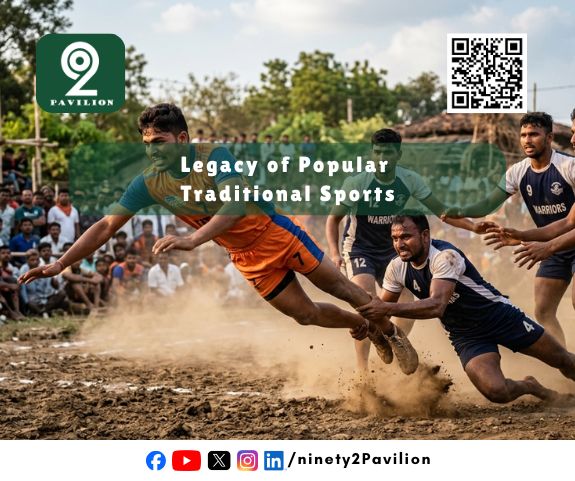
The most prominent example of this traditional revival is Kabaddi, a sport that has successfully transitioned from the dusty fields of rural Punjab to international screens. Combining elements of wrestling, tag, and breath control, Kabaddi is a quintessential test of physical strength and tactical acumen. In 2026, the sport has gained massive popularity across South and Central Asia, even making inroads into European markets. Its unique requirement—where a “raider” must tag an opponent and return to their half in a single breath while chanting—makes it a high-stakes psychological game as much as a physical one. This accessibility, requiring nothing more than a patch of earth and a group of willing participants, ensures that it remains the heartbeat of grassroots athletics in nations like Pakistan, India, and Iran.
Similarly, the ancient art of Kurash, a form of upright jacket wrestling from Central Asia, has emerged as a symbol of regional pride and diplomatic soft power. With a history stretching back over 3,500 years, Kurash emphasizes technique and momentum over brute force. In 2026, the sport has become a centerpiece of the Asian Games and the World Nomad Games, drawing athletes from over 100 countries. The focus on throwing an opponent onto their back using only the belt and upper body is a testament to the chivalric codes of the ancient Silk Road. For modern audiences, Kurash offers a fast-paced, high-impact spectacle that feels both primitive and sophisticated, bridging the gap between historical combat and modern competitive sports.
Moving to Southeast Asia, Sepak Takraw remains a breathtaking display of agility and acrobatics. Often described as “kick volleyball,” the game involves players using only their feet, knees, chest, and head to send a rattan ball over a net. The bicycle kicks and mid-air somersaults seen in elite matches are among the most visually stunning feats in all of sports. In 2026, the sport continues to anchor the national identities of Thailand, Malaysia, and Indonesia, serving as a vital cultural link across the ASEAN region. Its inclusion in international multisport events has elevated it from a village pastime to a professional pursuit, yet its essence remains tied to the local community centers where the click-clack of the rattan ball is a constant soundtrack to daily life.
Furthermore, traditional sports like Hurling in Ireland and Pato in Argentina provide a window into the pastoral and martial histories of the West. Hurling, often called “the fastest game on grass,” is an ancient Gaelic pursuit that combines elements of field hockey and lacrosse, embodying a sense of tribal loyalty that is rare in modern professional sports. These games are not just about physical exertion; they are repositories of language, folklore, and local heritage. In 2026, the global response to the “sameness” of modern life has led to a renewed appreciation for these specific, culturally unique games. By championing equal access to these traditional arenas, societies are ensuring that their ancestral legacies are not merely archived in museums but are lived, breathed, and celebrated on the field.
Ultimately, the enduring popularity of traditional sports in 2026 is a testament to the human need for authentic connection. These games remind us that sports are, at their core, a celebration of the human body and the environment it inhabits. Whether it is the mud-pits of a wrestling arena or the high-flying courts of Sepak Takraw, popular traditional sports offer a sense of belonging that transcends the scorecard. As we move forward into an increasingly digital future, these “sports of the soil” serve as a vital anchor, ensuring that the grit, grace, and glory of our collective past continue to inspire the champions of tomorrow