By: News Desk 92Pavilion
The vibrant cultural tapestry of 2026, sports in Pakistan are more than mere recreational activities; they are a profound expression of national identity, resilience, and a shared history that predates the very creation of the state. The background of Pakistani sports is a fascinating narrative of colonial heritage, indigenous traditions, and an undying spirit that has propelled the nation to the pinnacle of global excellence across multiple disciplines. From the dusty arenas of rural Punjab to the manicured lawns of Lord’s, the journey of Pakistani athletes is one of overcoming systemic challenges through sheer talent. This sporting legacy, rooted in the values of discipline and perseverance, began its formal journey in 1947, yet its soul remains tied to the ancient games played in the subcontinent for centuries.
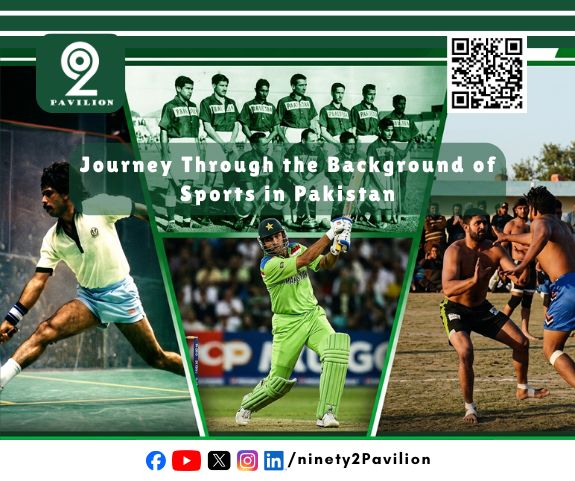
The colonial era introduced Pakistan to its modern sporting pillars: cricket and field hockey. While the British brought these games to the subcontinent, the local population quickly adapted and mastered them, infusing them with a distinct “Eurasian” flair characterized by speed, artistry, and technical finesse. Following independence in 1947, the foundational years (1947–1952) were critical for establishing a formal structure. Muhammad Ali Jinnah, the nation’s founder, was a staunch advocate for sports as a tool for nation-building, patronizing the first National Games in Karachi in 1948. This era saw the birth of the Pakistan Olympic Association and the Pakistan Hockey Federation, marking the beginning of a “Golden Era” where Pakistan would dominate the world in field hockey for nearly four decades. This period produced legends who achieved a record four World Cup titles and three Olympic gold medals, cementing the “Green Shirts” as a global powerhouse.
Parallel to the rise of hockey was the transformation of cricket from an urban middle-class pastime into a national obsession. Gaining Test status in 1952, the Pakistan cricket team quickly earned a reputation for being “unpredictable yet brilliant.” The background of Pakistani cricket is defined by a unique departmental model, where state institutions provided employment to athletes, ensuring a steady stream of talent despite a lack of grassroots infrastructure. This system bore fruit in the 1990s, culminating in the historic 1992 World Cup victory under the leadership of Imran Khan—a moment that remains the most celebrated in the country’s sporting history. This victory, combined with the emergence of the “Reverse Swing” and world-class fast bowling, redefined the global game and firmly placed Pakistan at the center of the cricketing world.
However, the background of sports in Pakistan is incomplete without acknowledging the “Squash Dynasty.” For nearly half a century, the Khan family—led by Jahangir Khan and Jansher Khan—maintained an unprecedented stranglehold on the sport. Jahangir’s 555-match winning streak in the 1980s is widely considered the greatest feat in professional sports history. While squash was played in the elite clubs of the colonial era, these legends transformed it into a symbol of Pakistani dominance, proving that with individual discipline and grit, the nation could conquer the world. Alongside these international successes, traditional sports like Kabaddi and Kushti (mud wrestling) have remained the heartbeat of rural Pakistan, providing a cultural anchor and a sense of continuity that bridges the past with the present.
As of 2026, the background of sports in Pakistan is entering a new chapter, characterized by a transition from traditional departmental models to commercial, franchise-based leagues like the Pakistan Super League (PSL). This modern evolution is also witnessing a long-awaited focus on individual sports, exemplified by Arshad Nadeem’s historic Olympic gold in javelin at Paris 2024. Despite the decline in some traditional sectors, the enduring legacy of Pakistani sports remains one of defiance against the odds. It is a history built on the “Shanghai Spirit” of mutual cooperation and individual brilliance, ensuring that regardless of the infrastructure deficits, the spirit of the Pakistani athlete continues to shine on the world stage