By: News Desk 92Pavilion
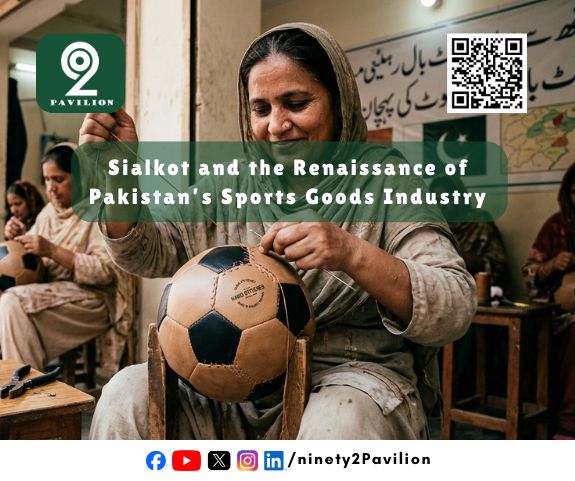
The global industrial landscape of 2026, the phrase “Made in Pakistan” has become synonymous with elite athletic performance and artisanal precision. Central to this reputation is the city of Sialkot, a unique industrial cluster that produces approximately 70% of the world’s hand-stitched inflatable balls and a significant portion of international martial arts gear, racing apparel, and surgical-grade fitness equipment. The local production of sports goods in Pakistan is not merely a manufacturing success story; it is a narrative of resilience, innovation, and an ancestral commitment to quality that has seen the industry evolve from a colonial-era repair shop into a high-tech global hub. As of April 2026, the sector is undergoing a profound “Digital and Green Transformation,” positioning itself as the primary partner for the world’s leading athletic brands through a combination of sustainable practices and cutting-edge automation.
The heartbeat of this industry remains the production of footballs. Historically famous for the hand-stitched balls used in countless FIFA World Cups, the Sialkot cluster has successfully navigated the shift toward “Thermo-Bonded” technology. In 2026, local factories are producing millions of high-performance balls that utilize seamless surfaces to ensure aerodynamic stability and water resistance. This transition was made possible through the “Sialkot Forward” initiative, a collaborative framework between local manufacturers and international tech firms. By integrating AI-driven quality control and automated cutting systems, Pakistani producers have managed to maintain their competitive edge against regional rivals, proving that traditional craftsmanship can be harmonized with Fourth Industrial Revolution technologies.
Sustainability has emerged as the defining competitive advantage for Pakistan’s sports goods sector in 2026. Responding to the “Global Response” toward climate change, Sialkot’s leading exporters have adopted “Circular Production” models. This includes the use of bio-based materials, recycled polyesters, and water-based adhesives that eliminate toxic emissions. Many factories are now powered by on-site solar arrays, reducing the carbon footprint of every ball and glove produced. This shift toward “Eco-Athleticism” is not just a moral choice but a commercial necessity; in the reshaping world order of 2026, global brands like Adidas and Nike prioritize suppliers who can provide a transparent, carbon-neutral supply chain. By championing green energy and ethical labor practices, Pakistan has solidified its status as a preferred “Sustainable Source” in the international market.
Furthermore, the industry has diversified far beyond the football pitch. In 2026, Pakistan has seen a surge in the production of high-end specialized apparel, particularly in the realms of motorsports and combat sports. Sialkot now houses some of the world’s most advanced leather processing units, producing protective gear that meets the rigorous safety standards of Formula 1 and MotoGP. Additionally, the “Individualization of Performance” trend has led to the rise of custom-manufactured equipment, where local firms use 3D-scanning and digital printing to create bespoke protective gear for professional athletes worldwide. This move into high-value, niche markets has helped insulate the industry from the volatility of mass-market commodity cycles, ensuring a steady growth in export revenues despite global economic shifts.
However, the local production landscape faces ongoing challenges, particularly regarding the formalization of the workforce and the rising costs of raw material imports. In 2026, the government’s “Special Economic Zone” status for Sialkot and the establishment of the Sports Industries Development Centre (SIDC) are critical for providing SMEs with access to expensive machinery and international certifications. These institutional frameworks are essential for ensuring that the benefits of the export boom trickle down to the skilled artisans who are the true backbone of the industry. By investing in the “Power of the Workshop,” Pakistan is ensuring that its sports goods sector remains a beacon of national pride and a vital engine of economic growth.
Ultimately, the story of sports goods production in Pakistan is one of constant adaptation. From the hand-stitched legends of the past to the AI-optimized, sustainable factories of 2026, the industry has remained a global leader by never standing still. As the world looks toward a more connected and conscientious future, Sialkot continues to prove that the best way to predict the future of sports is to build it. Through a unique blend of heritage, technology, and ethical integrity, Pakistan’s sports manufacturers are not just making equipment; they are crafting the tools that define the champions of the 21st century