
By: News desk 92Pavilion
To understand the spice level of Pakistani food is to understand the heart of its cultural identity—a bold, uncompromising, and deeply aromatic landscape that ranks among the most flavorful in the world. In 2026, as global palates become increasingly adventurous, Pakistani cuisine stands out not merely for “heat” in the sense of burning the tongue, but for the sophisticated and layered application of spices that create a complex sensory experience. While it is undeniably spicy by Western standards, the heat in Pakistani cooking is rarely one-dimensional; it is a carefully calibrated balance of pungency, earthiness, and fragrance that varies dramatically across the country’s diverse provinces.
The intensity of spice in Pakistan is largely a journey from west to east. In the rugged terrains of Balochistan and Khyber Pakhtunkhwa, the food is surprisingly mild. Here, the focus is on the natural quality of the meat, seasoned primarily with salt, cracked black pepper, and animal fat. However, as one moves toward the heartland of Punjab and the coastal metropolis of Karachi, the spice levels escalate significantly. In cities like Lahore, the use of red chili powder, crushed flakes, and fresh green chilies becomes a foundational element of the “Bhuna” process—a technique where spices are fried in oil until they release their essential oils, creating a deep, resonant heat that permeates the entire dish.
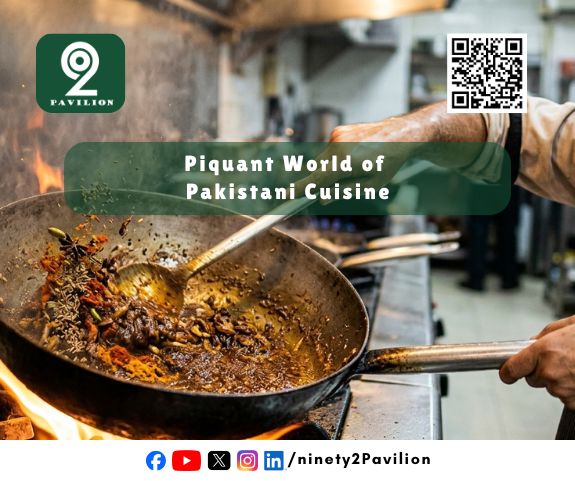
The “spiciness” of a typical Pakistani curry, such as a Goat Karahi or a Chicken Jalfrezi, is built upon a base of “Garam Masala”—a literal “warm spice” blend. This mix includes black pepper, cloves, cinnamon, and cardamom, which provide a warming, internal heat rather than a superficial burn. This is then layered with generous amounts of red chili for kick and turmeric for earthiness. However, the true “fire” often comes from the garnishes. It is standard practice in Pakistani households and street stalls to top a finished dish with a handful of razor-thin slivers of ginger and finely chopped green bird’s-eye chilies. This adds a fresh, sharp piquancy that cuts through the richness of the gravies, offering a multi-layered heat profile that evolves with every bite.
For the uninitiated, the heat can be formidable, but Pakistani cuisine offers built-in cooling mechanisms. The ubiquitous “Raita”—a yogurt-based dip infused with cumin and mint—serves as a fire extinguisher for the palate, while the heavy use of fats like ghee or butter helps to dissolve the capsaicin, making the spice more manageable. In 2026, even as modern fusion trends take hold in urban centers, the demand for authentic, high-heat dishes remains a point of national pride. Ultimately, the food in Pakistan is as spicy as the country’s history is rich. It is a heat that invites the diner in rather than pushing them away, creating a culinary experience that is as invigorating as it is delicious