By: News Desk 92Pavilion
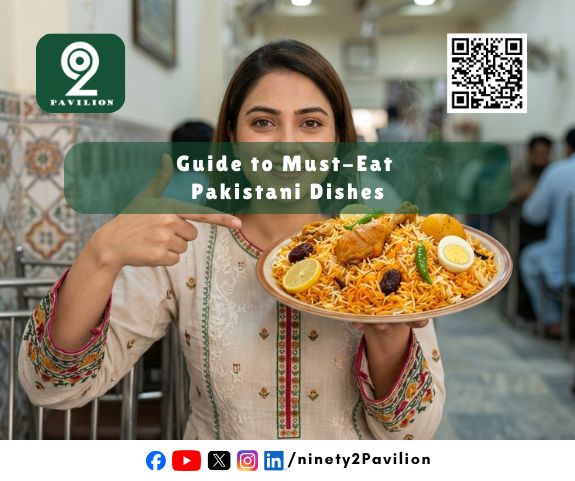
Navigating the culinary landscape of Pakistan is a journey of intense aromas, deep colors, and flavors that linger long after the meal is over. In 2026, as Pakistan firmly establishes itself as a premier global food destination, the question of what to eat becomes an exploration of regional pride and historical legacy. For any visitor or curious foodie, the starting point must be the “Big Three” of Pakistani cuisine: Biryani, Nihari, and Karahi. These dishes represent the soul of the country’s palate, offering a masterclass in slow-cooking and spice-layering that caters to every preference, from the fire of the south to the robust textures of the plains.
The day should ideally begin with a traditional “Nashta” (breakfast). Halwa Puri is the ultimate weekend ritual—a platter of deep-fried, light-as-air flatbreads (Puri) served with a sweet semolina pudding (Halwa) and a savory, spicy chickpea curry (Chana). For those seeking something more substantial, Nihari is the champion of morning stews. This slow-cooked beef or lamb shank curry is simmered overnight until the meat is incredibly tender, then topped with fresh ginger, green chilies, and lemon. Pairing it with a crisp, buttery Roghni Naan is an experience that defines the Pakistani breakfast experience.
For lunch or dinner, Biryani—specifically the Sindhi or Karachi variety—is non-negotiable. This is not just a rice dish; it is a complex assembly of saffron-stained basmati rice, marinated meat, and traditional spices that create a vibrant yellow and orange mosaic. If you prefer a more interactive dining experience, a Chicken or Mutton Karahi is a must. Cooked in a thick, wok-like pan over a high flame, this dish relies on the freshness of ginger, garlic, and tomatoes to create a thick, spicy gravy that clings to the meat. In the north, specifically Peshawar, the Kabuli Pulao offers a milder but equally delicious alternative, featuring rice cooked in meat broth and topped with sweet carrots, raisins, and almonds.
No culinary tour is complete without sampling the street food and grilled delicacies known as “Barbecue.” Seekh Kebabs (minced meat skewers) and Chapli Kebabs (spiced, flat patties from the Pashtun tradition) are smoky, succulent, and best enjoyed with a mint yogurt dip. For a lighter snack, Gol Gappay—hollow crispy shells filled with chickpeas and dipped in tangy tamarind water—provide a refreshing burst of flavor. Finally, conclude your journey with a cold glass of Lassi or a warm cup of Doodh Patti tea. Whether you are dining at a high-end restaurant in Lahore or a roadside stall on the Karakoram Highway, the food you eat in Pakistan is an invitation to a culture where every meal is treated as a celebration of hospitality