
By: News Desk 92Pavilion
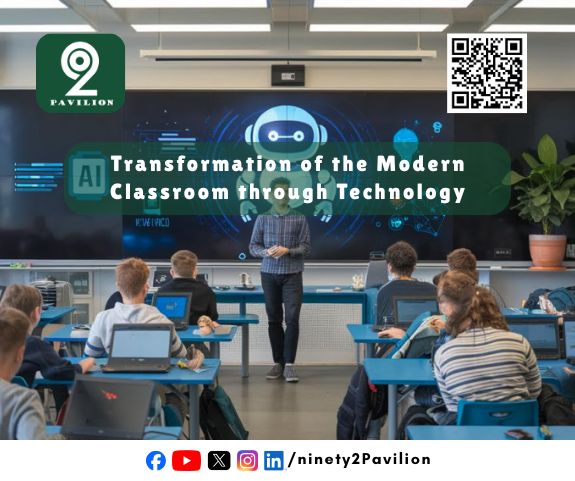
In 2026, the classroom has transcended its physical boundaries, evolving into a dynamic ecosystem where technology is no longer a luxury but a fundamental literacy. The integration of digital tools has shifted the educational paradigm from a passive, content-heavy model to one defined by interactive dialogue and personalized exploration. At the heart of this transformation is Artificial Intelligence, which now serves as a co-pilot for both educators and students. Through AI-driven adaptive learning platforms, the centuries-old challenge of “teaching to the middle” is being dismantled. These systems analyze real-time performance data to adjust the difficulty and pacing of lessons, ensuring that students who struggle receive immediate scaffolds while advanced learners are pushed toward deeper inquiry.
The rise of immersive technologies like Virtual and Augmented Reality (VR/AR) has further revolutionized the sensory experience of learning. Abstract concepts that were once confined to the pages of a textbook—such as the molecular structure of a virus or the architectural nuances of ancient Rome—are now tangible. Students can embark on virtual field trips to the surface of Mars or conduct high-risk chemistry experiments in a safe, simulated environment. This “experiential learning” has proven to be a powerful catalyst for engagement, particularly for students who previously found traditional lecture formats alienating. By stimulating multiple senses, these tools help cement long-term memory and foster a genuine curiosity that extends beyond the classroom walls.
However, the widespread adoption of technology also highlights the critical importance of the “digital divide” and the human element in education. As of 2026, while 19% of schools in developing regions like Pakistan have integrated digital tools, millions of children still lack reliable internet access. This disparity risks creating a two-tier educational system where technology widens the gap rather than bridging it. Furthermore, the 2025–2026 Education Insights Report emphasizes that technology is only as effective as the pedagogy behind it. Without intentional teacher training, high-tech gadgets can become expensive distractions. The most successful modern classrooms are those where technology automates administrative burdens—like grading and attendance—allowing teachers to focus on their true calling: mentorship, emotional support, and fostering critical thinking.
Ultimately, the goal of classroom technology in the mid-2020s is not to replace the teacher but to amplify their impact. As we move toward a future defined by microlearning and hybrid models, the focus has shifted toward “digital citizenship.” Students are being taught not just how to use tools, but how to navigate the ethical complexities of AI, data privacy, and information literacy. In this high-tech landscape, the classroom remains a sanctuary of human connection, powered by digital innovation to prepare the next generation for a world that is increasingly complex, interconnected, and digitized