Latest Posts
Building a Vibrant Cultural FutureA Journey Towards ProsperityArab nations face an inevitable declineBlogging Revenue in Pakistan’s 2026 EconomyWhy China is Investing in Pakistan’s Gwadar PortThe Rising Spirit of Pakistani SportsVoice-Over Economy in Pakistan 2026India’s Investment in Iran,Chabahar PortEvent Management Business in Pakistan 2026The Volatile Trajectory of Pakistan-Afghanistan Relations in 2026Why Pakistan Must Overhaul Its InfrastructureEvolution of Goods and Equipment in Modern SportsThe Current Situation of Sports in PakistanGovernment Initiatives for Sports in PakistanAssessing Sports Infrastructure and Facilities in PakistanSialkot and the Renaissance of Pakistan’s Sports Goods IndustryEmerging Sports Trends in 2026Legacy of Popular Traditional SportsJourney Through the Background of Sports in PakistanInfrastructure and Framework Deficits in Pakistani Sports InstitutionsLevelling the Field of SportsThe Roadmap for Pakistan’s Islamic Financial TransitionApartheid Structure in Occupied KashmirThe Strategic Role of the SCO in 2026Complexities of Illegal Immigrant RepatriationPakistan’s Strategic Role in Regional Power DynamicsPakistan’s Strategic Role in the South Asian Power PlayPakistan’s Strategic Tightrope in the US-China RivalryPakistan-China Relations in a Changing Geopolitical EnvironmentForeign Relation of Pakistan with Neighboring CountriesGlobal Response and the Reshaping World Order in 2026Impacts of International Structure on Pakistan’s Foreign PolicyEnduring Conflict Between India and PakistanAncient Roman and Modern EntertainmentCultivating Pakistan’s Future Tech WorkforceBuilding, Champions of the WorldDeciphering the Boundary Between Art and EntertainmentDevelopment of Pakistan’s Entertainment IndustryEntertainment and the Innovative Technology Industry in 2026Flourishing World of Entertainment in 2026How Technology Transformed Our EntertainmentInterrelationship Between Culture and Visual Entertainment MediaPakistan’s Entertainment Industry Set to ThrivePop Culture, Media Representation, and the Architecture of IdentityThe Evolution of Pakistan’s Entertainment IndustryThe Transformative Power of Entertainment on Modern SocietyStrategic Agenda for Pakistan’s Entertainment IndustryThe Economic Impact of the Entertainment Industry

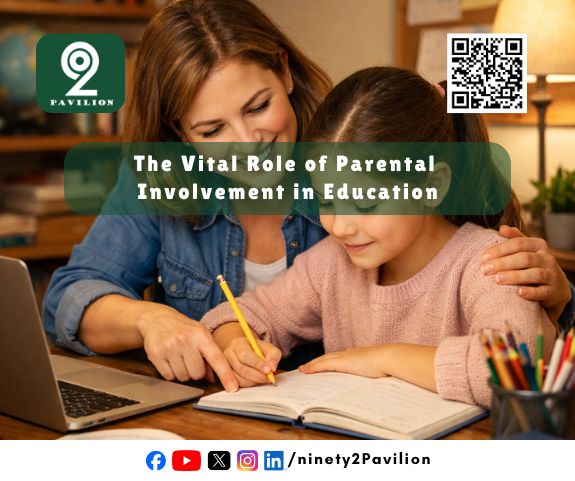
The Vital Role of Parental Involvement in Education

The Vital Role of Parental Involvement in Education

By: News Desk 92Pavilion

The journey of a student toward academic excellence and personal growth is rarely a solitary one; it is a collaborative venture where the most influential partner is often found at home. As of 2026, educational research from the Global Family Research Project and the National PTA continues to reinforce a fundamental truth: parental involvement is the single most consistent predictor of a child’s academic success, outweighing socioeconomic status or the prestige of the school itself. When parents transition from being passive observers to active participants in the learning process, they create a “bridge of consistency” between the classroom and the home, ensuring that the values of curiosity, discipline, and resilience are reinforced in every aspect of a child’s life.

Parental involvement manifests in two critical dimensions: home-based support and school-based engagement. At home, the impact is seen in the establishment of high but achievable expectations. Data from 2024–25 longitudinal studies suggest that children whose parents express a clear belief in the value of education—regardless of the parents’ own educational attainment—demonstrate higher levels of intrinsic motivation and better emotional regulation. Simple acts, such as co-reading in early childhood, supervising homework schedules, and engaging in “academic talk” during daily routines, serve to expand a child’s vocabulary and cognitive flexibility. By 2026, the definition of home support has also evolved to include digital mentorship, where parents help students navigate AI-driven learning tools and maintain a healthy balance between screen time and deep focus.

On the school front, active engagement fosters a sense of accountability and community. When parents attend conferences, volunteer for school events, or participate in parent-teacher associations, they send a powerful message to the child: “Your education is a priority for our family.” This presence bridges the cultural and communication gaps that can sometimes exist between teachers and students. Educators often report that when they have a strong rapport with parents, they can intervene more effectively when a student faces academic or behavioral hurdles. This synergy creates a safety net that prevents students from falling through the cracks, leading to lower rates of chronic absenteeism and higher graduation rates across all demographics.

However, the role of the parent is not just about academic oversight; it is about emotional scaffolding. The 2026 “State of the Student” report highlights that students with involved parents report lower levels of school-related anxiety and higher social competence. This “soft skill” development is crucial in a modern economy that prizes collaboration and empathy. When a parent supports a child through a difficult math problem or a social conflict at school, they are teaching problem-solving skills that textbooks alone cannot provide. Ultimately, the role of parental involvement is to act as a catalyst that activates the potential within a student. It transforms education from a series of tasks to be completed into a shared family value, creating a legacy of learning that persists long after the final bell rings


Share

Introduction

Pakistan’s political environment in 2026 remains dynamic and highly influential in shaping the country’s future. From parliamentary debates and economic policy decisions to opposition movements and electoral reforms, recent developments are playing a crucial role in determining national direction.

In this report by Eye of Pakistan, we analyze the latest political developments, government strategies, and opposition responses.

Government’s Policy Priorities in 2026

The federal government has emphasized:

  • Economic stabilization

  • Institutional reforms

  • Energy sector restructuring

  • Strengthening foreign diplomatic ties

Recent cabinet meetings focused on controlling inflation, stabilizing the Pakistani Rupee, and implementing fiscal discipline under ongoing economic reform programs.

Officials claim these measures aim to restore investor confidence and ensure sustainable growth.

Opposition’s Response and Political Strategy

Major opposition parties have intensified criticism of government policies, particularly regarding:

  • Rising inflation

  • Unemployment

  • Tax reforms

  • Utility price increases

Opposition leaders argue that economic pressure on the public has increased and demand greater transparency in parliamentary proceedings.

Political rallies and public gatherings have increased across major cities including Karachi, Lahore, and Islamabad.

Parliamentary Developments

Recent National Assembly sessions have seen heated debates over:

  • Budget allocations

  • Electoral reforms

  • Accountability laws

  • Provincial autonomy issues

Lawmakers from both treasury and opposition benches continue to exchange strong viewpoints, reflecting a vibrant yet tense political atmosphere.

Election Reforms and Democratic Process

Discussions around electoral transparency and digital voting mechanisms remain central to political discourse.

The Election Commission is reportedly reviewing:

  • Voter verification systems

  • Polling station security

  • Overseas voting procedures

Analysts believe these reforms could significantly impact future general elections.

Public Reaction and Political Climate

Public opinion appears divided. While some citizens support structural reforms and long-term stabilization plans, others express concerns over economic hardships and governance challenges.

Political analysts suggest that the coming months will be critical in determining whether current policies translate into tangible relief for the public.

Conclusion

Pakistan’s political landscape in 2026 is marked by active debate, institutional reforms, and strategic maneuvering from both government and opposition parties. As policy decisions continue to unfold, their impact on economic stability and democratic processes will remain under close observation.

Stay connected with Eye of Pakistan for reliable and timely political updates.