Latest Posts
Building a Vibrant Cultural FutureA Journey Towards ProsperityArab nations face an inevitable declineBlogging Revenue in Pakistan’s 2026 EconomyWhy China is Investing in Pakistan’s Gwadar PortThe Rising Spirit of Pakistani SportsVoice-Over Economy in Pakistan 2026India’s Investment in Iran,Chabahar PortEvent Management Business in Pakistan 2026The Volatile Trajectory of Pakistan-Afghanistan Relations in 2026Why Pakistan Must Overhaul Its InfrastructureEvolution of Goods and Equipment in Modern SportsThe Current Situation of Sports in PakistanGovernment Initiatives for Sports in PakistanAssessing Sports Infrastructure and Facilities in PakistanSialkot and the Renaissance of Pakistan’s Sports Goods IndustryEmerging Sports Trends in 2026Legacy of Popular Traditional SportsJourney Through the Background of Sports in PakistanInfrastructure and Framework Deficits in Pakistani Sports InstitutionsLevelling the Field of SportsThe Roadmap for Pakistan’s Islamic Financial TransitionApartheid Structure in Occupied KashmirThe Strategic Role of the SCO in 2026Complexities of Illegal Immigrant RepatriationPakistan’s Strategic Role in Regional Power DynamicsPakistan’s Strategic Role in the South Asian Power PlayPakistan’s Strategic Tightrope in the US-China RivalryPakistan-China Relations in a Changing Geopolitical EnvironmentForeign Relation of Pakistan with Neighboring CountriesGlobal Response and the Reshaping World Order in 2026Impacts of International Structure on Pakistan’s Foreign PolicyEnduring Conflict Between India and PakistanAncient Roman and Modern EntertainmentCultivating Pakistan’s Future Tech WorkforceBuilding, Champions of the WorldDeciphering the Boundary Between Art and EntertainmentDevelopment of Pakistan’s Entertainment IndustryEntertainment and the Innovative Technology Industry in 2026Flourishing World of Entertainment in 2026How Technology Transformed Our EntertainmentInterrelationship Between Culture and Visual Entertainment MediaPakistan’s Entertainment Industry Set to ThrivePop Culture, Media Representation, and the Architecture of IdentityThe Evolution of Pakistan’s Entertainment IndustryThe Transformative Power of Entertainment on Modern SocietyStrategic Agenda for Pakistan’s Entertainment IndustryThe Economic Impact of the Entertainment IndustryPakistan Was Not in the Room but Was the Reason the Room Existed.

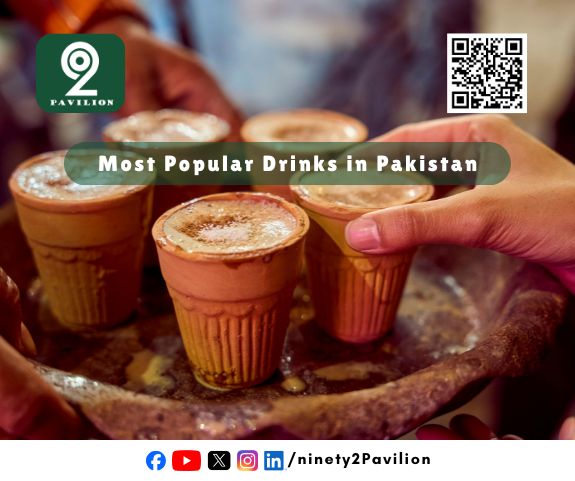
Most Popular Drinks in Pakistan

Most Popular Drinks in Pakistan

By: News Desk 92Pavilion

The beverage culture of Pakistan is as diverse and vibrant as its culinary landscape, offering a refreshing sanctuary from the sweltering heat of the plains and a warming embrace in the frosty northern mountains. In 2026, the country’s traditional drinks continue to thrive, standing their ground against the global wave of carbonated sodas through a unique blend of seasonal ingredients, herbal wisdom, and deep-seated hospitality. To understand the liquid soul of Pakistan is to experience everything from the creamy depths of a rural Lassi to the sophisticated, spice-laden notes of a city-dwelling Doodh Patti, each sip telling a story of the land and its people.

At the pinnacle of Pakistan’s drink culture is Chai, the undisputed national beverage that transcends all social and economic boundaries. Unlike the delicate infusions found in the West, Pakistani tea is typically Doodh Patti—a robust concoction where tea leaves are boiled directly in milk with sugar, often infused with green cardamom. In the northern regions, particularly Kashmir, this evolves into the visually stunning Kashmiri Chai (Pink Tea). This savory, creamy beverage is made from special green tea leaves reacted with baking soda to achieve its signature pink hue, then garnished with crushed pistachios and almonds. For millions of Pakistanis, a day does not truly begin or end without a steaming cup of tea, serving as the ultimate social lubricant in homes and roadside “dhaba” stalls alike.

As the mercury rises during the long Pakistani summers, the nation turns to its legendary cooling agents. Lassi, a yogurt-based drink, is the quintessential rural staple. In the Punjab, a tall steel glass of “Meethi” (sweet) Lassi, topped with a thick layer of fresh cream or “pedas,” is considered a full meal in itself. For a lighter alternative, Kachi Lassi—a diluted mixture of milk, water, and a pinch of salt—is prized for its ability to prevent heatstroke. Parallel to this is Sattu, an ancient powerhouse drink made from roasted barley flour mixed with water and jaggery. Often called the “poor man’s protein shake,” Sattu is undergoing a commercial renaissance in 2026 as health-conscious urbanites rediscover its natural cooling and detoxifying properties.

The world of Pakistani fruit and herbal infusions offers further variety. Rooh Afza, the iconic crimson syrup made from a blend of fruits, vegetables, and herbal extracts, has been a staple of the Pakistani “Iftar” table for generations. Whether mixed with water or milk, its distinct floral aroma is synonymous with the month of Ramadan. In the bustling markets of Lahore and Karachi, street vendors do a roaring trade in Gannay ka Ras (fresh sugarcane juice), squeezed on the spot and flavored with black salt, ginger, and lemon. In the colder months, Kanji, a fermented drink made from black carrots and mustard seeds, provides a tangy, probiotic-rich boost. Ultimately, the popular drinks of Pakistan are a reflection of the country’s resourcefulness and its commitment to natural, seasonal refreshment, ensuring that every thirst is quenched with a taste of tradition

Share

Introduction

Pakistan’s political environment in 2026 remains dynamic and highly influential in shaping the country’s future. From parliamentary debates and economic policy decisions to opposition movements and electoral reforms, recent developments are playing a crucial role in determining national direction.

In this report by Eye of Pakistan, we analyze the latest political developments, government strategies, and opposition responses.

Government’s Policy Priorities in 2026

The federal government has emphasized:

  • Economic stabilization

  • Institutional reforms

  • Energy sector restructuring

  • Strengthening foreign diplomatic ties

Recent cabinet meetings focused on controlling inflation, stabilizing the Pakistani Rupee, and implementing fiscal discipline under ongoing economic reform programs.

Officials claim these measures aim to restore investor confidence and ensure sustainable growth.

Opposition’s Response and Political Strategy

Major opposition parties have intensified criticism of government policies, particularly regarding:

  • Rising inflation

  • Unemployment

  • Tax reforms

  • Utility price increases

Opposition leaders argue that economic pressure on the public has increased and demand greater transparency in parliamentary proceedings.

Political rallies and public gatherings have increased across major cities including Karachi, Lahore, and Islamabad.

Parliamentary Developments

Recent National Assembly sessions have seen heated debates over:

  • Budget allocations

  • Electoral reforms

  • Accountability laws

  • Provincial autonomy issues

Lawmakers from both treasury and opposition benches continue to exchange strong viewpoints, reflecting a vibrant yet tense political atmosphere.

Election Reforms and Democratic Process

Discussions around electoral transparency and digital voting mechanisms remain central to political discourse.

The Election Commission is reportedly reviewing:

  • Voter verification systems

  • Polling station security

  • Overseas voting procedures

Analysts believe these reforms could significantly impact future general elections.

Public Reaction and Political Climate

Public opinion appears divided. While some citizens support structural reforms and long-term stabilization plans, others express concerns over economic hardships and governance challenges.

Political analysts suggest that the coming months will be critical in determining whether current policies translate into tangible relief for the public.

Conclusion

Pakistan’s political landscape in 2026 is marked by active debate, institutional reforms, and strategic maneuvering from both government and opposition parties. As policy decisions continue to unfold, their impact on economic stability and democratic processes will remain under close observation.

Stay connected with Eye of Pakistan for reliable and timely political updates.