Latest Posts
Building a Vibrant Cultural FutureA Journey Towards ProsperityArab nations face an inevitable declineBlogging Revenue in Pakistan’s 2026 EconomyWhy China is Investing in Pakistan’s Gwadar PortThe Rising Spirit of Pakistani SportsVoice-Over Economy in Pakistan 2026India’s Investment in Iran,Chabahar PortEvent Management Business in Pakistan 2026The Volatile Trajectory of Pakistan-Afghanistan Relations in 2026Why Pakistan Must Overhaul Its InfrastructureEvolution of Goods and Equipment in Modern SportsThe Current Situation of Sports in PakistanGovernment Initiatives for Sports in PakistanAssessing Sports Infrastructure and Facilities in PakistanSialkot and the Renaissance of Pakistan’s Sports Goods IndustryEmerging Sports Trends in 2026Legacy of Popular Traditional SportsJourney Through the Background of Sports in PakistanInfrastructure and Framework Deficits in Pakistani Sports InstitutionsLevelling the Field of SportsThe Roadmap for Pakistan’s Islamic Financial TransitionApartheid Structure in Occupied KashmirThe Strategic Role of the SCO in 2026Complexities of Illegal Immigrant RepatriationPakistan’s Strategic Role in Regional Power DynamicsPakistan’s Strategic Role in the South Asian Power PlayPakistan’s Strategic Tightrope in the US-China RivalryPakistan-China Relations in a Changing Geopolitical EnvironmentForeign Relation of Pakistan with Neighboring CountriesGlobal Response and the Reshaping World Order in 2026Impacts of International Structure on Pakistan’s Foreign PolicyEnduring Conflict Between India and PakistanAncient Roman and Modern EntertainmentCultivating Pakistan’s Future Tech WorkforceBuilding, Champions of the WorldDeciphering the Boundary Between Art and EntertainmentDevelopment of Pakistan’s Entertainment IndustryEntertainment and the Innovative Technology Industry in 2026Flourishing World of Entertainment in 2026How Technology Transformed Our EntertainmentInterrelationship Between Culture and Visual Entertainment MediaPakistan’s Entertainment Industry Set to ThrivePop Culture, Media Representation, and the Architecture of IdentityThe Evolution of Pakistan’s Entertainment IndustryThe Transformative Power of Entertainment on Modern Society

Pakistan’s Entertainment Industry Set to Thrive

Pakistan’s Entertainment Industry Set to Thrive

By: News Desk 92Pavilion

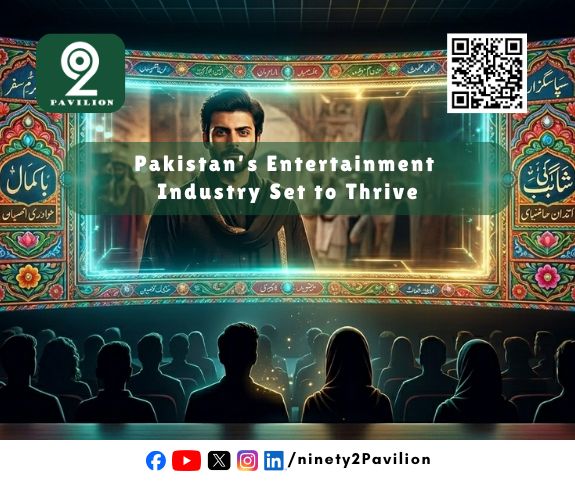
The entertainment landscape of Pakistan is undergoing a profound and systemic transformation in 2026, signaling a shift from a decade of consolidation to an era of global ambition. Long defined by the commercial reliability of television dramas and a resilient yet struggling film sector, the industry is now recalibrating its focus toward quality, digital integration, and international collaboration. This is not merely a seasonal uptick in content production; it is a fundamental restructuring of how cultural stories are told, sold, and scaled. As the domestic market matures and technological barriers dissolve, the Pakistani entertainment ecosystem is positioning itself as a formidable player in the regional and global creative economy.

At the heart of this thriving sector is the strategic shift toward “event-based” programming. In television, which remains the country’s most prolific medium, major networks have moved away from the quantity-over-quality model. In 2026, the mantra has become one of selective silence and high-impact storytelling. By concentrating star power into fewer, more rigorously produced serials that prioritize writer-led narratives and moral depth, the industry is reclaiming its reputation for sophisticated emotional interiority. This approach has proven successful in retaining a discerning audience that now has instant access to global streaming giants. By focusing on projects that offer authentic cultural resonance, Pakistani television is not just surviving the digital age but thriving within it.

Parallel to this, the cinema of Pakistan is witnessing a technological and creative revival. Despite the structural challenges of a shrinking domestic theater network, filmmakers are innovating through genre-bending and tech-driven production. A landmark achievement in early 2026 was the premiere of the country’s first feature-length film created entirely through Artificial Intelligence, demonstrating a bold embrace of the Fourth Industrial Revolution. Furthermore, the 2026 film slate reflects a newfound confidence in diverse genres—ranging from Lyari-based sports dramas to superhero epics and crime thrillers. This diversification, coupled with international distribution models aimed at the overseas diaspora, is bridging the gap between artistic ambition and commercial viability.

Government support has also emerged as a critical catalyst for this growth. The establishment of the National Centre of Films (NCF) and the introduction of significant financial incentives—including tax exemptions on filming equipment and credits for cinema operations—have provided the necessary scaffolding for institutional revival. These policy tools are complemented by a surge in international collaborations and memorandums of understanding for joint productions with global partners. Simultaneously, the music industry is experiencing a renaissance of the “long-form” project, with artists once again prioritizing albums over disposable singles, fostering a deeper, more sustainable connection with their listeners.

Ultimately, the prosperity of Pakistan’s entertainment industry in 2026 is rooted in its ability to balance nostalgia with reinvention. By leveraging its unique cultural identity and marrying it with modern production standards, the sector is successfully projecting Pakistan’s “soft image” to the world. As the noise of fragmented digital competition fades, what remains is a leaner, more resilient industry that is finally ready to sustain meaning and impact on a global scale

Share

Introduction

Pakistan’s political environment in 2026 remains dynamic and highly influential in shaping the country’s future. From parliamentary debates and economic policy decisions to opposition movements and electoral reforms, recent developments are playing a crucial role in determining national direction.

In this report by Eye of Pakistan, we analyze the latest political developments, government strategies, and opposition responses.

Government’s Policy Priorities in 2026

The federal government has emphasized:

  • Economic stabilization

  • Institutional reforms

  • Energy sector restructuring

  • Strengthening foreign diplomatic ties

Recent cabinet meetings focused on controlling inflation, stabilizing the Pakistani Rupee, and implementing fiscal discipline under ongoing economic reform programs.

Officials claim these measures aim to restore investor confidence and ensure sustainable growth.

Opposition’s Response and Political Strategy

Major opposition parties have intensified criticism of government policies, particularly regarding:

  • Rising inflation

  • Unemployment

  • Tax reforms

  • Utility price increases

Opposition leaders argue that economic pressure on the public has increased and demand greater transparency in parliamentary proceedings.

Political rallies and public gatherings have increased across major cities including Karachi, Lahore, and Islamabad.

Parliamentary Developments

Recent National Assembly sessions have seen heated debates over:

  • Budget allocations

  • Electoral reforms

  • Accountability laws

  • Provincial autonomy issues

Lawmakers from both treasury and opposition benches continue to exchange strong viewpoints, reflecting a vibrant yet tense political atmosphere.

Election Reforms and Democratic Process

Discussions around electoral transparency and digital voting mechanisms remain central to political discourse.

The Election Commission is reportedly reviewing:

  • Voter verification systems

  • Polling station security

  • Overseas voting procedures

Analysts believe these reforms could significantly impact future general elections.

Public Reaction and Political Climate

Public opinion appears divided. While some citizens support structural reforms and long-term stabilization plans, others express concerns over economic hardships and governance challenges.

Political analysts suggest that the coming months will be critical in determining whether current policies translate into tangible relief for the public.

Conclusion

Pakistan’s political landscape in 2026 is marked by active debate, institutional reforms, and strategic maneuvering from both government and opposition parties. As policy decisions continue to unfold, their impact on economic stability and democratic processes will remain under close observation.

Stay connected with Eye of Pakistan for reliable and timely political updates.