
By: News Desk 92pavilion
Pakistan finds itself at a critical health junction. While the nation has historically battled infectious diseases, the current year highlights a more insidious threat: a sharp rise in non-communicable diseases (NCDs) among young adults aged 18 to 35. This demographic, often perceived as the peak of health, is increasingly falling prey to sedentary lifestyles and poor dietary choices. As urbanization accelerates in cities like Lahore and Karachi, the traditional active lifestyle of the past is being replaced by indoor, tech-centric habits, leading to a significant decline in physical fitness and an alarming surge in modifiable health risk factors.
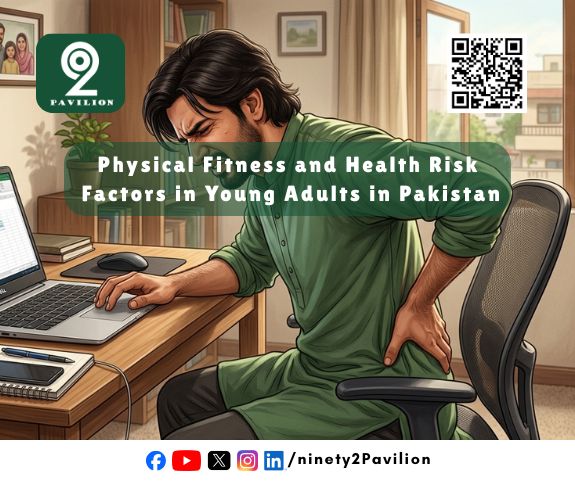
Research conducted in early 2026 indicates that only about 42% of young adults in Pakistan engage in regular physical activity. This widespread inactivity is a primary driver of the escalating obesity rates, which now affect nearly 44% of this age group. The transition to a “digital-first” life—characterized by remote work, social media consumption, and a reliance on delivery apps—has created a “physical activity deficit.” Clinical data suggests that this lack of movement is directly linked to a decrease in VO2 max (aerobic capacity) and muscle strength, leaving the youth population less resilient and more susceptible to early-onset chronic conditions.
[Image depicting a young Pakistani adult using a fitness tracker while balancing a busy urban lifestyle]
The health risk factors emerging in 2026 are no longer restricted to older generations. High psychological stress has become a dominant risk factor, with over 56% of young adults reporting chronic stress due to economic pressures and competitive academic environments. This stress, when combined with a diet high in trans fats and sodium (popularized by the burgeoning fast-food culture), has led to a spike in Myocardial Infarction (heart attacks) among those under 30. In fact, ischemic heart disease is now the leading cause of mortality in Pakistan, and the age of first-time cardiac events is trending younger every year. Hypertension and Type 2 Diabetes, once seen as “old age” diseases, are now frequently diagnosed in university-aged individuals.
Tobacco use remains a persistent and deadly risk factor. Despite public health campaigns, smoking and the use of smokeless tobacco (like chalia and niswar) continue to be prevalent among young males, significantly increasing their risk of arterial damage and various cancers. In 2026, the rise of “vaping” has added a new layer of complexity to respiratory health risks. When coupled with the severe air pollution in major Pakistani cities, the respiratory fitness of young adults is being compromised at an unprecedented rate, leading to chronic inflammatory conditions that further discourage physical exertion.
Ultimately, addressing these risk factors requires a paradigm shift in how Pakistani society views fitness. In 2026, the path forward involves integrating “Functional Movement” into daily life and prioritizing mental health as a component of physical fitness. Public health initiatives are now focusing on creating safe green spaces and promoting “Green Prescriptions”—medical advice that encourages outdoor activity. For the young adults of Pakistan, the challenge is to reclaim their physical heritage; by choosing movement over stagnation and whole foods over processed convenience, they can turn the tide against this silent crisis and secure a healthier future.