
By: News Desk 92Pavilion
The global health and fitness industry in 2026 has transitioned from a fragmented collection of gyms and diet plans into a cohesive, technology-driven ecosystem valued at over $135 billion. This “New Age of Wellness” is defined by a shift from reactive care to proactive longevity, where exercise and nutrition are treated as precision instruments for biological optimization. As compound annual growth rates hold steady at approximately 9.5%, the industry is no longer just selling memberships; it is selling a comprehensive life-management infrastructure fueled by Artificial Intelligence, wearable biosensors, and a renewed focus on the aging global population.
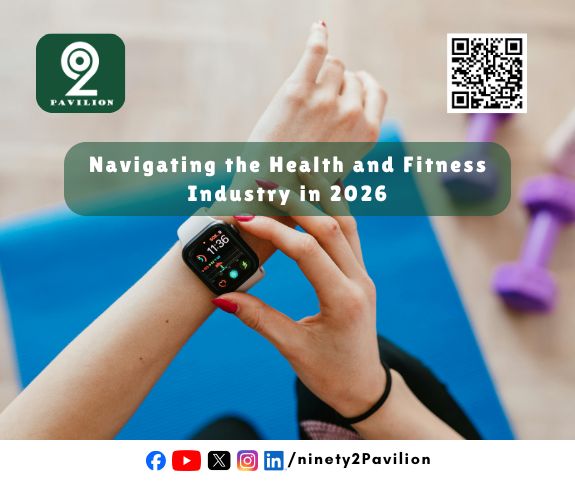
At the vanguard of this evolution is Wearable Technology, which has maintained its position as the number one global fitness trend for nearly a decade. In 2026, these devices have moved beyond simple step counting to become “clinical-grade” health monitors capable of tracking blood glucose, heart rhythm, and even skin temperature in real-time. This data is fed into AI-powered coaching platforms that create “Adaptive Workouts”—routines that automatically adjust their intensity based on an individual’s recovery score or stress levels. This hyper-personalization has effectively democratized elite-level coaching, making high-performance health accessible to millions through mobile exercise apps and connected home equipment.
Parallel to this technological surge is the “Active Aging” movement. With 73 million Baby Boomers crossing the age of 65 by 2030, the fitness industry in 2026 has pivoted sharply to cater to older adults. Specialized programs focusing on “Functional Capacity”—resistance training to prevent muscle loss, balance exercises to reduce fall risk, and low-impact cardiovascular activity—have become the fastest-growing segments in the market. This demographic is now the most consistent group of gym-goers, driving a demand for medically integrated fitness centers that bridge the gap between traditional healthcare and the local health club.
Furthermore, 2026 marks the year that Mental Health became a primary driver of physical activity. Over 78% of exercisers now cite emotional well-being as their top reason for working out, surpassing traditional goals like weight loss or aesthetics. This has birthed the “Neurowellness” trend, which blends physical training with cognitive-motor exercises designed to improve neuroplasticity and reduce the risk of cognitive impairment. Immersive fitness worlds, powered by Virtual Reality, are also gaining traction, turning monotonous cardio into engaging social experiences that reduce the “perceived effort” of exercise while fostering a sense of community.
Despite the digital boom, physical health clubs remain resilient by evolving into “Holistic Wellness Hubs.” Modern facilities now offer a “Hybrid Model” that includes traditional weightlifting alongside recovery suites featuring infrared saunas, cold plunges, and somatic release classes. The industry’s focus has expanded to address environmental crises, such as microplastic awareness and climate-resilient outdoor training. Ultimately, the health and fitness industry in 2026 is a reflection of a society that values “Healthspan” over lifespan—a world where the pursuit of fitness is no longer an optional hobby, but a fundamental pillar of human flourishing and social connection