By: News Desk 92Pavilion
As of April 2026, the translation and interpretation industry in Pakistan has evolved into a strategic pillar of the country’s burgeoning export-led economy. In a world characterized by shifting geopolitical alliances and the rapid expansion of the China-Pakistan Economic Corridor (CPEC), the running business situation in Pakistan is defined by a massive surge in demand for high-stakes linguistic mediation. While the rise of sophisticated AI translation tools has automated basic word-to-word conversions, it has simultaneously increased the commercial value of professional human interpreters who can navigate the nuances of culture, legal jargon, and diplomatic etiquette. For a Pakistani practitioner today, monetization is no longer just about moving text from one language to another; it is about acting as a “Cultural Consultant” who ensures that international business interests can successfully integrate into the local Pakistani landscape and vice versa.
Earnings in the local sector are currently driven by three major commercial engines: legal and corporate translation, diplomatic and conference interpretation, and the rapidly growing “Media Localization” market. With the recent high-level trade agreements signed between Pakistan and various Central Asian republics in early 2026, there is a specialized, high-paying niche for translators who can work across Urdu, English, Mandarin, and Russian. To earn money in this environment, Pakistani translators have moved away from low-cost “per-page” models toward “High-Value Technical Retainers.” Large-scale infrastructure projects and multinational legal firms in Karachi and Islamabad are now willing to pay a premium for certified translators who can provide “Certified Legal Equivalency,” ensuring that contracts and technical manuals are legally binding across different jurisdictions. In these high-stakes environments, a senior translator can command fees that compete with upper-management corporate salaries, often structured around project-based milestones that offer significant financial stability.
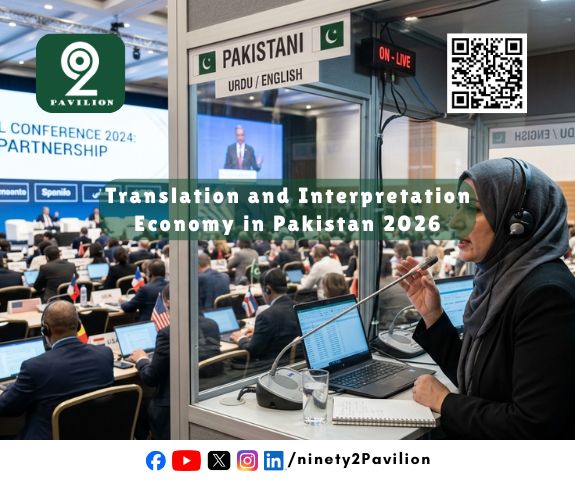
The interpretation market has also undergone a technical transformation. Following the adoption of hybrid-work models across the globe, “Remote Simultaneous Interpretation” (RSI) has become a primary revenue stream for Pakistani linguists. By utilizing high-speed fiber-optic networks, local interpreters are now servicing international conferences in Dubai, London, and Singapore from their home studios in Pakistan. This “Service Export” model allows them to earn in US Dollars or Euros, providing a powerful hedge against local inflation while maintaining a lower operational cost base. Simultaneously, the domestic market for “On-Ground Interpretation” remains robust, particularly in the manufacturing and energy sectors, where foreign technicians and local workers require real-time linguistic support to maintain operational safety and efficiency.
Furthermore, the “Localization” trend has created a new front for profit. As global tech giants and streaming platforms expand their reach into the South Asian market, there is a constant demand for “Transcreation”—a process where content is not just translated but culturally adapted to resonate with the Pakistani audience. Interpreters and translators are earning substantial income by localizing software interfaces, video game scripts, and marketing campaigns, ensuring that the tone and cultural references are appropriate for the 130 million-plus mobile-first consumers in Pakistan. To stay profitable in 2026, successful practitioners are also integrating AI-assisted “Translation Memory” (TM) tools to increase their throughput, allowing them to handle higher volumes of work without sacrificing the precision that human oversight provides. In summary, the translation and interpretation business in Pakistan in 2026 is a sophisticated, high-growth field. It rewards those who can bridge the gap between technical linguistic accuracy and deep cultural intelligence, proving that in an increasingly connected but complex world, the human bridge remains an irreplaceable asset in the Pakistani professional arsenal