
By: News Desk 92Pavilion
Pakistan stands at the precipice of a profound societal shift, driven not by traditional industrialization, but by a pervasive and rapid digital metamorphosis. Information Technology (IT) has evolved from a niche service sector into the primary nervous system of the national economy, fundamentally altering how citizens interact with the state, how businesses operate, and how the youth envision their professional futures. This transformative role of IT is characterized by a “Triple-C” impact: Connectivity, Commerce, and Citizen-Centricity. As the country navigates a complex reshaping world order, its digital infrastructure has become its most resilient asset, bridging geographic and socio-economic divides that have persisted for decades. The global response to Pakistan’s tech surge has been one of cautious optimism, as the nation positions itself as a competitive hub for software exports and digital entrepreneurship in South Asia.
The most visible facet of this transformation is the democratization of the “Digital Commons” through widespread internet penetration and the proliferation of affordable smartphones. In 2026, the transition from 4G to 5G in major urban centers has unlocked the potential for the Internet of Things (IoT) and real-time data analytics, but the true impact is felt in the “Mobile-First” revolution in rural areas. For the first time, small-scale farmers in Punjab and Sindh are using AI-driven platforms to access satellite-based weather forecasts and market pricing, bypassing traditional middlemen. This connectivity is the bedrock of “Equal Access,” ensuring that information—once a luxury of the urban elite—is now a public utility available to the masses. This shift is not merely technological; it is a psychological liberation that has empowered a new generation of digital natives to compete on the global stage from the comfort of their homes.
Economically, the IT sector has emerged as a vital pillar of national stability. In late 2025 and early 2026, Pakistan’s IT exports hit record highs, driven by a burgeoning ecosystem of freelancers and specialized software houses. The “Freelance Economy” has turned Pakistan into the world’s fourth-largest provider of digital labor, bringing in essential foreign exchange and providing a safety net against domestic economic volatility. Furthermore, the rise of “Fintech” has revolutionized the financial landscape. With the successful implementation of the ‘Raast’ instant payment system and the licensing of several digital-only banks, the “Unbanked” population is shrinking at an unprecedented rate. This digital financial inclusion is essential for formalizing the economy, allowing for transparent transactions and providing small business owners with the credit history needed to scale their operations.
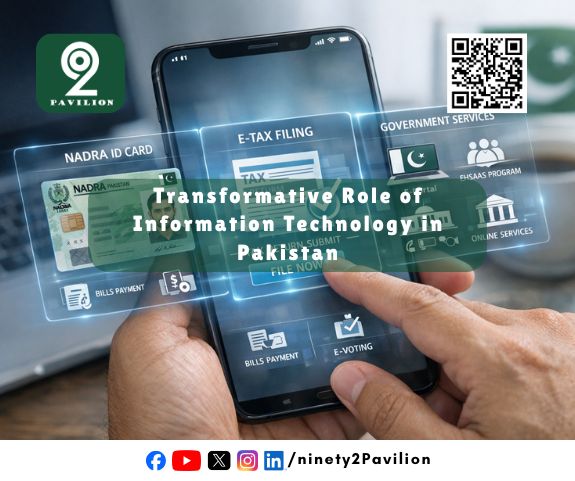
In the realm of governance, IT is dismantling the “Red Tape” culture that has historically hindered public service delivery. The current situation in 2026 sees a massive “E-Governance” push, where services ranging from land record digitization to tax filing and judicial case tracking are handled through unified digital portals. This transparency is a direct strike against corruption, as automated systems reduce the need for physical interaction with bureaucratic gatekeepers. The “Global Response” to Pakistan’s digital ID system, NADRA, has been exemplary, with several nations looking to adopt similar biometric frameworks for their own citizen registries. This digital identity is the “Golden Thread” that links social safety nets, like the Benazir Income Support Programme, directly to the verified accounts of the beneficiaries, ensuring that aid reaches those who need it most without leakage.
However, the transformative journey is not without its “Digital Fault Lines.” The challenges of cybersecurity, data privacy, and the “Digital Divide” between genders and regions remain significant hurdles. In 2026, the government’s focus has shifted toward “Framework Fortification,” introducing the Personal Data Protection Bill to align with global standards like GDPR. Moreover, the integration of IT into the educational framework is a work in progress; while “EdTech” has seen a boom, the infrastructure and framework in many public institutions still struggle to keep pace with the rapid evolution of AI and machine learning. Addressing these gaps is critical to ensuring that the digital renaissance is inclusive and sustainable, rather than a privilege for a tech-savvy minority.
Ultimately, the role of Information Technology in Pakistan is that of a “Great Equalizer.” It has provided the nation with a roadmap to bypass the slow, incremental steps of traditional development in favor of a “Leapfrog” strategy. As Pakistan looks toward the 2030s, the digital economy is expected to contribute a significantly larger portion of the GDP, driven by a youth bulge that is increasingly proficient in coding, data science, and digital marketing. The transformation we witness today is only the beginning. By fostering an environment of innovation, protecting digital rights, and investing in human capital, Pakistan is not just adopting technology; it is rewriting its national destiny in the language of the 21st century