
Latest Posts
Building a Vibrant Cultural FutureA Journey Towards ProsperityArab nations face an inevitable declineBlogging Revenue in Pakistan’s 2026 EconomyWhy China is Investing in Pakistan’s Gwadar PortThe Rising Spirit of Pakistani SportsVoice-Over Economy in Pakistan 2026India’s Investment in Iran,Chabahar PortEvent Management Business in Pakistan 2026The Volatile Trajectory of Pakistan-Afghanistan Relations in 2026Why Pakistan Must Overhaul Its InfrastructureEvolution of Goods and Equipment in Modern SportsThe Current Situation of Sports in PakistanGovernment Initiatives for Sports in PakistanAssessing Sports Infrastructure and Facilities in PakistanSialkot and the Renaissance of Pakistan’s Sports Goods IndustryEmerging Sports Trends in 2026Legacy of Popular Traditional SportsJourney Through the Background of Sports in PakistanInfrastructure and Framework Deficits in Pakistani Sports InstitutionsLevelling the Field of SportsThe Roadmap for Pakistan’s Islamic Financial TransitionApartheid Structure in Occupied KashmirThe Strategic Role of the SCO in 2026Complexities of Illegal Immigrant RepatriationPakistan’s Strategic Role in Regional Power DynamicsPakistan’s Strategic Role in the South Asian Power PlayPakistan’s Strategic Tightrope in the US-China RivalryPakistan-China Relations in a Changing Geopolitical EnvironmentForeign Relation of Pakistan with Neighboring CountriesGlobal Response and the Reshaping World Order in 2026Impacts of International Structure on Pakistan’s Foreign PolicyEnduring Conflict Between India and PakistanAncient Roman and Modern EntertainmentCultivating Pakistan’s Future Tech WorkforceBuilding, Champions of the WorldDeciphering the Boundary Between Art and EntertainmentDevelopment of Pakistan’s Entertainment Industry

Renewable Energy Business in Pakistan

Renewable Energy Business in Pakistan

By: News Desk 92Pavilion

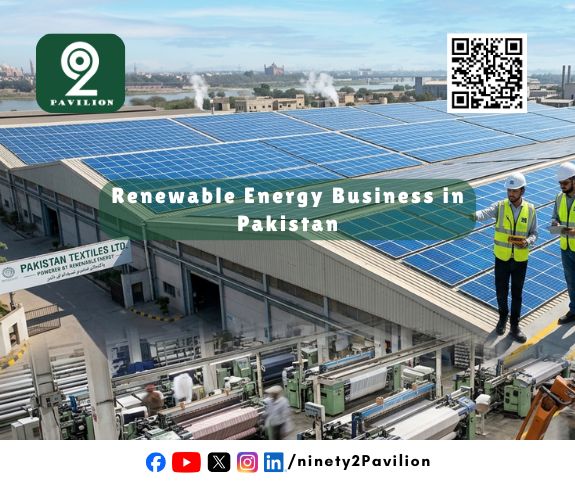
In the professional landscape of April 2026, the renewable energy sector in Pakistan has transitioned from a niche environmental alternative into the most critical pillar of the nation’s energy security. As of this month, the running business situation is defined by a “Solar Revolution” that has seen distributed solar capacity climb to make up nearly a quarter of the country’s energy mix over the last decade. Following the energy crises of the early 2020s, the market has matured into a multi-billion-dollar industry, with the cumulative solar capacity expected to hit nearly 8 gigawatts by the end of this year. For a renewable energy entrepreneur in Pakistan today, the path to earning money is no longer just about selling panels; it is about navigating a complex regulatory shift from “Net Metering” to “Net Billing” and acting as a strategic energy consultant for a power-hungry consumer base.

To earn money in this environment, practitioners have adopted a “Value-Retention” model. The primary revenue engine remains the Engineering, Procurement, and Construction (EPC) sector, where firms earn through turnkey installations for residential, commercial, and industrial clients. However, with the 2026 policy shift toward “Net Billing,” the financial return on exported electricity has been reduced, with export rates now sitting at approximately 11 to 13 PKR per unit compared to import rates of 40 to 50 PKR. This has created a lucrative new revenue stream: “Energy Optimization and Storage.” To maximize profits, solar businesses are now upselling high-capacity battery storage and hybrid systems that allow users to store excess energy for nighttime use rather than selling it back to the grid at a lower rate. By positioning solar as a “savings-first” investment rather than a “selling” tool, firms are capturing higher margins on battery hardware and smart energy management software.

The corporate and industrial (C&I) sector has become a massive front for revenue in 2026. With rising electricity tariffs squeezing profit margins for factories in Sialkot, Faisalabad, and Karachi, industrial-scale solar installations—often ranging from hundreds of kilowatts to multiple megawatts—are being treated as essential infrastructure. To earn money here, renewable energy firms are utilizing “Solar-as-a-Service” or Power Purchase Agreements (PPAs), where the provider installs the system at no upfront cost to the factory and earns a recurring monthly income by selling the generated electricity at a rate lower than the national grid. This model provides long-term, stable cash flows and allows businesses to hedge against future tariff hikes. Additionally, the recent deployment of solar across 1,000 telecom sites by major connectivity providers this month highlights a booming B2B market for “Off-Grid Reliability” solutions.

Furthermore, the 2026 market has birthed a “Service and Maintenance” economy. With over 280,000 active net-metering connections nationwide, there is a recurring demand for professional cleaning, health checks, and inverter repairs. Many solar companies are now earning through annual maintenance contracts (AMCs), ensuring consistent revenue even when new installation bookings fluctuate. In the rural and agricultural heartlands, solar-powered tube wells and “Agri-PV” solutions are providing a secondary growth front, where entrepreneurs earn by replacing expensive diesel-powered machinery with sustainable, low-maintenance solar alternatives.

To stay profitable in the current year, successful solar leaders are focusing on “Technical Compliance.” As DISCOs (Distribution Companies) implement stricter inspection protocols for protection equipment and single-line diagrams, firms that provide certified, high-standard “Protection Chain” bundles are winning the market over low-cost, uncertified competitors. In summary, the renewable energy business in Pakistan in 2026 is a high-growth, sophisticated industry. It rewards those who can bridge the gap between technical hardware and strategic financial planning, proving that as the nation pivots away from expensive fossil fuel imports, the ability to harvest and manage the sun’s power has become the most resilient commercial asset in the Pakistani professional arsenal


Share

Introduction

Pakistan’s political environment in 2026 remains dynamic and highly influential in shaping the country’s future. From parliamentary debates and economic policy decisions to opposition movements and electoral reforms, recent developments are playing a crucial role in determining national direction.

In this report by Eye of Pakistan, we analyze the latest political developments, government strategies, and opposition responses.

Government’s Policy Priorities in 2026

The federal government has emphasized:

  • Economic stabilization

  • Institutional reforms

  • Energy sector restructuring

  • Strengthening foreign diplomatic ties

Recent cabinet meetings focused on controlling inflation, stabilizing the Pakistani Rupee, and implementing fiscal discipline under ongoing economic reform programs.

Officials claim these measures aim to restore investor confidence and ensure sustainable growth.

Opposition’s Response and Political Strategy

Major opposition parties have intensified criticism of government policies, particularly regarding:

  • Rising inflation

  • Unemployment

  • Tax reforms

  • Utility price increases

Opposition leaders argue that economic pressure on the public has increased and demand greater transparency in parliamentary proceedings.

Political rallies and public gatherings have increased across major cities including Karachi, Lahore, and Islamabad.

Parliamentary Developments

Recent National Assembly sessions have seen heated debates over:

  • Budget allocations

  • Electoral reforms

  • Accountability laws

  • Provincial autonomy issues

Lawmakers from both treasury and opposition benches continue to exchange strong viewpoints, reflecting a vibrant yet tense political atmosphere.

Election Reforms and Democratic Process

Discussions around electoral transparency and digital voting mechanisms remain central to political discourse.

The Election Commission is reportedly reviewing:

  • Voter verification systems

  • Polling station security

  • Overseas voting procedures

Analysts believe these reforms could significantly impact future general elections.

Public Reaction and Political Climate

Public opinion appears divided. While some citizens support structural reforms and long-term stabilization plans, others express concerns over economic hardships and governance challenges.

Political analysts suggest that the coming months will be critical in determining whether current policies translate into tangible relief for the public.

Conclusion

Pakistan’s political landscape in 2026 is marked by active debate, institutional reforms, and strategic maneuvering from both government and opposition parties. As policy decisions continue to unfold, their impact on economic stability and democratic processes will remain under close observation.

Stay connected with Eye of Pakistan for reliable and timely political updates.

Education in Pakistan 2026

By: News Desk 92Pavilion Education in Pakistan stands as a complex paradox of modest statistical gains and deep-rooted systemic crises. As of 2026, the national

Share
Read More »