By: News Desk 92Pavilion
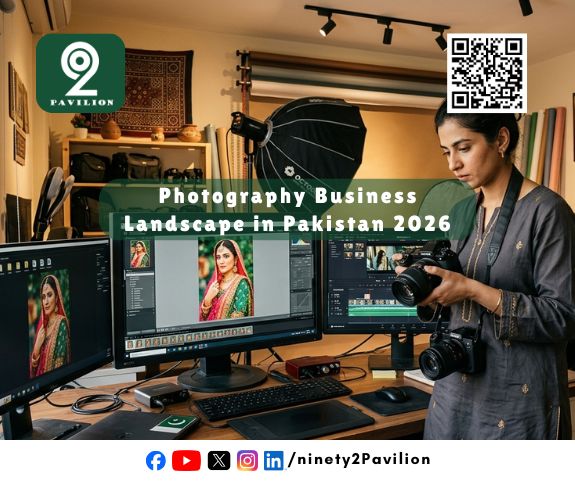
In the current economic climate of April 2026, the photography industry in Pakistan has evolved from a traditional service into a high-tech, multi-dimensional business sector. While the country faces various macroeconomic challenges, the demand for visual storytelling has reached an all-time high, driven primarily by the explosion of digital commerce and a culturally deep-rooted obsession with grand celebrations. Today, a professional photographer in Pakistan is no longer just someone with a camera; they are a digital asset manager and a brand consultant. The primary engine of the local photography business remains the wedding industry, which has proven to be remarkably recession-proof. Even as inflation impacts household budgets, the “Big Fat Pakistani Wedding” continues to be a priority, with families allocating significant portions of their savings to ensure high-end cinematic coverage. However, the business model has shifted; clients now demand more than just albums. They seek “same-day edits” for social media, vertical video content for TikTok, and drone cinematography that captures the scale of the event. This has allowed photographers to charge premium rates for specialized “social media packages” that exist alongside traditional photography.
Parallel to the wedding industry, the rise of the “SME” sector in Pakistan has opened a massive second front for revenue: commercial and product photography. With the proliferation of local brands on platforms like Instagram and the maturity of e-commerce giants like Daraz, businesses in cities like Sialkot, Faisalabad, and Karachi are desperate for international-standard product imagery. Photographers are now earning substantial income by setting up dedicated product studios where they offer high-volume catalog shoots. This sector is particularly lucrative because it provides consistent, year-round work, unlike the seasonal nature of wedding photography. Furthermore, the 2026 business landscape has seen a surge in real estate photography. As major housing societies and high-rise developments expand across the outskirts of Islamabad and Lahore, developers are hiring professional photographers to provide high-quality architectural shots and 360-degree virtual tours to attract overseas Pakistani investors.
Another emerging revenue stream is the “Creator Support” model. As more Pakistanis join the global creator economy, professional photographers are being hired to shoot high-quality “lifestyle” content for influencers and corporate executives looking to build their personal brands on LinkedIn and X. This shift represents a transition from “event” work to “identity” work, where the photographer is paid for their ability to craft a specific public image. Additionally, stock photography has become a viable passive income source. Local photographers are increasingly contributing to global platforms like Getty Images or specialized regional libraries, selling authentic South Asian visuals to international agencies that previously relied on stereotypical or outdated imagery.
However, the running business situation in Pakistan also presents unique hurdles. The cost of equipment—primarily imported from Japan and the US—has skyrocketed due to import duties, forcing photographers to adopt a “rental-sharing” economy or invest in mid-range gear that they optimize through advanced AI post-processing tools. To stay competitive, successful photographers are now integrating AI-powered culling and editing software to reduce turnaround times from weeks to hours, which is a major selling point in the fast-paced local market. In summary, the photography business in Pakistan in 2026 is a resilient and diversifying field. By moving beyond traditional niches and embracing the technical demands of the digital-first economy, photographers are finding that while the equipment is more expensive, the appetite for high-quality visual content has never been more voracious