By: News Desk 92Pavilion
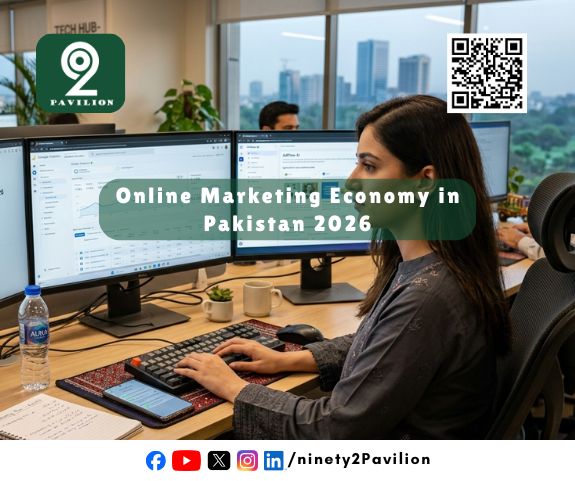
In the current business landscape of April 2026, online marketing in Pakistan has transitioned from an optional promotional tool into the primary lifeblood of the national economy. As traditional brick-and-mortar retail faces the dual pressures of rising operational costs and a rapidly digitizing consumer base, the “Digital First” mandate has taken hold across every major urban center from Karachi to Peshawar. The running business situation in Pakistan is characterized by a massive migration of advertising capital away from legacy media like television and billboards toward highly targeted, performance-driven digital ecosystems. For an online marketer in 2026, the path to monetization is no longer just about managing social media pages; it is about acting as a high-level growth architect who integrates artificial intelligence, data analytics, and cross-platform storytelling to drive measurable revenue for local and international brands.
To earn money in this environment, Pakistani marketers have moved into specialized, high-margin services such as “Performance-Based Arbitrage” and “Full-Funnel CRO” (Conversion Rate Optimization). Local startups and established textile giants alike are now willing to pay a premium for experts who can lower their Customer Acquisition Cost (CAC) while increasing the Lifetime Value (LTV) of their mobile-first audience. This shift has allowed savvy marketing agencies in Pakistan to move away from low-cost labor models toward “Value-Based Retainers,” where they earn a percentage of the total sales generated through their digital campaigns. Furthermore, with the Pakistani freelance community now exceeding three million active contributors, the competition has birthed a new class of “Micro-Agencies” that specialize in niche markets like Amazon FBA management for Pakistani exporters or TikTok-driven “Social Commerce” for local fashion brands.
The 2026 landscape is also heavily defined by the rise of “Localized AI Marketing.” Successful practitioners are using generative AI to create high-velocity content that resonates specifically with the Pakistani demographic, utilizing Roman Urdu and regional cultural cues to build trust. This cultural nuance is a significant competitive advantage that AI cannot yet fully replicate without human guidance. Marketers are earning substantial income by offering “AI-Integrated Strategy” packages, where they help traditional businesses automate their customer service via intelligent chatbots while simultaneously running hyper-personalized email and WhatsApp marketing campaigns. The integration of WhatsApp Business as a primary closing channel in Pakistan has created a unique “Chat-to-Conversion” revenue model, where marketers are paid based on the volume of qualified leads they funnel into private sales groups.
Furthermore, the “Dollar-Earning” potential remains the cornerstone of the industry’s appeal. By offering SEO, Programmatic Advertising, and Influencer Management to clients in the Middle East, Europe, and North America, Pakistani digital marketers are acting as “Service Exporters.” This allows them to capitalize on the currency exchange gap, maintaining a high-standard lifestyle locally while charging competitive international rates. To stay profitable in the current fiscal climate, professionals are also diversifying into “Affiliate Media Buying,” where they use their own capital to run ads for global products, earning commissions in USD. In summary, the online marketing business in Pakistan in 2026 is a mature, technical, and highly resilient field. It rewards those who view marketing as a science rather than an art, proving that in an era of digital saturation, the ability to capture attention and convert it into commerce is the most valuable skill set in the Pakistani professional arsenal