By: News Desk 92Pavilion
As of April 2026, the agricultural sector in Pakistan is undergoing a profound structural evolution, moving from traditional manual practices toward a data-driven “Precision Agriculture” model. In a country where agriculture contributes approximately 23% to the GDP and employs nearly 37% of the labor force, the running business situation is defined by an urgent need to mitigate the impacts of climate volatility and resource scarcity. The AgriTech landscape has matured significantly this year, with a surge in private equity investment and a massive push toward digitizing the rural supply chain. For an entrepreneur or investor in the 2026 Pakistani AgriTech space, the path to earning money is no longer just about selling hardware; it is about acting as a “Yield Architect” who provides actionable insights to a farming community that is increasingly mobile-first and tech-aware.
Monetization in the 2026 AgriTech sector is primarily driven by three core pillars: Data-as-a-Service (DaaS), Smart Infrastructure Leasing, and Direct-to-Consumer (D2C) Supply Chain Optimization. The primary revenue engine currently is the deployment of IoT (Internet of Things) sensors and satellite imagery analytics. To earn money in this space, AgriTech firms provide farmers with real-time data on soil moisture, nutrient levels, and pest movement via Urdu-language mobile apps. These services are often sold as “Subscription-Based Farm Management,” where a farmer pays a monthly or seasonal fee to receive precision irrigation schedules and weather alerts that can reduce input costs by up to 30%. This model is particularly lucrative for “Corporate Farming” projects in Punjab and Sindh, where large-scale operations are willing to pay a premium for data that ensures export-quality yields.
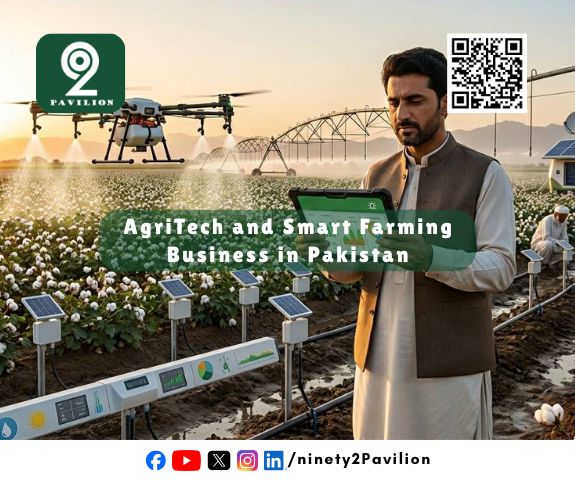
The “Equipment-as-a-Service” (EaaS) model has also emerged as a dominant force in the 2026 business landscape. Given the high cost of imported smart machinery, local startups are earning substantial income by leasing out drone-based crop spraying systems and autonomous tractors. Drones, in particular, have become a cornerstone of the industry this month, following the relaxation of flight regulations for agricultural use. AgriTech providers earn by charging “Per-Acre Fees” for aerial mapping and localized pesticide application, which is faster and more efficient than traditional methods. By lowering the barrier to entry for high-tech tools, these firms are capturing a massive market of small-to-medium-scale farmers who previously could not afford such technology.
Furthermore, the “Fintech-Agri Integration” has created a new front for profit. In 2026, AgriTech firms are partnering with banks to provide “Digital Credit Scoring” for farmers. By using historical yield data and satellite verification of crops as collateral, these platforms earn commissions on loan disbursements and insurance premiums. This has solved the long-standing liquidity crisis in rural Pakistan, allowing farmers to invest in better seeds and tech while providing the AgriTech firms with a recurring, commission-based revenue stream. Simultaneously, supply chain startups are earning money by “Disintermediating the Mandi,” using digital marketplaces to connect farmers directly with urban retailers and exporters. By taking a small percentage of the transaction, these platforms increase the farmer’s profit while ensuring fresh, traceable produce for the consumer.
To stay profitable in the current year, successful AgriTech leaders are focusing on “Local Adaptation.” Since generic global models often fail in the local context, firms that customize their AI algorithms for Pakistani soil types and crop varieties (like Basmati rice and high-yield cotton) are winning the market. In summary, the AgriTech and smart farming business in Pakistan in 2026 is a high-growth, essential industry. It rewards those who can bridge the gap between high-tech software and the practical realities of the field, proving that as the nation seeks food security, the ability to grow more with less through technology has become the most valuable asset in the Pakistani professional arsenal