Latest Posts
Building a Vibrant Cultural FutureA Journey Towards ProsperityArab nations face an inevitable declineBlogging Revenue in Pakistan’s 2026 EconomyWhy China is Investing in Pakistan’s Gwadar PortThe Rising Spirit of Pakistani SportsVoice-Over Economy in Pakistan 2026India’s Investment in Iran,Chabahar PortEvent Management Business in Pakistan 2026The Volatile Trajectory of Pakistan-Afghanistan Relations in 2026Why Pakistan Must Overhaul Its InfrastructureEvolution of Goods and Equipment in Modern SportsThe Current Situation of Sports in PakistanGovernment Initiatives for Sports in PakistanAssessing Sports Infrastructure and Facilities in PakistanSialkot and the Renaissance of Pakistan’s Sports Goods IndustryEmerging Sports Trends in 2026Legacy of Popular Traditional SportsJourney Through the Background of Sports in PakistanInfrastructure and Framework Deficits in Pakistani Sports InstitutionsLevelling the Field of SportsThe Roadmap for Pakistan’s Islamic Financial TransitionApartheid Structure in Occupied KashmirThe Strategic Role of the SCO in 2026Complexities of Illegal Immigrant RepatriationPakistan’s Strategic Role in Regional Power DynamicsPakistan’s Strategic Role in the South Asian Power PlayPakistan’s Strategic Tightrope in the US-China RivalryPakistan-China Relations in a Changing Geopolitical EnvironmentForeign Relation of Pakistan with Neighboring CountriesGlobal Response and the Reshaping World Order in 2026Impacts of International Structure on Pakistan’s Foreign PolicyEnduring Conflict Between India and PakistanAncient Roman and Modern EntertainmentCultivating Pakistan’s Future Tech WorkforceBuilding, Champions of the WorldDeciphering the Boundary Between Art and EntertainmentDevelopment of Pakistan’s Entertainment Industry

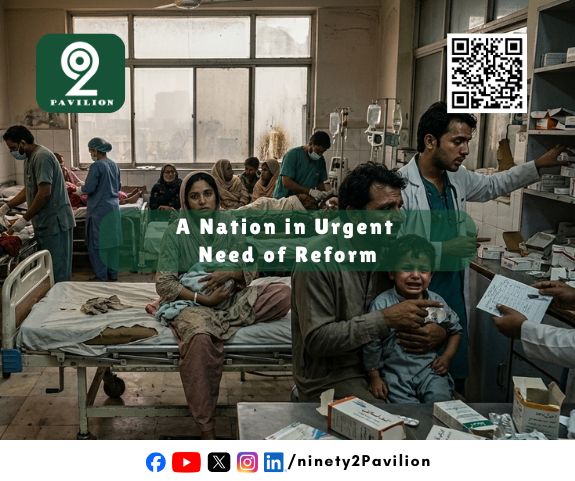
A Nation in Urgent Need of Reform in Health

A Nation in Urgent Need of Reform in Health

By: News Desk 92Pavilion

Pakistan’s healthcare system is facing one of the most severe crises in its history. The latest Health of the Nation 2026 report by the Pakistan Medical Association (PMA) paints a grim picture of a country where preventable diseases, unsafe water, medicine shortages, and environmental hazards are pushing public health to the edge of collapse. The PMA has gone so far as to call for a national health emergency, stressing that without immediate action, millions more lives will remain at risk.

Every day, 675 newborns and 27 mothers die from avoidable causes — a staggering reflection of systemic neglect and a failing health infrastructure. Poor-quality and contaminated water contributes to about 40 percent of annual deaths and causes nearly 30 percent of all reported illnesses. Diarrheal diseases remain the leading cause of child mortality, with one in five Pakistanis suffering from a water-related illness. These numbers underscore a basic governance failure to ensure clean water — the foundation of public health dawn.com pakistan.shafaqna.com.

The country is also battling an alarming rise in drug-resistant infections. Extensively drug-resistant (X-DR) typhoid has emerged in Karachi and Sindh due to unsafe water and unregulated antibiotic use. Meanwhile, new HIV infections have surged by 200 percent in the past 15 years, making Pakistan home to one of the fastest-growing HIV epidemics in the WHO Eastern Mediterranean Region. Many of these infections are linked to unsafe injections and contaminated medical practices — signifying systemic failures in both regulation and awareness dawn.com.

Adding to the crisis is the acute shortage of essential medicines, including treatments for tuberculosis, cancer, and diabetes. Patients are increasingly forced to rely on smuggled or counterfeit drugs, risking their safety and survival. The PMA warns that these shortages stem from regulatory negligence, supply chain breakdowns, and the deregulation of pharmaceutical pricing in recent years dawn.com.

Environmental degradation has made the situation even worse. Toxic air pollution and contaminated groundwater have been linked to rising cases of renal diseases. According to recent PMA estimates, Pakistan may see up to 50,000 new end-stage kidney failure cases this year alone, mostly caused by heavy metal–laden water dawn.com.

In summary, Pakistan’s health emergency is the result of overlapping crises: institutional neglect, unsafe environments, insufficient health funding, and lack of accountability. The PMA urges the government to raise health spending to at least 3 percent of GDP, enforce water safety, freeze prices of life-saving drugs, and restore medicine supplies immediately.

Without these urgent reforms, Pakistan risks not only a humanitarian catastrophe but also the collapse of trust in one of the most crucial pillars of national stability — its public health system


Share

Introduction

Pakistan’s political environment in 2026 remains dynamic and highly influential in shaping the country’s future. From parliamentary debates and economic policy decisions to opposition movements and electoral reforms, recent developments are playing a crucial role in determining national direction.

In this report by Eye of Pakistan, we analyze the latest political developments, government strategies, and opposition responses.

Government’s Policy Priorities in 2026

The federal government has emphasized:

  • Economic stabilization

  • Institutional reforms

  • Energy sector restructuring

  • Strengthening foreign diplomatic ties

Recent cabinet meetings focused on controlling inflation, stabilizing the Pakistani Rupee, and implementing fiscal discipline under ongoing economic reform programs.

Officials claim these measures aim to restore investor confidence and ensure sustainable growth.

Opposition’s Response and Political Strategy

Major opposition parties have intensified criticism of government policies, particularly regarding:

  • Rising inflation

  • Unemployment

  • Tax reforms

  • Utility price increases

Opposition leaders argue that economic pressure on the public has increased and demand greater transparency in parliamentary proceedings.

Political rallies and public gatherings have increased across major cities including Karachi, Lahore, and Islamabad.

Parliamentary Developments

Recent National Assembly sessions have seen heated debates over:

  • Budget allocations

  • Electoral reforms

  • Accountability laws

  • Provincial autonomy issues

Lawmakers from both treasury and opposition benches continue to exchange strong viewpoints, reflecting a vibrant yet tense political atmosphere.

Election Reforms and Democratic Process

Discussions around electoral transparency and digital voting mechanisms remain central to political discourse.

The Election Commission is reportedly reviewing:

  • Voter verification systems

  • Polling station security

  • Overseas voting procedures

Analysts believe these reforms could significantly impact future general elections.

Public Reaction and Political Climate

Public opinion appears divided. While some citizens support structural reforms and long-term stabilization plans, others express concerns over economic hardships and governance challenges.

Political analysts suggest that the coming months will be critical in determining whether current policies translate into tangible relief for the public.

Conclusion

Pakistan’s political landscape in 2026 is marked by active debate, institutional reforms, and strategic maneuvering from both government and opposition parties. As policy decisions continue to unfold, their impact on economic stability and democratic processes will remain under close observation.

Stay connected with Eye of Pakistan for reliable and timely political updates.

Education in Pakistan 2026

By: News Desk 92Pavilion Education in Pakistan stands as a complex paradox of modest statistical gains and deep-rooted systemic crises. As of 2026, the national

Share
Read More »