By: News Desk 92Pavilion
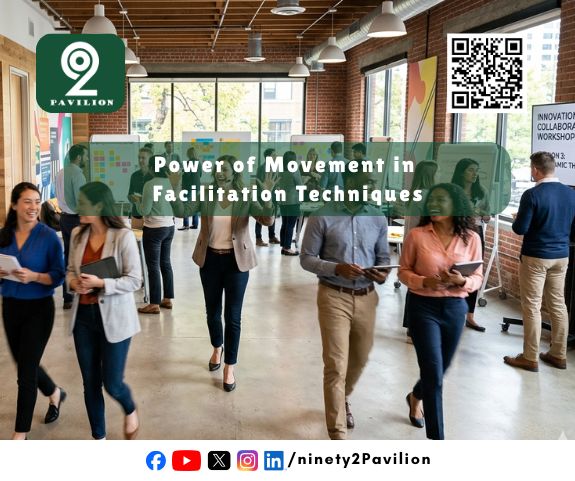
In the professional and educational landscapes of 2026, the traditional image of facilitation—a group of people seated in a semi-circle around a flipchart—is being rapidly replaced by a more dynamic, kinetic model. Facilitation techniques have evolved to recognize that the human brain does not function in isolation from the body. By integrating physical activity and fitness into the structural design of workshops, meetings, and training sessions, modern facilitators are unlocking higher levels of cognitive engagement, creative problem-solving, and group cohesion. This shift toward “Active Facilitation” treats movement not as a distraction from the work, but as a primary catalyst for performance and mental clarity.
The scientific foundation for this approach is robust. Physical activity stimulates the production of neurochemicals like dopamine and serotonin, which regulate mood and attention, while also increasing blood flow to the prefrontal cortex—the area of the brain responsible for executive function. In 2026, savvy facilitators use this to their advantage through “State Management.” If a group’s energy flags after a long session, instead of a standard coffee break, they might employ a five-minute “Facilitation Gym” segment—high-energy, low-impact movements designed to reset the participants’ neural pathways. These bursts of activity act as a cognitive “reboot,” ensuring that the group remains in an optimal state for absorbing complex information and making critical decisions.
Furthermore, physical activity serves as a powerful tool for breaking down social barriers and hierarchies. Traditional seated arrangements often reinforce power dynamics, but movement-based facilitation techniques, such as “Walk-and-Talk” sessions or “Standing Sprints,” level the playing field. When participants move together, they experience a phenomenon known as “social synchony,” which fosters a sense of unity and collective identity. In 2026, many corporate facilitators use “Proprioceptive Icebreakers”—activities that require physical coordination and partner work—to build immediate rapport and trust. These techniques move the group from a state of individual observation to one of active, embodied participation, making the collaborative process feel more intuitive and less forced.
The implementation of these techniques also addresses the global health imperative to reduce sedentary behavior. With “sitting disease” recognized as a significant organizational risk, active facilitation techniques demonstrate a commitment to participant well-being. Using “Standing Agendas” or rotating workstations that require physical movement between topics ensures that the body remains engaged alongside the mind. This holistic approach not only produces better immediate outcomes for the workshop but also models healthy professional habits that participants can take back to their daily routines. Ultimately, the integration of physical activity into facilitation in 2026 is about maximizing human potential. By getting participants out of their chairs and into their bodies, facilitators are transforming the workshop into a space where movement fuels ideas and fitness drives the future of work.