By: News Desk 92Pavilion | Updated: July 2026
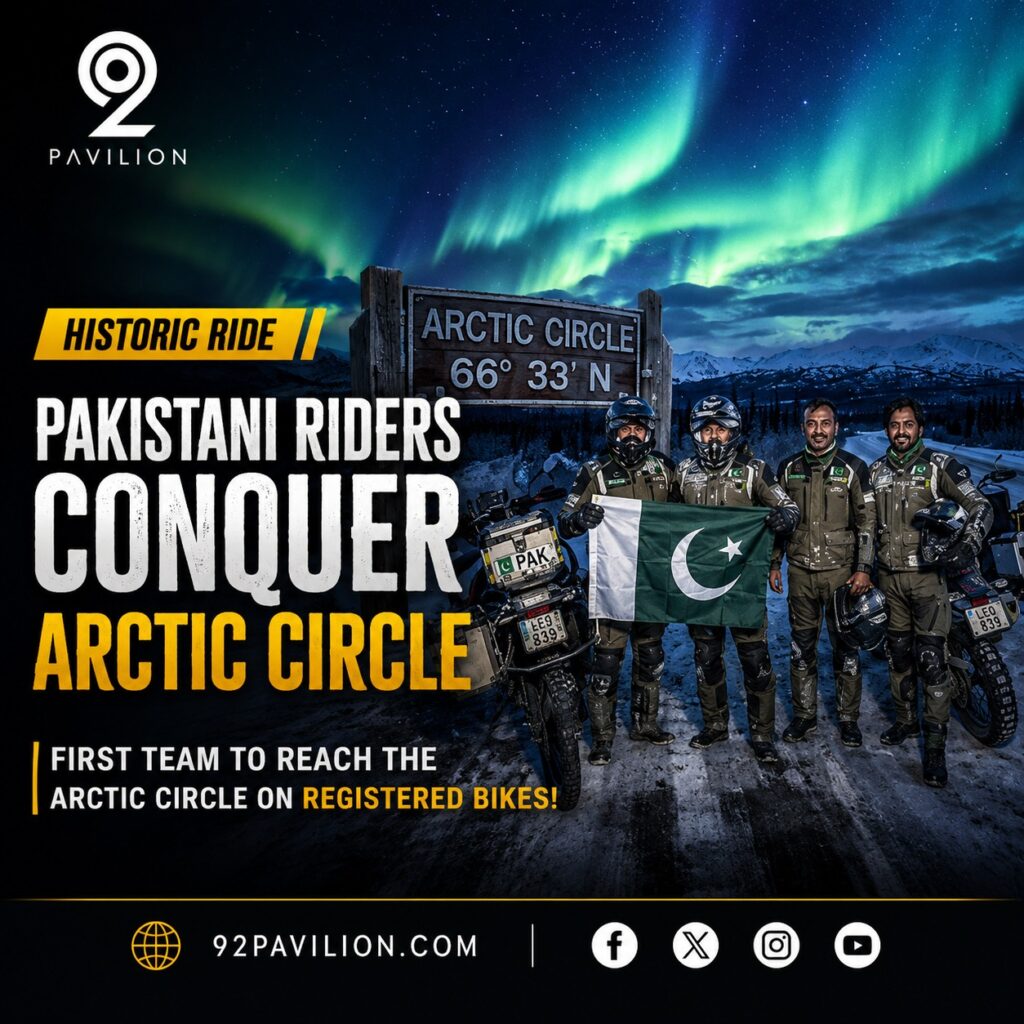
Quick Answer: Four Pakistani bikers reach Arctic Circle, becoming the first team known to complete the journey on Pakistan-registered motorcycles. The team, led by adventurer Shiraz Sami, arrived at Nordkapp in Norway after crossing multiple countries. The group included Sami’s 19-year-old son and two fellow riders.
A Journey Years in the Making
Shiraz Sami led the four-member team on this record-setting ride. Alongside him were his son, Abdullah Shiraz, and fellow riders Rashid Rafi and Fahad Bilal. Together, they rode thousands of kilometres from Pakistan, crossing deserts, mountain ranges, and international borders along the way.
Their final destination was Nordkapp, also known as North Cape. It sits at the northernmost point in mainland Europe reachable by road, in the Arctic region of Norway.
Why This Ride Stands Out
Adventure motorcycling from Pakistan isn’t new. But this trip carried a specific distinction. According to Sami, this is the first time a team has completed the journey to the Arctic Circle on motorcycles registered in Pakistan.
That detail matters to riders. Traveling on locally registered bikes, rather than rented or foreign-registered ones, adds a layer of difficulty. It means dealing with more paperwork, more scrutiny at borders, and more uncertainty along unfamiliar routes.
What the Ride Involved
Sami described the trip as far more than a simple road journey. Writing about the experience on social media, he said the team faced some of the toughest terrain in the world, from scorching deserts to freezing mountain passes.
He called it a symbol of courage, determination, and perseverance, one that tested the riders both physically and mentally over thousands of kilometres.
A Message Beyond the Miles
For Sami, the ride wasn’t just about reaching a destination. It was about proving what’s possible. His words after completing the journey carried that message clearly: as far as the team knows, they are the first Pakistani riders to make it to the Arctic Circle on their own registered motorcycles.
Stories like this tend to resonate beyond the biking community. They show a side of Pakistan often missing from global headlines, one built on ambition, endurance, and a willingness to take on the unknown.
What This Means for Pakistani Adventure Travel
Achievements like this often inspire others to attempt similar journeys. Pakistan has a small but growing community of long-distance riders and adventure travellers, and stories like Sami’s team add to a growing list of milestones achieved by Pakistani explorers around the world.
Whether this ride encourages more riders to attempt similar cross-continental trips remains to be seen. But for now, it stands as a new benchmark for Pakistani motorcycle expeditions.
Frequently Asked Questions
Who were the Pakistani bikers who reached the Arctic Circle?
The team included Shiraz Sami, his son Abdullah Shiraz, Rashid Rafi, and Fahad Bilal.
Where did the journey end?
At Nordkapp (North Cape) in Norway, the northernmost point in mainland Europe accessible by road.
What makes this journey historic?
It’s believed to be the first time a team has reached the Arctic Circle on motorcycles registered in Pakistan.
How long was the journey?
The team travelled thousands of kilometres, crossing multiple countries, deserts, and mountain ranges to complete the trip.
This report is based on statements from Shiraz Sami and reporting from ProPakistani, Samaa, and MM News.
92Pavilion celebrates the adventurers putting Pakistan on the map. Follow us for more inspiring stories.