By: 92Pavilion | Updated: September 3, 2026
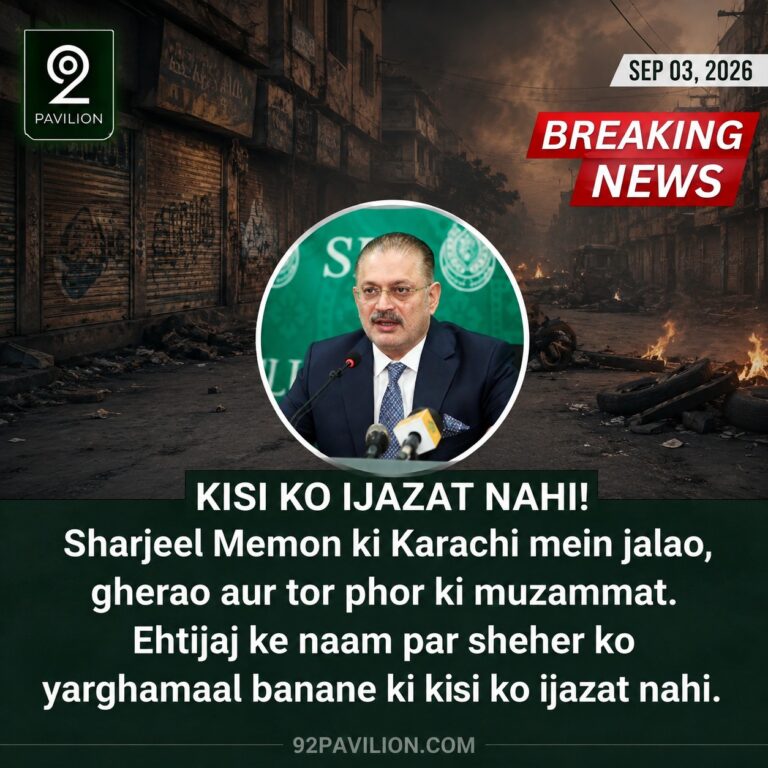
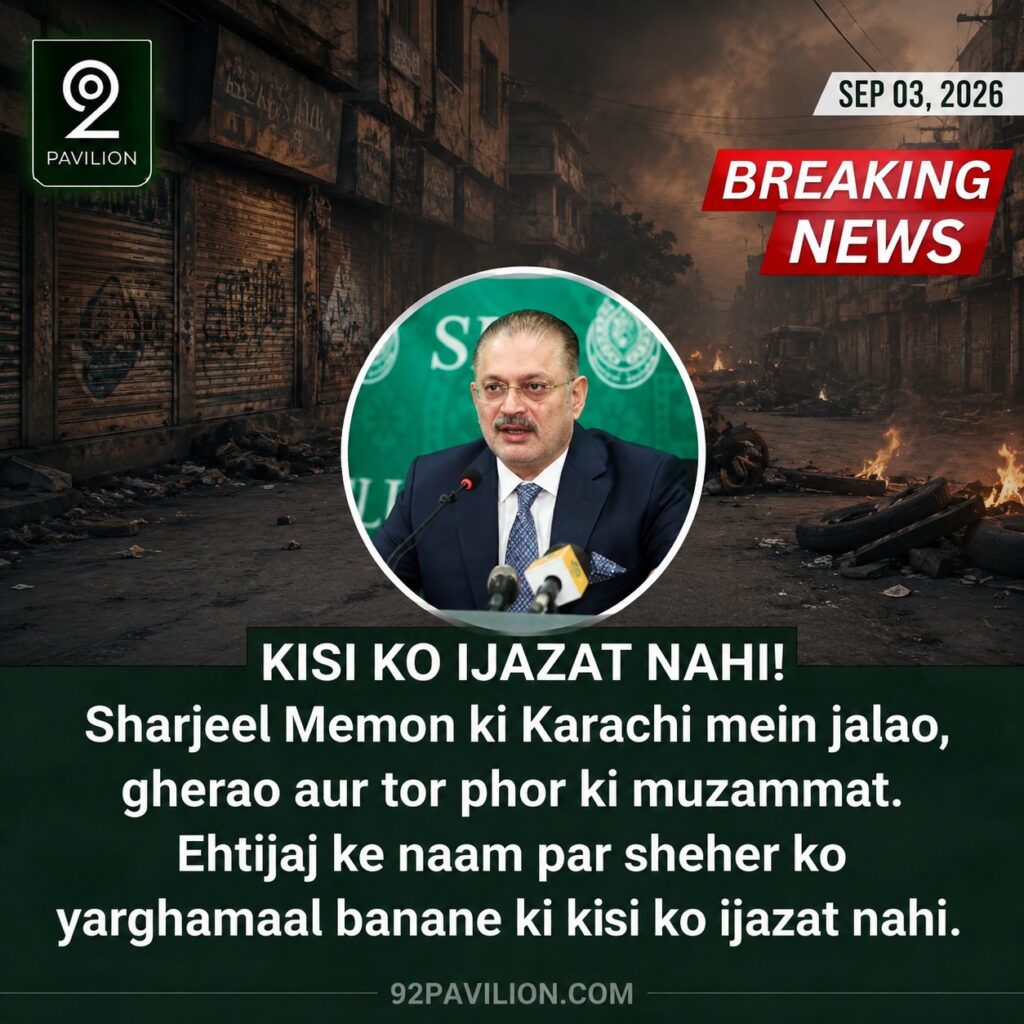
Quick Answer: Sindh Senior Minister Sharjeel Memon has strongly condemned reports of arson, road blockades, and property damage in Karachi during a nationwide shutter-down strike called by Jamaat-e-Islami (JI) against the petroleum levy. He warned that while JI has the right to protest, no one would be allowed to disrupt the city’s peace or challenge the writ of the state.
What Sharjeel Memon Said
In a statement, Memon said making people’s lives difficult and creating unrest in Karachi for political purposes was deeply regrettable. He acknowledged that Jamaat-e-Islami had the full right to protest but stressed that disruptive elements could not be allowed to damage public property.
He added that anyone found setting fires, blocking roads, or damaging property would be brought before the law, and that attempts to hold Karachi hostage in the name of protest would not be allowed to succeed. Memon said spreading fear among citizens under the cover of a demonstration was not peaceful protest but a direct challenge to the law.
Context: The Nationwide Petroleum Levy Strike
The warning came as a nationwide shutter-down strike, called by Jamaat-e-Islami against inflation, unemployment, and the petroleum levy, brought commercial activity to a halt in several cities across Sindh. Markets remained closed in multiple locations, with JI workers patrolling streets and appealing to traders to support the protest.
In Kashmore, business centres stayed shut as JI workers moved through the city, while in Mirpurkhas, major commercial areas including Khasakpura, Station Road, and Shahi Bazaar closed their shutters. JI also held a motorcycle rally in Mirpurkhas, urging traders to observe a peaceful strike.
Background on JI’s Demands
JI has been protesting for weeks against the government’s petroleum levy, which currently stands at Rs80 per litre on petrol and Rs77.28 per litre on diesel, part of overall fuel taxes of Rs114 per litre on petrol. The party argues the levy has driven up prices across the economy and has demanded its complete withdrawal.
JI chief Hafiz Naeem ur Rehman has said the protest campaign, which included sit-ins in multiple major cities, would continue until the government agreed to abolish the levy, and previously announced plans for further shutter-down strikes and a potential march toward Islamabad if demands were not met.
The Government’s Position
The Sindh government has said it recognises JI’s right to protest but insists that public order and property must be protected throughout. Officials have pointed to the traffic disruptions and closures affecting daily life in Karachi as justification for firmer enforcement against any vandalism or road blockades linked to the demonstrations.
Why This Standoff Matters
The exchange between Sindh’s government and JI reflects a broader tension in Pakistan between the right to peaceful protest and the state’s responsibility to maintain public order, particularly in Karachi, a city with a history of unrest linked to political demonstrations. How this standoff is managed could shape the tone of future protest movements against economic policies in the province.
Frequently Asked Questions
What did Sharjeel Memon warn against?
He warned that no one would be allowed to disrupt Karachi’s peace or damage public property under the cover of protest.
Why is Jamaat-e-Islami protesting?
The party is demanding the complete withdrawal of the government’s petroleum levy, which it says has driven up prices across the economy.
Which areas of Sindh were affected by the strike?
Markets closed in parts of Karachi, along with Kashmore and Mirpurkhas, where commercial areas shut down in support of the protest.
Has the government responded to JI’s demands?
Officials have said any reduction in the levy is unlikely to win IMF approval without identifying alternative revenue sources.
This report is based on statements from Sindh Senior Minister Sharjeel Memon and Jamaat-e-Islami leadership, with reporting from Aaj English, The Frontier Post, Arab News, and Business Recorder.
92Pavilion brings you timely, verified updates on Pakistan and the region. Stay with us for continued coverage.