By: News Desk 92Pavilion
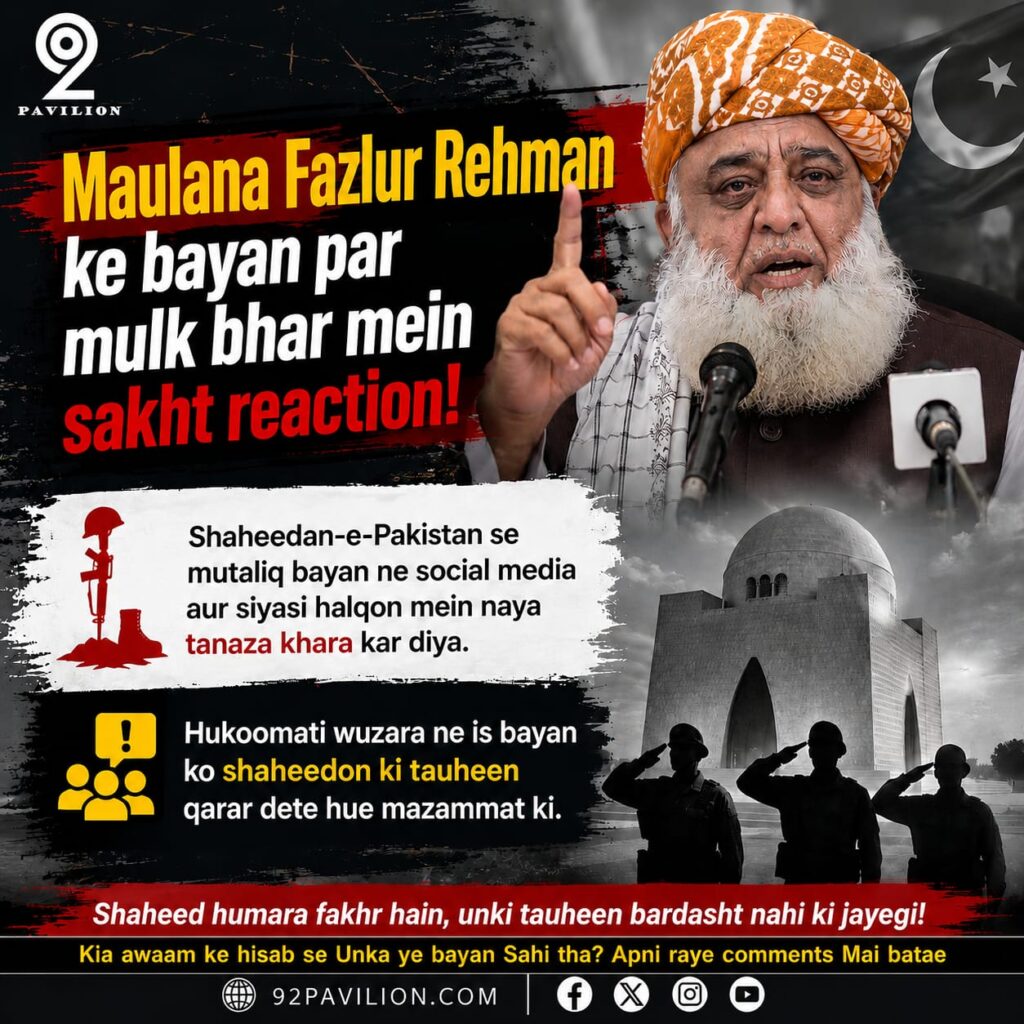
Kasur/Islamabad: JUI-F chief Maulana Fazlur Rehman has triggered a major political storm after remarks he made about Pakistan’s martyrs during a public rally. His comments sparked sharp criticism across social media and political circles nationwide.
What He Said
Fazlur Rehman addressed the security situation in Khyber Pakhtunkhwa and Balochistan during a gathering in Kasur, Punjab. While speaking, he said soldiers martyred in the line of duty were essentially salaried employees assigned to defend the country. He also remarked that every institution operates within its own defined mandate. As a result, his comments were widely interpreted as linking soldiers’ sacrifices to their salaries.
Government’s Reaction
The backlash from government ministers came swiftly. Defence Minister Khawaja Asif expressed disappointment, calling the remarks “unfair” and “morally insensitive.” He said no one sacrifices their life merely for a paycheque, but rather out of faith, ideology, and love for the homeland. Asif added that the comments hurt the sentiments of martyrs’ families, including widows and orphaned children.
Railways Minister Hanif Abbasi also condemned the statement strongly. He said Fazlur Rehman had hurt the sentiments of the entire nation, noting that Pakistan’s army has remained engaged in continuous conflict for 35 years. Similarly, Planning Minister Ahsan Iqbal called the remarks inconsistent with Islamic teachings and moral values.
Furthermore, Punjab Assembly Speaker Malik Muhammad Ahmad Khan demanded a public apology. He stressed that the sacrifices of Pakistan’s armed forces remain the nation’s pride and cannot be undermined under any circumstances. Minister of State Aun Chaudhry echoed this demand, urging Fazlur Rehman to apologise to both the nation and martyrs’ families.
JUI-F’s Response
JUI-F later issued a clarification, stating that Fazlur Rehman’s remarks had been misinterpreted. According to the party, his intention was never to insult the nation’s martyrs. Following this clarification, the Karachi Bar Association withdrew its earlier condemnation of the statement.
Meanwhile, religious scholar Maulana Tahir Ashrafi apologised on behalf of the controversy during a press conference in Karachi alongside Sindh Chief Minister Murad Ali Shah. He said the statements had caused immense pain to martyrs’ families.
Legal Action Begins
The controversy has also moved into Pakistan’s courts. Petitions seeking criminal cases against Fazlur Rehman have been filed in multiple districts across Punjab, including Lahore and Gujranwala. In one such case, a Lahore sessions court sought a written response from the National Cyber Crime Investigation Agency (NCCIA) and adjourned the hearing until August 17.
Petitioners argue that the speech, which circulated widely on social media, contained derogatory remarks about martyrs and deeply hurt public sentiment.
Political Fallout Continues
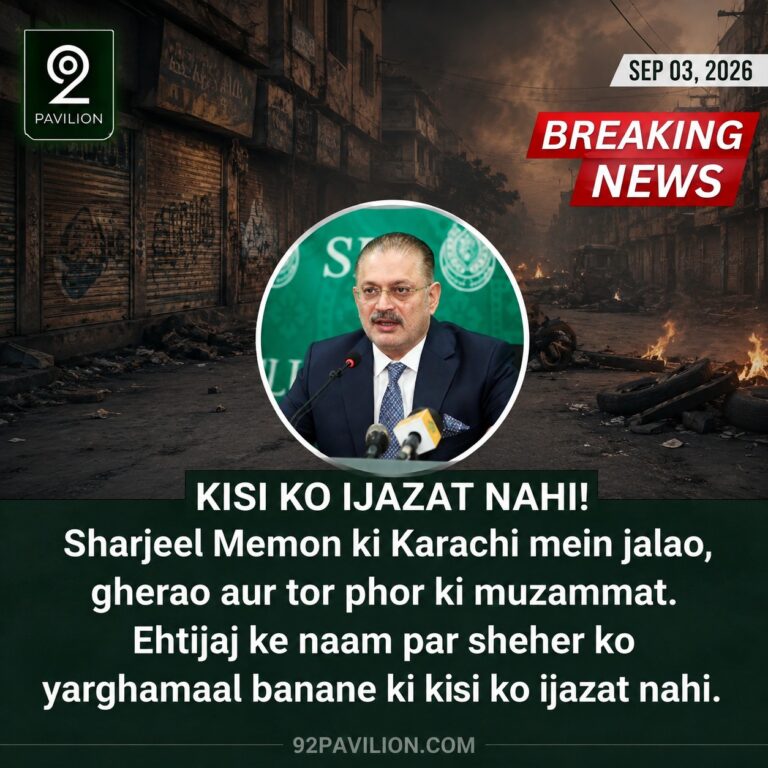
The row has since gathered significant political momentum. The Punjab Assembly adopted resolutions supporting the armed forces, while senior government officials continue to publicly condemn the remarks. Sindh Senior Minister Sharjeel Inam Memon urged Fazlur Rehman to withdraw his statement entirely, saying it sent the wrong message at a time when national unity matters most.
What Happens Next
With court proceedings underway and political pressure mounting, all eyes remain on whether Fazlur Rehman will formally clarify or apologise for his remarks. The NCCIA’s response, due by mid-August, will likely determine whether the controversy escalates into formal legal action.
FAQs
What did Maulana Fazlur Rehman say?
He said soldiers martyred in the line of duty were salaried employees assigned to defend the country, remarks widely seen as linking martyrdom to salary.
Why are ministers criticising him?
Government ministers, including Khawaja Asif and Hanif Abbasi, say the remarks disrespect the sacrifices of Pakistan’s martyrs and hurt their families’ sentiments.
Has JUI-F responded?
Yes. JUI-F issued a clarification stating the remarks were misinterpreted and that insulting martyrs was never Fazlur Rehman’s intention.
Is legal action being taken?
Yes. Petitions seeking criminal cases against Fazlur Rehman have been filed in courts across Punjab, with a Lahore court seeking a response from the NCCIA by August 17.
Has Fazlur Rehman apologised?
As of the latest reports, Fazlur Rehman has not issued a personal apology, though JUI-F has clarified his intent.