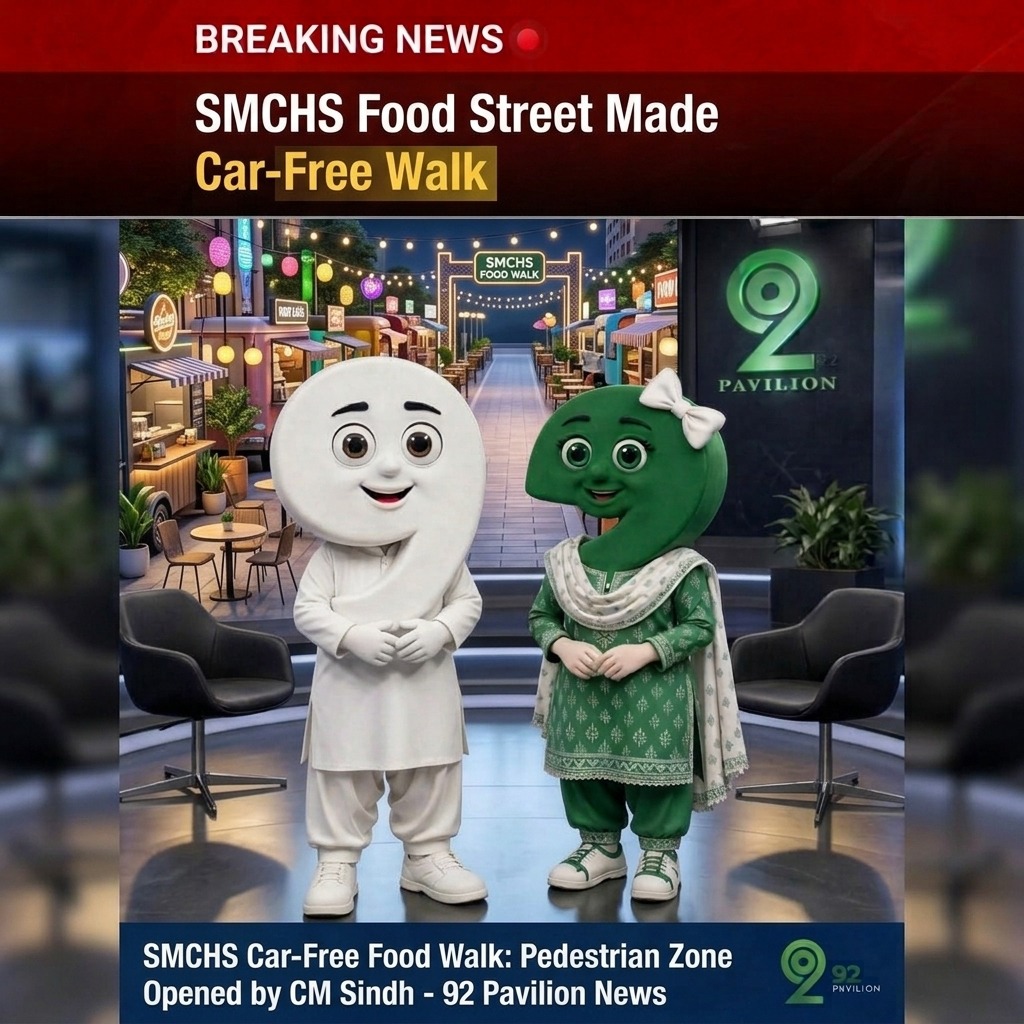
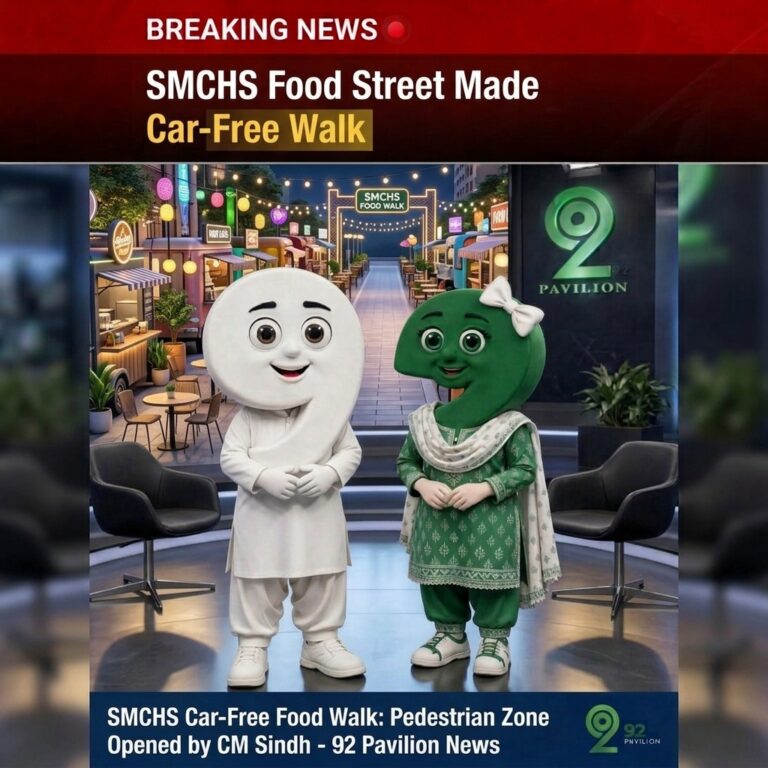
KARACHI — The traditional food street in the Sindhi Muslim Cooperative Housing Society (SMCHS) has officially been transformed into a modern, pedestrian-friendly food walk following an inauguration by Sindh Chief Minister Syed Murad Ali Shah on Monday.
The redevelopment project marks a major milestone in urban revitalization for the city, aiming to provide a safer, cleaner, and more welcoming environment for Karachi’s food enthusiasts. To facilitate families and reduce traffic congestion, the local administration has announced a strict ban on regular vehicles entering the food walk zone between 6:00 PM and 2:00 AM daily.
During the launch event, senior provincial officials highlighted that the car-free zone will encourage a vibrant outdoor dining culture while tackling parking issues through dedicated nearby parking lots. Local restaurant owners and visitors have widely welcomed the initiative, hoping it sets a blueprint for other crowded commercial hubs across the metropolis.
Introduction
Pakistan’s political environment in 2026 remains dynamic and highly influential in shaping the country’s future. From parliamentary debates and economic policy decisions to opposition movements and electoral reforms, recent developments are playing a crucial role in determining national direction.
In this report by Eye of Pakistan, we analyze the latest political developments, government strategies, and opposition responses.
Government’s Policy Priorities in 2026
The federal government has emphasized:
Recent cabinet meetings focused on controlling inflation, stabilizing the Pakistani Rupee, and implementing fiscal discipline under ongoing economic reform programs.
Officials claim these measures aim to restore investor confidence and ensure sustainable growth.
Opposition’s Response and Political Strategy
Major opposition parties have intensified criticism of government policies, particularly regarding:
Rising inflation
Unemployment
Tax reforms
Utility price increases
Opposition leaders argue that economic pressure on the public has increased and demand greater transparency in parliamentary proceedings.
Political rallies and public gatherings have increased across major cities including Karachi, Lahore, and Islamabad.
Parliamentary Developments
Recent National Assembly sessions have seen heated debates over:
Lawmakers from both treasury and opposition benches continue to exchange strong viewpoints, reflecting a vibrant yet tense political atmosphere.
Election Reforms and Democratic Process
Discussions around electoral transparency and digital voting mechanisms remain central to political discourse.
The Election Commission is reportedly reviewing:
Analysts believe these reforms could significantly impact future general elections.
Public Reaction and Political Climate
Public opinion appears divided. While some citizens support structural reforms and long-term stabilization plans, others express concerns over economic hardships and governance challenges.
Political analysts suggest that the coming months will be critical in determining whether current policies translate into tangible relief for the public.
Conclusion
Pakistan’s political landscape in 2026 is marked by active debate, institutional reforms, and strategic maneuvering from both government and opposition parties. As policy decisions continue to unfold, their impact on economic stability and democratic processes will remain under close observation.
Stay connected with Eye of Pakistan for reliable and timely political updates.