
Latest Posts
Loading latest posts…

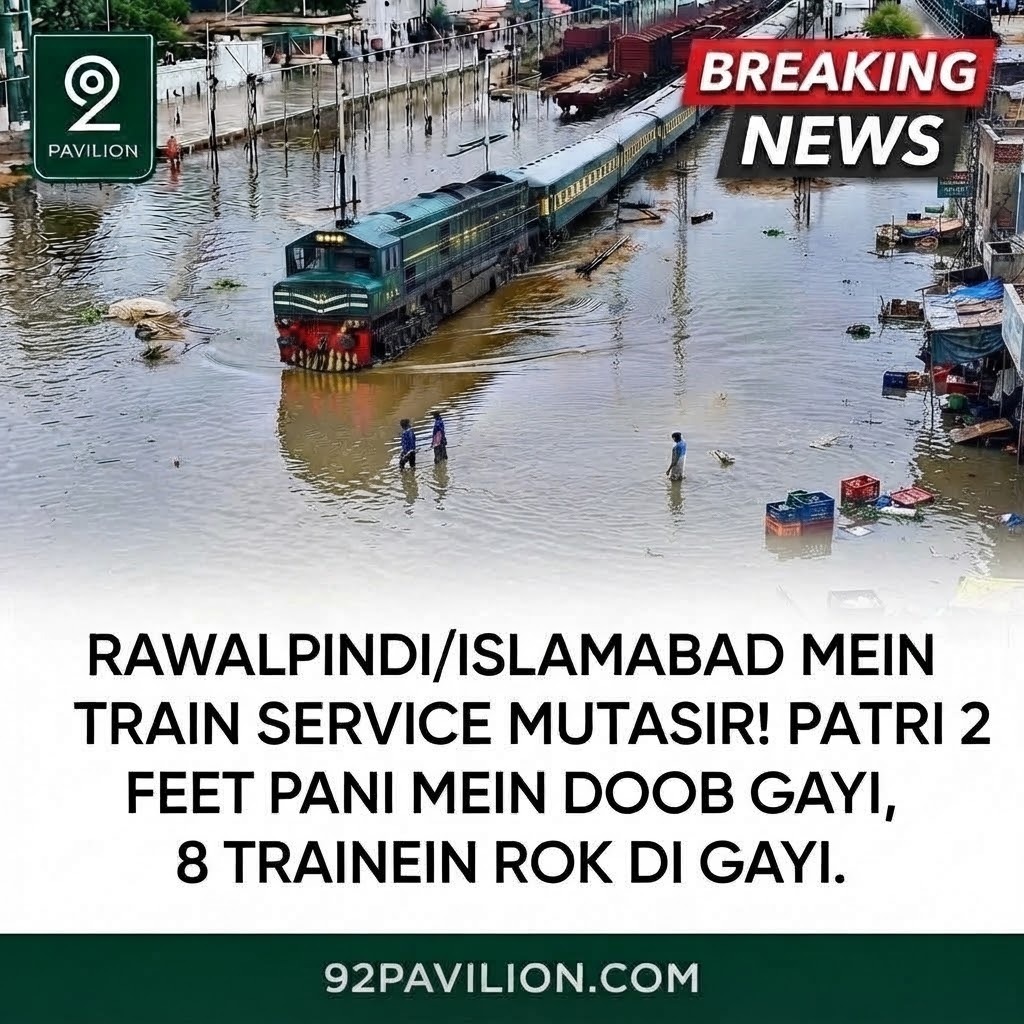
Rawalpindi-Islamabad Train Service Disrupted as Track Floods, 8 Trains Halted

Submerged railway track in Rawalpindi causing train service disruption

Rawalpindi-Islamabad Train Service Disrupted as Track Floods, 8 Trains Halted

Quick Answer: Torrential monsoon rains submerged the Manikyala-Sihala railway track near Rawalpindi under nearly two feet of water, forcing Pakistan Railways to suspend operations and hold eight trains bound for Lahore, Multan, Quetta, and Karachi. Passengers were stranded for six to eight hours.

What Happened

Heavy rain for the fourth consecutive day inundated railway tracks in Rawalpindi and Islamabad, disrupting train operations across the twin cities. The worst-hit section, Manikyala-Sihala, was submerged under close to two feet of water, prompting railway authorities to suspend operations on the route between 6am and 5pm until floodwater receded.

Trains arriving from both Lahore and Karachi were also stopped from entering the affected section as a safety precaution.

Trains and Passengers Affected

  • Eight trains halted, including Pakistan Express, Khyber Mail, Rehman Baba, Tezgam, and two Rawalpindi–Lahore railcars.
  • Affected trains were held at Chaklala Railway Station while the track was cleared.
  • Passengers remained stranded for six to eight hours, with some staging protests over the lack of food and basic facilities during the delay.
  • Once services resumed, railway officials declared the Manikyala-Sihala section “highly hazardous” and restricted train speeds to just 10–15 km/h as a precaution.

Why the Track Flooded

Rawalpindi experienced its fourth straight day of heavy rainfall, with several low-lying areas already inundated before the railway disruption. The Water and Sanitation Agency (WASA) Rawalpindi declared a rain emergency and deployed staff and heavy machinery to critical points across the city, including Gawalmandi, Liaquat Bagh, Committee Chowk Underpass, Murree Road, and Sadiqabad, to manage drainage.

What Railway Authorities Are Doing

  • Operations on the Manikyala-Sihala section will only fully normalize once the track is officially declared clear of water damage.
  • Speed restrictions remain in place on the affected stretch to prevent derailment risk on the waterlogged and potentially weakened track bed.
  • Passengers have been advised to check with their nearest railway station or the Pakistan Railways helpline before travelling during ongoing monsoon spells.

FAQs

Q: Which trains were affected by the Rawalpindi track flooding?

Pakistan Express, Khyber Mail, Rehman Baba, Tezgam, and two Rawalpindi-Lahore railcars were held at Chaklala Railway Station.

Q: How long were train services suspended?

Operations were suspended from 6am to 5pm on the affected section, though passengers faced delays of six to eight hours in total.

Q: Is it safe to travel by train in Rawalpindi during monsoon season?

Pakistan Railways has imposed reduced speed limits (10-15 km/h) on vulnerable sections as a precaution. Travellers should confirm train status before heading to the station during heavy rain spells.

Q: What caused the flooding on the railway track?

Four consecutive days of heavy monsoon rain caused the Manikyala-Sihala section to be submerged under nearly two feet of water.

This report is based on statements from Pakistan Railways and WASA Rawalpindi officials. Updated as new information on train schedules becomes available.


Share

Introduction

Pakistan’s political environment in 2026 remains dynamic and highly influential in shaping the country’s future. From parliamentary debates and economic policy decisions to opposition movements and electoral reforms, recent developments are playing a crucial role in determining national direction.

In this report by Eye of Pakistan, we analyze the latest political developments, government strategies, and opposition responses.

Government’s Policy Priorities in 2026

The federal government has emphasized:

  • Economic stabilization

  • Institutional reforms

  • Energy sector restructuring

  • Strengthening foreign diplomatic ties

Recent cabinet meetings focused on controlling inflation, stabilizing the Pakistani Rupee, and implementing fiscal discipline under ongoing economic reform programs.

Officials claim these measures aim to restore investor confidence and ensure sustainable growth.

Opposition’s Response and Political Strategy

Major opposition parties have intensified criticism of government policies, particularly regarding:

  • Rising inflation

  • Unemployment

  • Tax reforms

  • Utility price increases

Opposition leaders argue that economic pressure on the public has increased and demand greater transparency in parliamentary proceedings.

Political rallies and public gatherings have increased across major cities including Karachi, Lahore, and Islamabad.

Parliamentary Developments

Recent National Assembly sessions have seen heated debates over:

  • Budget allocations

  • Electoral reforms

  • Accountability laws

  • Provincial autonomy issues

Lawmakers from both treasury and opposition benches continue to exchange strong viewpoints, reflecting a vibrant yet tense political atmosphere.

Election Reforms and Democratic Process

Discussions around electoral transparency and digital voting mechanisms remain central to political discourse.

The Election Commission is reportedly reviewing:

  • Voter verification systems

  • Polling station security

  • Overseas voting procedures

Analysts believe these reforms could significantly impact future general elections.

Public Reaction and Political Climate

Public opinion appears divided. While some citizens support structural reforms and long-term stabilization plans, others express concerns over economic hardships and governance challenges.

Political analysts suggest that the coming months will be critical in determining whether current policies translate into tangible relief for the public.

Conclusion

Pakistan’s political landscape in 2026 is marked by active debate, institutional reforms, and strategic maneuvering from both government and opposition parties. As policy decisions continue to unfold, their impact on economic stability and democratic processes will remain under close observation.

Stay connected with Eye of Pakistan for reliable and timely political updates.