By: News Desk 92Pavilion | Updated: July 2026
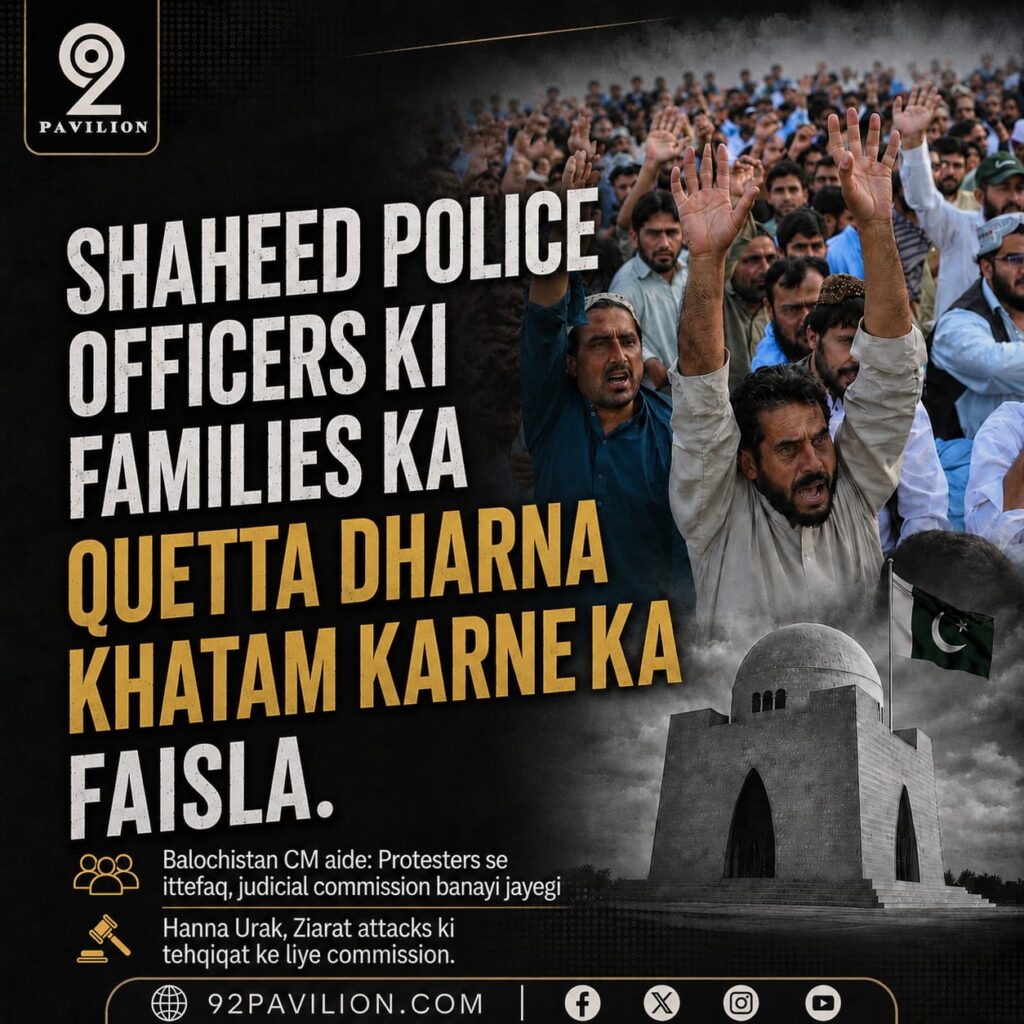
Quick Answer: The Quetta dharna ends after ten days, as families of martyred police officers reached a deal with the Balochistan government. Officials agreed to form a judicial commission. It will probe the deadly Ziarat and Hanna Urak attacks. The agreement was signed on July 18, 2026.
What Sparked the Protest
The sit-in began after two brutal attacks in early July. On July 5, armed men struck the Hanna Urak Valley near Quetta. Five tribesmen were killed. Eight others were injured. Eleven people were abducted.
A day later, terrorists hit a police post in Ziarat. Nine officers were killed on the spot. Eighteen more were killed after being kidnapped. In total, the two attacks claimed 32 lives.
Families Held Their Ground for Days
Grieving families refused to bury their loved ones right away. They held a sit-in at Quetta’s Koyila Phatak, now renamed Shuhada-i-Ziarat Chowk. They kept the bodies with them throughout the protest.
Their main demand was simple. They wanted an independent investigation into both attacks. Political parties and trade groups soon joined their cause. A province-wide shutter-down strike followed, shutting markets across Balochistan.
The Government Responds
Home Minister Ziaullah Langove led talks on behalf of the government. After days of negotiation, both sides reached a written agreement. It was signed late on July 17.
Under the deal, a judicial commission will investigate the Ziarat and Hanna Urak attacks. The government also agreed to officially declare the victims as martyrs. Their families will receive compensation and support for children’s education.
Public buildings, including schools and hospitals, will be renamed after the martyrs. Police stations in the affected areas will also carry their names.
Operation Shaban and the Security Response
Security forces launched a major clearance operation following the attacks. It was named Operation Shaban. As of the agreement date, 91 terrorists had been killed in the operation.
The government also pledged to boost police capacity in Balochistan’s urban areas. This includes more manpower and better training for local forces.
A Final Farewell
After the deal was signed, the martyrs were laid to rest. Their bodies were taken from the sit-in site to a stadium in Quetta. Thousands attended the funeral prayers, including political leaders and tribal elders.
Security was tight throughout the ceremony. Police and paramilitary forces secured the area. Snipers were stationed on nearby rooftops. The bodies were later sent to their hometowns for burial with state honours.
Chief Minister’s Response
Balochistan Chief Minister Sarfraz Bugti confirmed the judicial commission’s formation days later. He met Pakistan Peoples Party chief Bilawal Bhutto-Zardari in Islamabad to discuss the situation.
Bugti said he personally worked to console the bereaved families. He credited dialogue with resolving the standoff peacefully.
Frequently Asked Questions
Why did the Quetta dharna happen?
Families of police officers killed in the Ziarat and Hanna Urak attacks demanded a judicial investigation into the killings.
When did the Quetta dharna end?
The protest ended on July 18, 2026, after an agreement was signed with the Balochistan government.
What did the government agree to?
The government agreed to form a judicial commission, declare victims as martyrs, and provide compensation to their families.
How many people died in the attacks?
A total of 32 people were killed across the Ziarat and Hanna Urak attacks in early July 2026.
This report is based on statements from the Balochistan government and reporting from Dawn, Geo News, and Islamabad Post.