By: News Desk 92Pavilion | Updated: July 2026
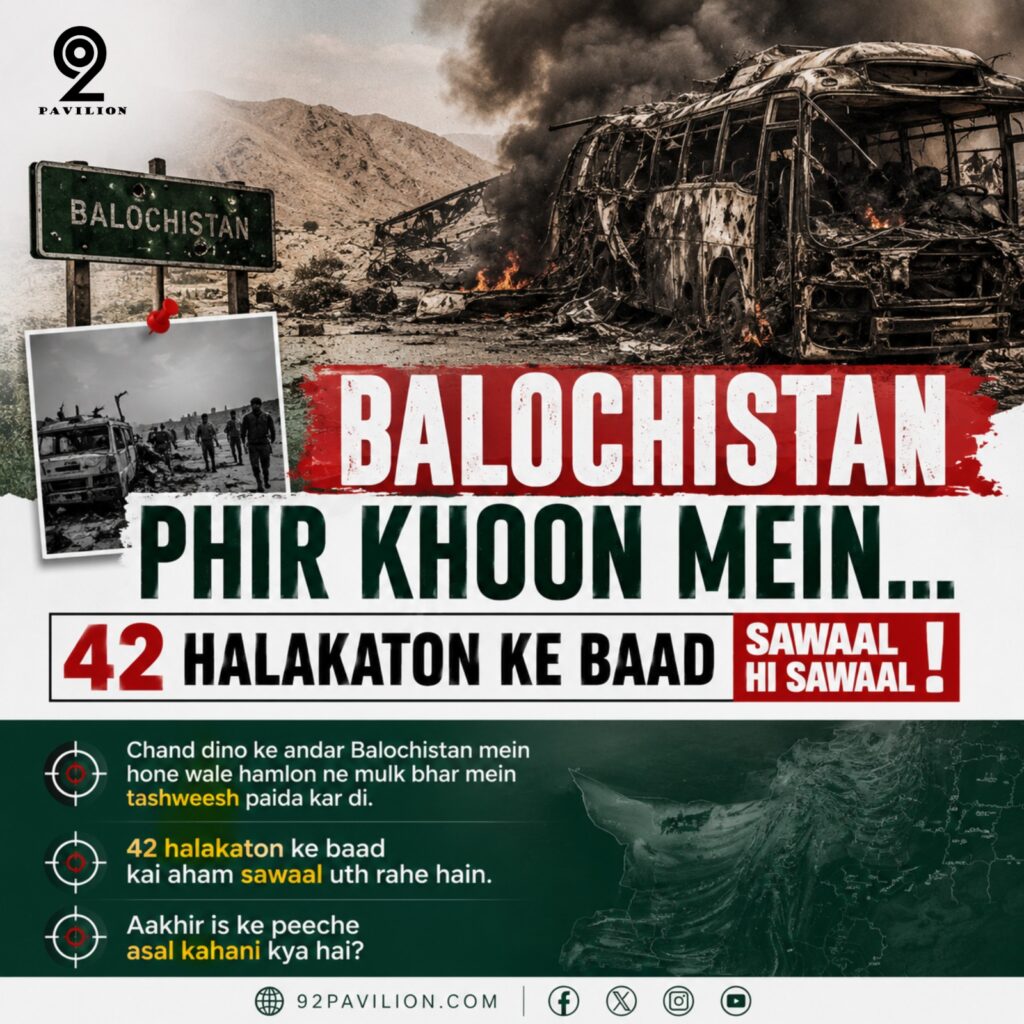
Quick Answer: Pakistan’s military says 42 people including police officers, soldiers and civilians have been killed in a series of militant attacks in Balochistan since Monday. The military also says 54 militants were killed in the security forces’ response operations.
What Happened
Pakistan’s military spokesperson, Lieutenant General Ahmed Sharif Chaudhry, told a televised press briefing in Rawalpindi that the death toll from a wave of attacks in Balochistan over the past several days has reached 42. The toll includes 18 police officers, 11 soldiers, and 4 civilians, according to the military’s figures. Security forces, in turn, say they killed 54 militants during the subsequent operations.
How the Attacks Unfolded
The violence began on Monday when militants launched what officials called a “multidirectional attack” on a police check post guarding the Mangi Dam project in Ziarat district. During the assault, policemen initially resisted and reportedly killed 15 attackers before the post was temporarily overrun and surviving personnel were taken hostage. Nine policemen lost their lives in this incident.
Army and Frontier Corps reinforcements were dispatched to the mountainous area around Ziarat, where an operation to surround the militants continued for several days. In the follow-up operation, 18 policemen and 11 militants were reported killed.
Separately, on the night between July 4 and 5, militants believed to be linked to the Balochistan Liberation Army (BLA) attacked civilians in the Hanna Urak area. Local residents resisted the assault and forced the attackers to retreat, though four civilians were killed and six others injured.
On Wednesday, militants also ambushed a military vehicle on a highway in Balochistan, killing 11 soldiers.
Military’s Response
Addressing the attacks, the military spokesperson warned that security forces would continue pursuing those responsible, saying militants and their supporters would be tracked down wherever they are. He also alleged that a significant number of the attackers were of Afghan origin.
Pakistan’s security establishment has repeatedly accused Afghanistan of allowing its territory to be used as a base by separatist and militant groups an accusation the Afghan Taliban administration in Kabul has denied.
Context
Balochistan, Pakistan’s largest but least populated province, has seen a long-running separatist insurgency, along with attacks by groups such as the Pakistan Taliban (TTP) targeting security forces, foreign-linked investment projects, and infrastructure in the mineral-rich region. The province borders both Afghanistan and Iran.
Prime Minister Shehbaz Sharif visited Balochistan following the attacks and vowed that operations against militant groups would continue.
FAQs
Q1: How many people were killed in the Balochistan attacks?
Pakistan’s military says 42 people were killed, including 18 police officers, 11 soldiers and 4 civilians.
Q2: Where did the attacks take place?
The main attacks occurred in Ziarat district, targeting a police post guarding the Mangi Dam project, along with an ambush on a military vehicle and an attack on civilians in Hanna Urak.
Q3: How many militants were killed in the response?
The military says 54 militants were killed during security operations following the attacks.
Q4: Who is being blamed for the attacks?
Pakistan’s military spokesperson said many attackers were of Afghan origin and linked the violence to groups including the Pakistan Taliban (TTP) and the Balochistan Liberation Army (BLA).