By: 92 Pavilion | Updated: August 29, 2026 Category: Pakistan
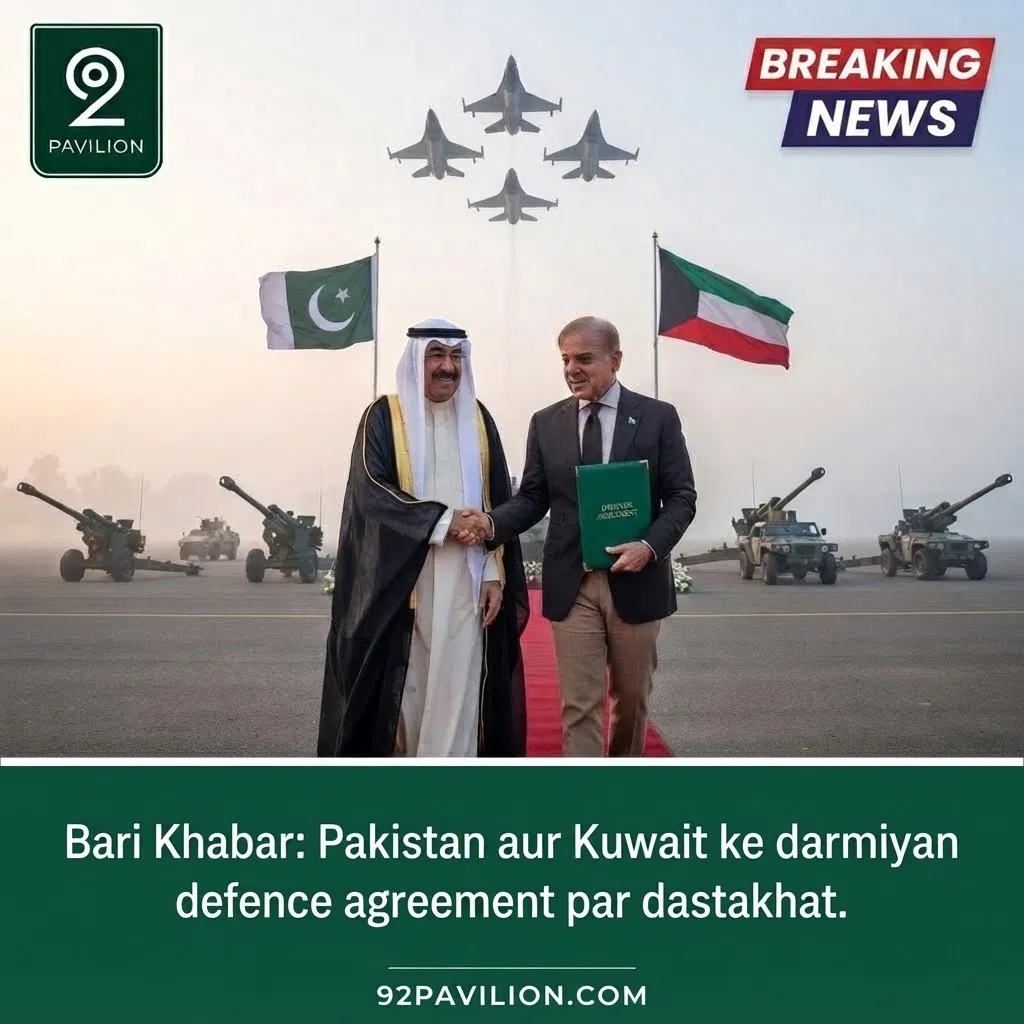
Quick Answer: Pakistan and Kuwait signed the “Protocol Agreement-2026” in Rawalpindi on August 27, expanding their military cooperation framework. Defence Minister Khawaja Muhammad Asif signed on Pakistan’s behalf, while Kuwaiti Defence Minister Sheikh Abdullah Ali Abdullah Al-Salem Al-Sabah signed for Kuwait. The agreement builds on the two countries’ 2023 Defence Cooperation Agreement and covers training, capacity building, border management, and the exchange of military expertise.
What Was Signed and Where
Pakistan’s Defence Minister Khawaja Muhammad Asif and Kuwait’s Defence Minister Sheikh Abdullah Ali Abdullah Al-Salem Al-Sabah signed the Protocol Agreement-2026 in Rawalpindi on August 27, according to the Ministry of Defence’s statement reported by Shafaqna Pakistan. The signing took place during a visit by the Kuwaiti defence minister, with Chief of the General Staff Lt. Gen. Khalid Al-Shriaan and senior Pakistani commanders present at the ceremony.
Earlier the same day, Chief of Defence Forces and Chief of Army Staff Field Marshal Asim Munir met Kuwait’s chief of general staff of the armed forces at General Headquarters, where the two sides discussed regional security and ways to deepen bilateral defence ties.
What the Agreement Covers
According to IRIA News, the agreement focuses on military training, capacity building, border management, coordination, and the exchange of military expertise between the two armed forces. It builds on the Defence Cooperation Agreement signed by Pakistan and Kuwait in June 2023, which Kuwait formally ratified through decree-law no. 73 of 2026, published in the official gazette Kuwait Al-Youm on July 26.
Unlike Pakistan’s separate defence agreements with Saudi Arabia and the Mecca Joint Defence Agreement with Saudi Arabia and Turkey, the Kuwait protocol does not include a mutual collective-defence clause. Instead, according to analysis from Global Village Space, it centres on practical cooperation: Pakistan’s armed forces will help train Kuwait’s military, build its defence capacity, and assist with border management.
Part of a Wider Pattern in the Gulf
This agreement is the latest in a series of defence arrangements Pakistan has signed with Gulf states over the past year. Pakistan and Saudi Arabia signed the Strategic Mutual Defence Agreement in September 2025, followed by the trilateral Mecca Joint Defence Agreement with Saudi Arabia and Turkey in August 2026. Pakistan had also opened talks with Kuwait in July 2026 on an expanded security arrangement, which culminated in this week’s protocol signing.
Analysts note that the immediate value of the Pakistan-Kuwait deal is likely to come from practical military cooperation, particularly training and capacity building, which could help Kuwait strengthen the skills and readiness of its own armed forces.
Why This Matters
Pakistan’s expanding defence ties across the Gulf reflect a broader pattern of the country positioning itself as a security partner for Gulf states amid regional instability. For Pakistan, these agreements offer opportunities for military cooperation, training exchanges, and closer diplomatic ties, while Gulf states gain access to Pakistan’s experienced armed forces for training and capacity-building support.
Frequently Asked Questions
When was the Pakistan-Kuwait Protocol Agreement-2026 signed?
It was signed on August 27, 2026, in Rawalpindi.
Who signed the agreement?
Pakistan’s Defence Minister Khawaja Muhammad Asif signed for Pakistan, and Kuwait’s Defence Minister Sheikh Abdullah Ali Abdullah Al-Salem Al-Sabah signed for Kuwait.
Does the agreement include a mutual defence clause like the Mecca pact?
No. Unlike Pakistan’s agreements with Saudi Arabia, the Kuwait protocol focuses on training, capacity building, and coordination rather than a collective-defence commitment.
What agreement does this build on?
It expands on the Defence Cooperation Agreement signed by Pakistan and Kuwait in June 2023, which Kuwait formally ratified in July 2026.