By: News Desk 92Pavilion | Updated: August 28, 2026
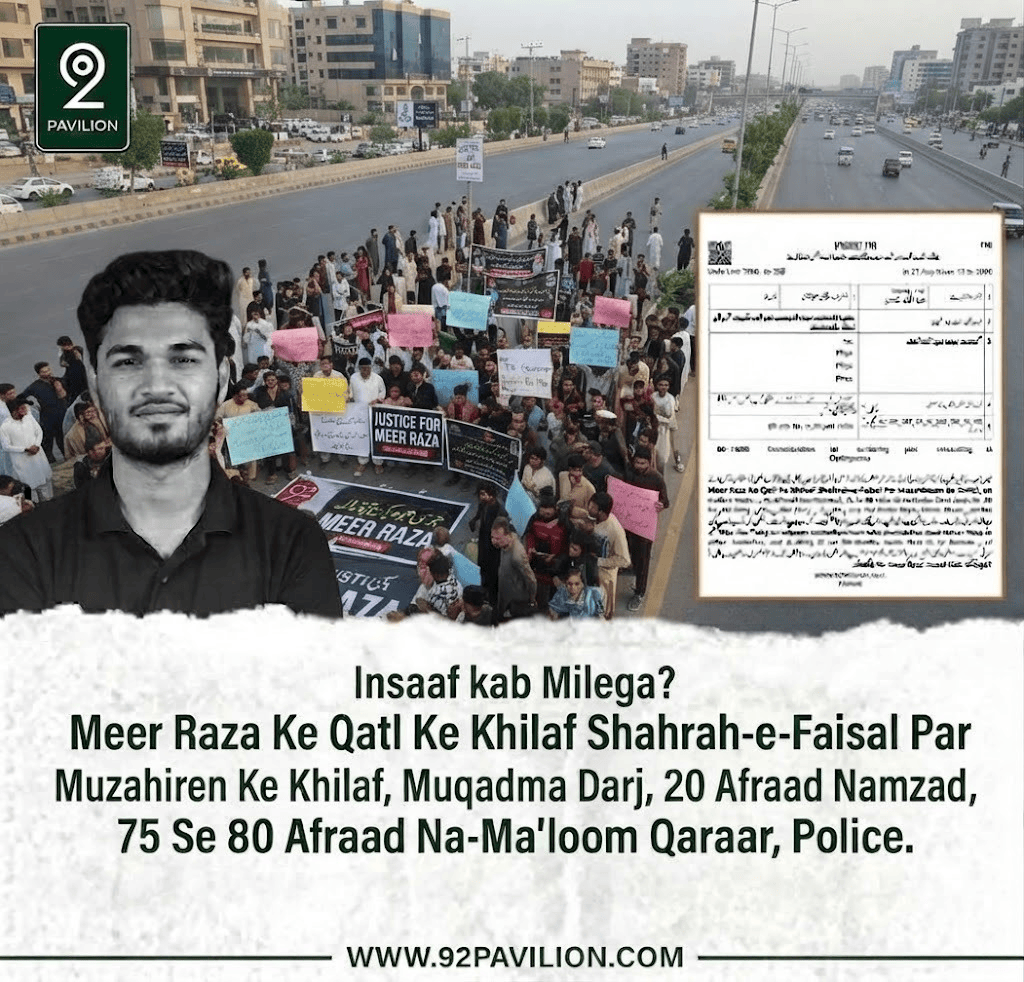
Quick Answer: Karachi police have registered a case against roughly 100 protesters, naming 20 individuals and listing 75 to 80 others as unidentified, following a late-night demonstration that blocked Shahrah-e-Faisal. The protesters were demanding justice in the ongoing Mir Raza Ali murder case, which has drawn nightly demonstrations at Karachi’s Nursery bus stop for weeks.
What the FIR Says
According to the first information report filed at Ferozabad police station, a police sub-inspector on routine patrol saw around 100 people blocking the road between Saddar and the airport on Shahrah-e-Faisal at around 12:30am. The case was registered roughly an hour later, naming 20 individuals along with 75 to 80 unidentified associates.
The FIR states the protesters were carrying sticks and banners with slogans demanding the arrest of Mir Raza Ali’s killers, and that they blocked traffic for both vehicles and pedestrians. Police said officers attempted to persuade the demonstrators to clear the road, but the crowd continued chanting slogans and kept the blockade in place.
Who Was Named
The FIR nominated 20 individuals, including Adnan Raza, Danish Rehman, Danish Raza, Faizan, Hamza, Raza Hassan, Ali Zubair, Talha, Ali Zohaib, Shahryar, Sibtain, Ammar, Abdullah, Zarar, Ahmed, Bilal, Jamil, Taha Sheikh, Babar Hameed, and Sheikh Talha. Police said no arrests had been confirmed among those named as of the latest update.
Why the Protests Have Continued
Mir Raza Ali, a 25-year-old businessman and owner of the dessert brand Wafflix, was found dead with a gunshot wound in Gulistan-i-Jauhar on July 29, a day after he was reported missing. More than a month later, his family and civil society groups say the case remains unresolved, and they have gathered nightly at the Nursery bus stop on Shahrah-e-Faisal, vowing to continue until those responsible are arrested.
The protests have drawn a broad mix of participants, including Ali’s family and friends, along with residents unconnected to the case who say they were moved by the circumstances of his death. Women, men, children, and people from different age groups have taken part in the nightly gatherings.
Police Justification for the Case
Police said Shahrah-e-Faisal, one of Karachi’s main traffic arteries, has been blocked for several hours nearly every day because of the protests, causing severe disruption for thousands of commuters. Officials said the case was registered specifically over the road blockade rather than the underlying demand for justice, and a heavy police contingent, including female personnel, has since been deployed at the Nursery protest site.
Where the Murder Investigation Stands
Separately, a judicial commission formed to review the investigation into Ali’s death has begun proceedings, summoning the medico-legal officer who conducted the first autopsy, along with the nursery employees who discovered his body and the police and Edhi personnel who responded to the scene. Ali’s family has previously raised concerns about how the case was investigated and has pushed for a joint investigation team rather than relying solely on the judicial commission.
What Happens Next
With a trial court reportedly setting a deadline for a police report in the case, attention now turns to whether the newly booked protesters face further legal action and how the judicial commission’s findings will shape the broader murder investigation. Civil society groups say they intend to continue demonstrations at Shahrah-e-Faisal, Clifton, and other locations until real progress is shown.
Frequently Asked Questions
Why did Karachi police register a case against the protesters? Police say the case was registered because the demonstrators blocked Shahrah-e-Faisal for several hours, disrupting traffic for thousands of commuters.
How many people were named in the FIR?
Twenty individuals were named, along with 75 to 80 unidentified associates.
Have any of the named protesters been arrested?
As of the latest update, police had not confirmed any arrests among those named in the case.
What is the Mir Raza Ali case about?
It concerns the July 2026 death of 25-year-old businessman Mir Raza Ali, found with a gunshot wound in Gulistan-i-Jauhar, which his family and civil society groups say has not been properly investigated.
This report is based on the police FIR filed at Ferozabad police station, with reporting from Dawn, The Express Tribune, ARY News, Dunya News, and MM News.
92Pavilion brings you timely, verified updates on Pakistan and the region. Stay with us for continued coverage.