By: News Desk 92Pavilion | Updated: August 8, 2026
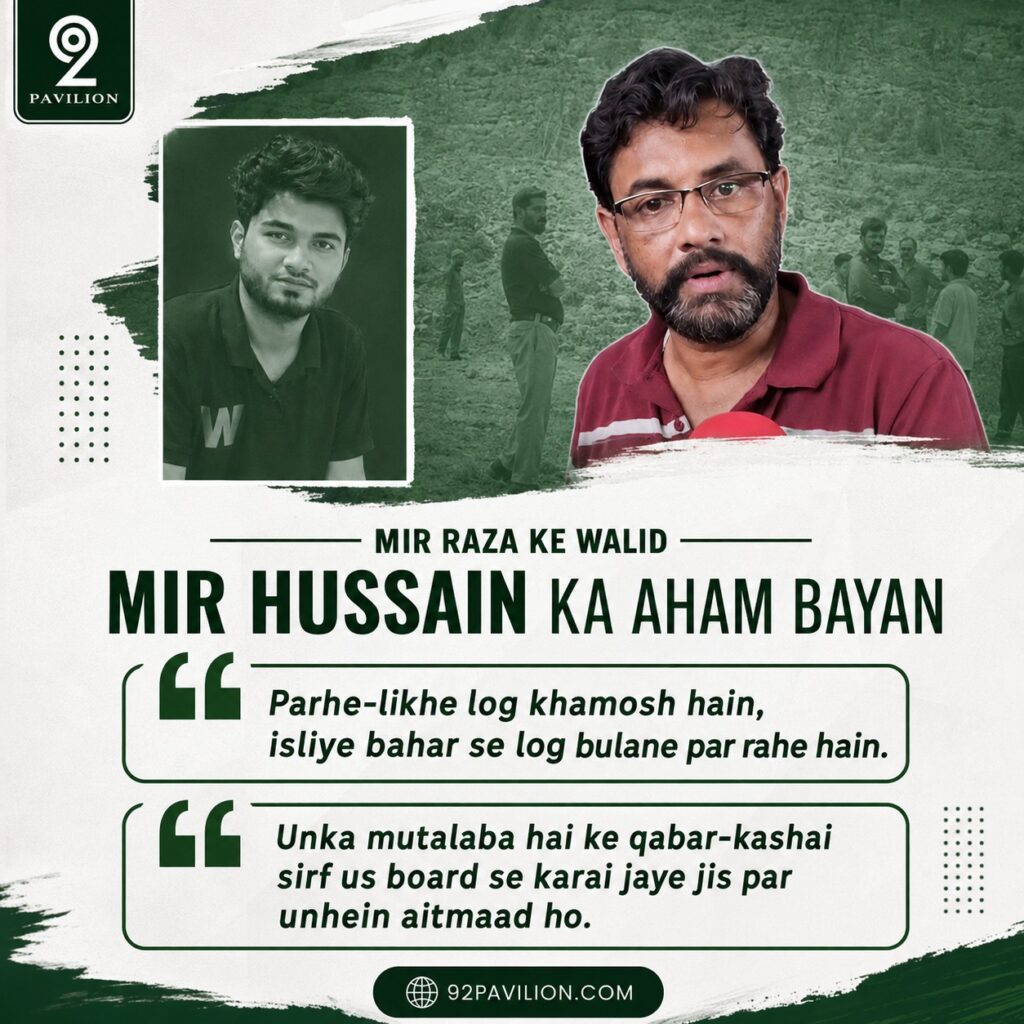
Quick Answer: Mir Raza’s father, Mir Hussain Ali, has spoken out about what he sees as public silence surrounding his son’s death, saying ordinary citizens from outside the community have done more to demand answers than educated voices closer to home. He has also insisted that the court-ordered exhumation of his son’s body happen only under a medical board his family trusts.
A Father’s Frustration Boils Over
In recent remarks to media, Mir Hussain didn’t hold back his disappointment. He said educated people have largely stayed quiet on his son’s case, while it’s often people from outside, with no direct connection to the family, who have been the ones calling for accountability.
His words reflect a broader frustration that’s run through his public statements since Mir Raza’s death: a sense that despite widespread public sympathy, real pressure for answers has come mostly from strangers rather than the city’s more prominent or influential voices.
Standing Firm on the Medical Board
Alongside his comments on public silence, Mir Hussain made his demand for the exhumation process unmistakably clear. He said the procedure must be carried out only by a medical board his family has confidence in, not one changed or reshuffled without their input.
That demand came after Sindh authorities altered the composition of the medical board multiple times in the days leading up to the exhumation, changes the family rejected each time until officials restored the original panel they’d trusted from the start.
A Father Who Hasn’t Wavered
Since his son went missing on the night of July 28, Mir Hussain has consistently rejected the idea that Mir Raza died by suicide. He has pointed to what he describes as visible signs of violence on his son’s body, along with unresolved questions about a missing weapon and gaps in the original post-mortem examination.
He has described himself as “100 percent certain” his son was murdered, a conviction he’s repeated at nearly every stage of the investigation, even as some evidence reviewed by police has pointed toward other explanations.
Why His Voice Has Carried Weight
Mir Hussain’s public statements have played a significant role in shaping how this case has unfolded. His repeated objections helped push authorities to reconsider the original post-mortem findings, and his insistence on a trusted medical board directly influenced the final composition of the panel that carried out Saturday’s exhumation.
His comments about public silence add another dimension to the case, raising questions about who steps up to demand accountability in high-profile cases like this one, and who stays quiet.
What Comes Next for the Family
With the exhumation now complete, the family is waiting on the results of a fresh post-mortem examination, one they hope will finally provide clarity on how their son died. Mir Hussain has said a short delay wouldn’t shake the family’s resolve, and his recent comments suggest that resolve remains firmly intact.
Frequently Asked Questions
What did Mir Raza’s father say about public silence?
Mir Hussain said educated people have largely remained quiet on the case, while it’s often people outside the family’s circle who have called for accountability.
What has Mir Hussain demanded regarding the exhumation?
He insisted the exhumation take place only under a medical board the family trusts, rejecting earlier panels that were changed without their input.
Does the family accept the suicide theory in Mir Raza’s death?
No. Mir Hussain has consistently said he believes his son was murdered, citing signs of violence and gaps in the original investigation.
What happens next in the case?
The family and investigators are now awaiting results from the fresh post-mortem examination conducted during Saturday’s exhumation.
This report is based on statements from Mir Hussain Ali and reporting from The Express Tribune and The News.
92Pavilion continues to follow this case closely. Stay with us as the investigation develops.