By: 92Pavilion | Updated: September 3, 2026
Quick Answer: Jamaat-e-Islami’s nationwide shutter-down strike on September 3 shut markets and blocked major Karachi roads including Shahrah-e-Faisal, Lyari Expressway, Tower Road, and Hassan Square, while unidentified men set fire to two motorcycles near Korangi Crossing. Police say the city’s roads have since reopened and law and order is restored, even as the government and JI agreed to form committees for further talks.
Which Roads Were Affected
Karachi traffic police issued an advisory as JI’s strike call took effect early Thursday morning. Areas hit by closures, slow-moving traffic, or diversions included Shahrah-e-Faisal, Lyari Expressway, Numaish Chowk and M.A. Jinnah Road, Tower Road, Hassan Square, University Road, 4K Chowrangi, Five Star Chowrangi, and the Korangi Road–Mehmoodabad-Qayyumabad stretch. Commuters in these areas faced long queues and were advised to use alternate routes for most of the morning.
The Korangi Crossing Incident
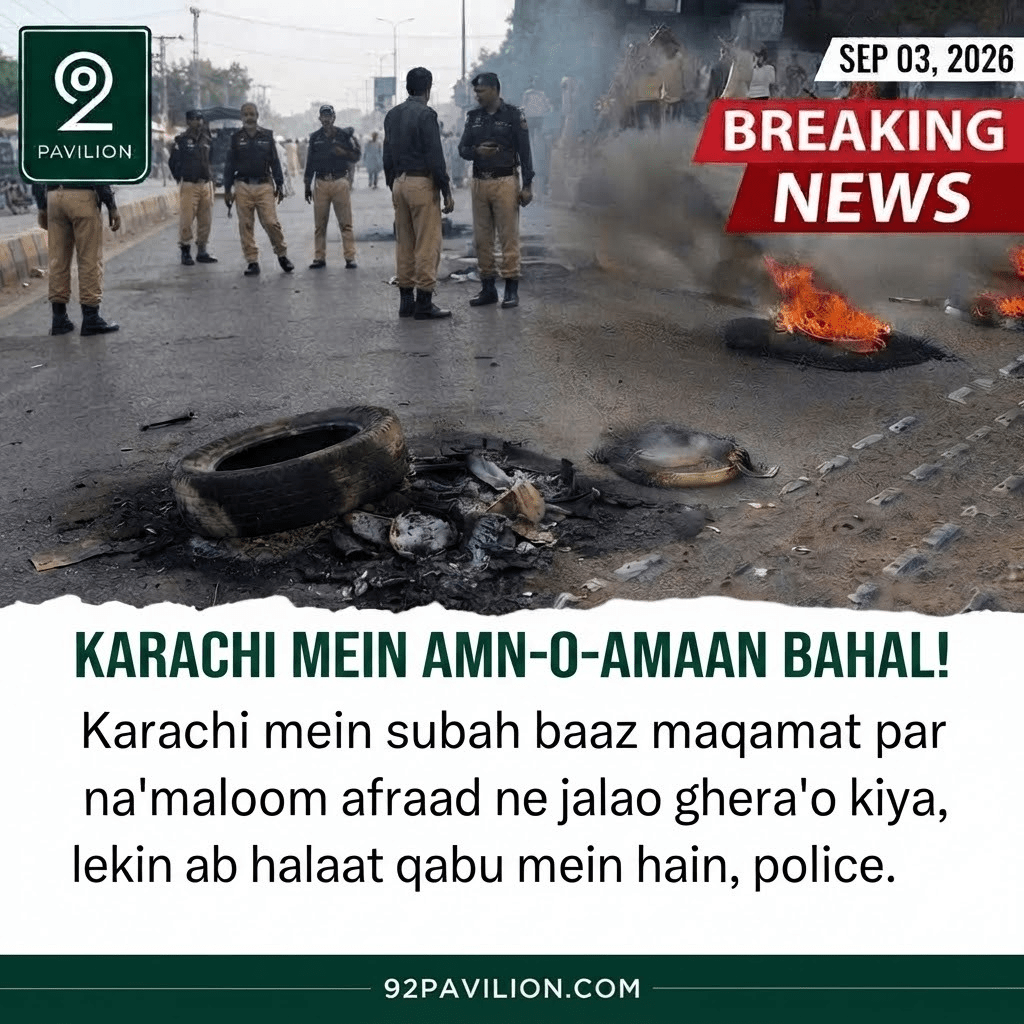
Near Korangi Crossing, unidentified men set a tyre alight and burned two motorcycles, temporarily blocking the road. No injuries were reported, and police cleared the site once the fire was put out. The Akbar Road motorcycle market in the same area also stayed shut for the day.
How the Strike Played Out Across the City
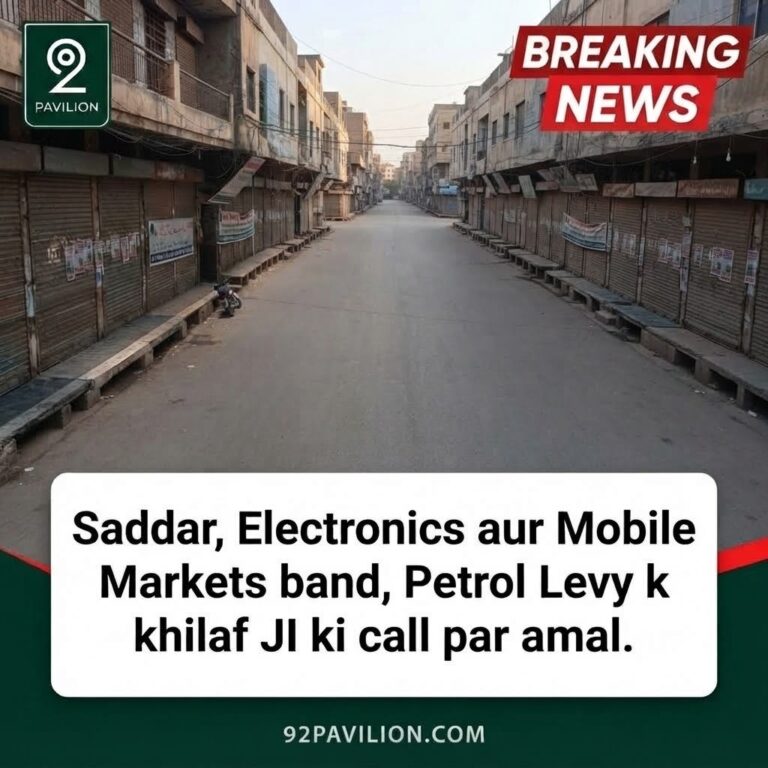
The response to JI’s call was mixed rather than total. JI Karachi chief Munim Zafar said more than 300 small and large markets shut down, with commercial areas in Federal B Area, Water Pump, Liaquatabad, Teen Hatti, and Saddar largely closed. The Karachi Bar Association backed the strike and held a rally from the Sindh High Court to the Karachi Press Club. Public transport was affected too: the Orange Line BRT suspended service through the morning, though the Green Line kept running as usual.
Elsewhere in Sindh, the strike was observed more completely — Larkana, Thatta, and Hala saw near-total shutdowns, while Hyderabad and Badin reported partial closures.
Law and Order Restored
By afternoon, police confirmed that the isolated incidents of arson and blockage reported in parts of Karachi during the morning had been brought under control, and traffic on the city’s main arteries was moving again. Officials said extra patrolling remained in place at sensitive points as a precaution, but described the overall law-and-order situation in the city as stable.
Government and JI Agree to Talks
In Lahore, Federal Minister for Planning Ahsan Iqbal held a joint press conference with JI Emir Hafiz Naeemur Rehman and PM’s Adviser Rana Sanaullah. Both sides said they had agreed to form separate committees, with JI’s team led by Liaquat Baloch, to work out possible relief on the petroleum levy, electricity costs, and bread prices. Iqbal said the government would consider any workable proposals JI puts forward.
Hafiz Naeemur Rehman confirmed the sit-ins already running in provincial capitals for the past 18 days would continue in parallel with these talks, calling it a dual-track approach: negotiations and protest together, until demands are met.
Frequently Asked Questions
Are Karachi roads open now?
Yes. Police say the roads closed during Thursday’s strike, including Shahrah-e-Faisal and Lyari Expressway, have reopened and traffic is moving normally.
What happened at Korangi Crossing?
Unidentified men burned a tyre and two motorcycles near the crossing, briefly blocking the road. Police cleared the area and no injuries were reported.
Is the strike over?
The one-day shutter-down strike has ended, but JI’s separate sit-ins in provincial capitals, ongoing since mid-August, are continuing alongside talks with the government.
What is JI demanding?
JI wants the petroleum levy reduced or scrapped, lower electricity costs, and cheaper bread, citing the impact of inflation on ordinary households.
This report is based on updates from Karachi traffic police, The News International, and other local media covering the September 3 strike.
92Pavilion brings you timely, verified updates on Pakistan and the region. Stay with us for continued coverage.