Latest Posts
Loading latest posts…

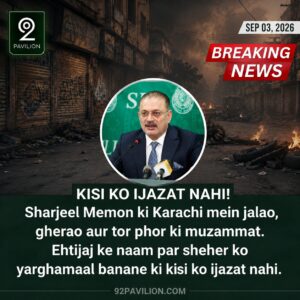
JI’s Strike Call Shuts Business Centres and Petrol Pumps Across Karachi Region

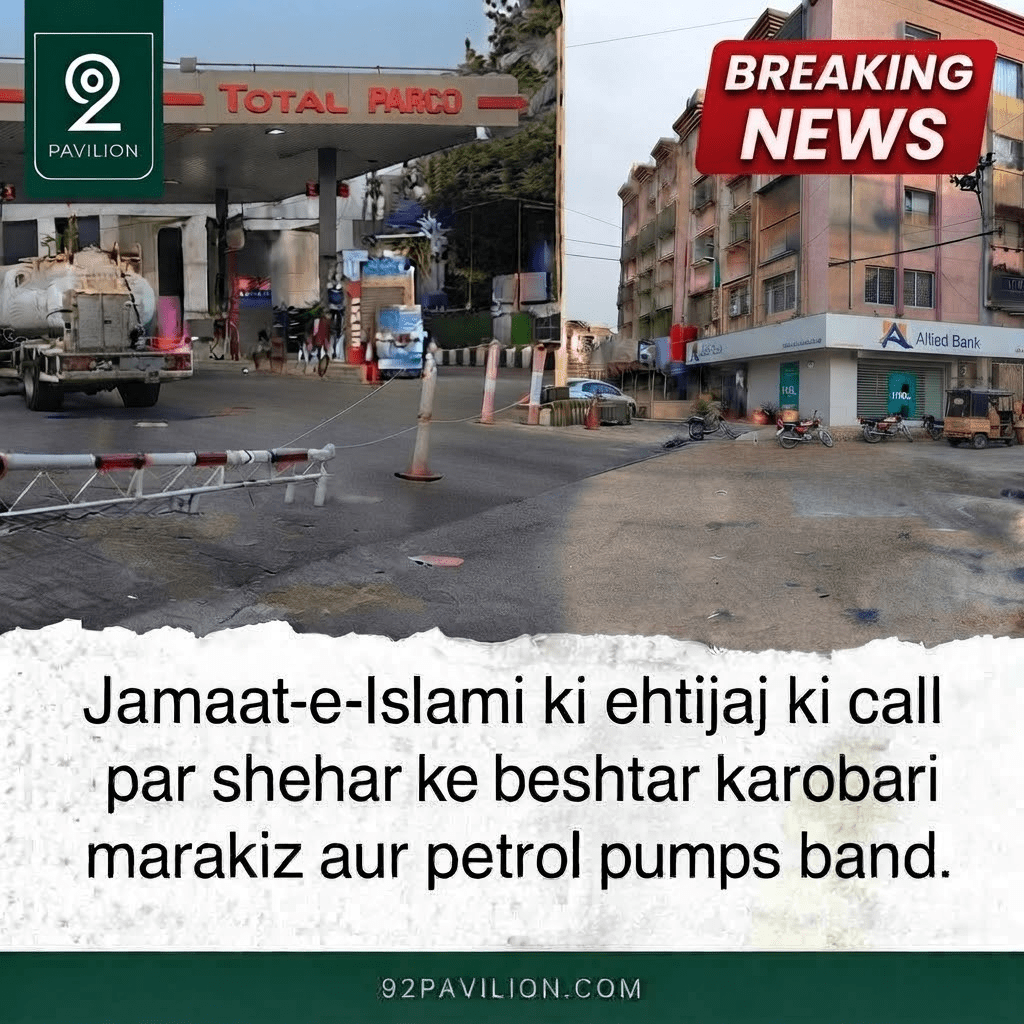
Empty petrol station and shuttered shops in Karachi during Jamaat-e-Islami's September 3 strike call

JI’s Strike Call Shuts Business Centres and Petrol Pumps Across Karachi Region

By: 92Pavilion | Updated: September 3, 2026

Quick Answer: Jamaat-e-Islami’s September 3 shutter-down call led to the closure of more than 300 markets and commercial centres in Karachi, along with petrol pumps, hotels, and shops shutting completely in Thatta district, though the response varied across different parts of the city.

Business Centres Affected in Karachi

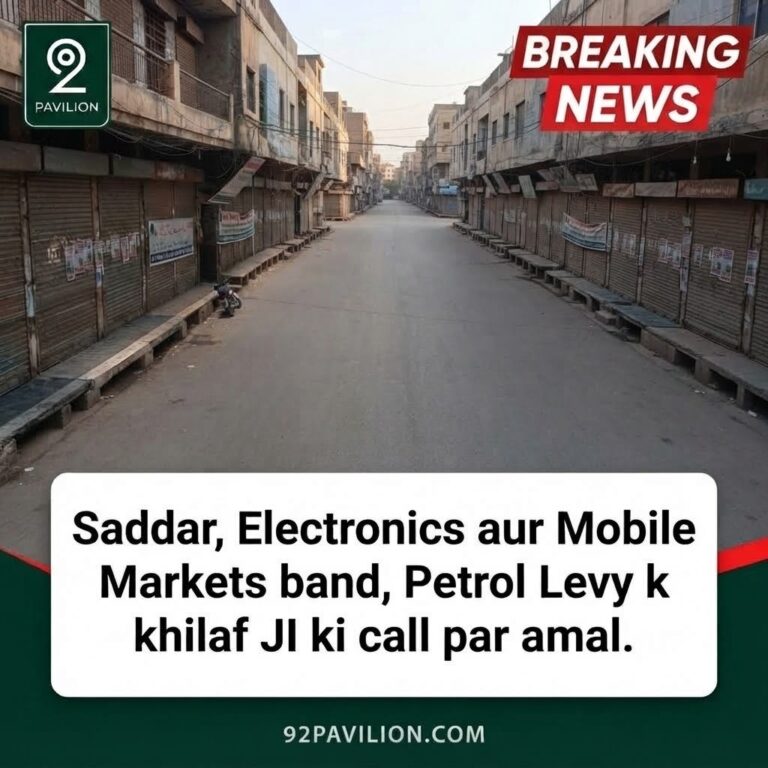
JI Karachi chief Munim Zafar said more than 300 small and large markets shut down for the day. Commercial hubs in Federal B Area, Water Pump, Liaquatabad, Teen Hatti, and Saddar were largely closed, while the Akbar Road motorcycle market also stayed shut. The Karachi Bar Association backed the strike, holding a rally from the Sindh High Court to the Karachi Press Club.

Petrol Pumps and Full Shutdown in Thatta

The strike’s most complete effect was seen in Thatta district, where commercial centres, hotels, petrol pumps, and shops shut entirely in Makli, Gharo, Dhabeji, Mirpur Sakro, and Garho. This made Thatta one of the few areas in Sindh to observe a total shutter-down rather than a partial one.

A Mixed Response Overall

Not every part of the city or province followed the call equally. While markets in areas like Federal B Area and Thatta closed fully, other commercial zones continued operating with reduced activity. In neighbouring Hyderabad, the strike was only partially observed, with select markets such as Chandni Market and Resham Bazaar closing while others stayed open.

Why Traders Joined the Call

JI’s strike centred on demands to reduce the petroleum levy, lower electricity costs, and ease inflation, issues that directly affect small traders and fuel retailers. Several trader associations had pledged support for the shutdown in advance, citing the impact of repeated fuel price hikes on their businesses.

Frequently Asked Questions

How many markets closed in Karachi during the strike?

JI Karachi’s chief said more than 300 small and large markets shut down for the day.

Were petrol pumps closed everywhere?

Not city-wide. The most complete petrol pump closures were reported in Thatta district, while Karachi saw a mixed response.

Did all of Karachi observe the strike?

No, the response varied by area, with some commercial zones fully closed and others remaining open with reduced activity.

This report is based on statements from JI Karachi leadership and local trader associations on September 3, 2026.

92Pavilion brings you timely, verified updates on Pakistan and the region. Stay with us for continued coverage.
Share

Introduction

Pakistan’s political environment in 2026 remains dynamic and highly influential in shaping the country’s future. From parliamentary debates and economic policy decisions to opposition movements and electoral reforms, recent developments are playing a crucial role in determining national direction.

In this report by Eye of Pakistan, we analyze the latest political developments, government strategies, and opposition responses.

Government’s Policy Priorities in 2026

The federal government has emphasized:

  • Economic stabilization

  • Institutional reforms

  • Energy sector restructuring

  • Strengthening foreign diplomatic ties

Recent cabinet meetings focused on controlling inflation, stabilizing the Pakistani Rupee, and implementing fiscal discipline under ongoing economic reform programs.

Officials claim these measures aim to restore investor confidence and ensure sustainable growth.

Opposition’s Response and Political Strategy

Major opposition parties have intensified criticism of government policies, particularly regarding:

  • Rising inflation

  • Unemployment

  • Tax reforms

  • Utility price increases

Opposition leaders argue that economic pressure on the public has increased and demand greater transparency in parliamentary proceedings.

Political rallies and public gatherings have increased across major cities including Karachi, Lahore, and Islamabad.

Parliamentary Developments

Recent National Assembly sessions have seen heated debates over:

  • Budget allocations

  • Electoral reforms

  • Accountability laws

  • Provincial autonomy issues

Lawmakers from both treasury and opposition benches continue to exchange strong viewpoints, reflecting a vibrant yet tense political atmosphere.

Election Reforms and Democratic Process

Discussions around electoral transparency and digital voting mechanisms remain central to political discourse.

The Election Commission is reportedly reviewing:

  • Voter verification systems

  • Polling station security

  • Overseas voting procedures

Analysts believe these reforms could significantly impact future general elections.

Public Reaction and Political Climate

Public opinion appears divided. While some citizens support structural reforms and long-term stabilization plans, others express concerns over economic hardships and governance challenges.

Political analysts suggest that the coming months will be critical in determining whether current policies translate into tangible relief for the public.

Conclusion

Pakistan’s political landscape in 2026 is marked by active debate, institutional reforms, and strategic maneuvering from both government and opposition parties. As policy decisions continue to unfold, their impact on economic stability and democratic processes will remain under close observation.

Stay connected with Eye of Pakistan for reliable and timely political updates.