By: News Desk 92Pavilion | Updated: August 15, 2026
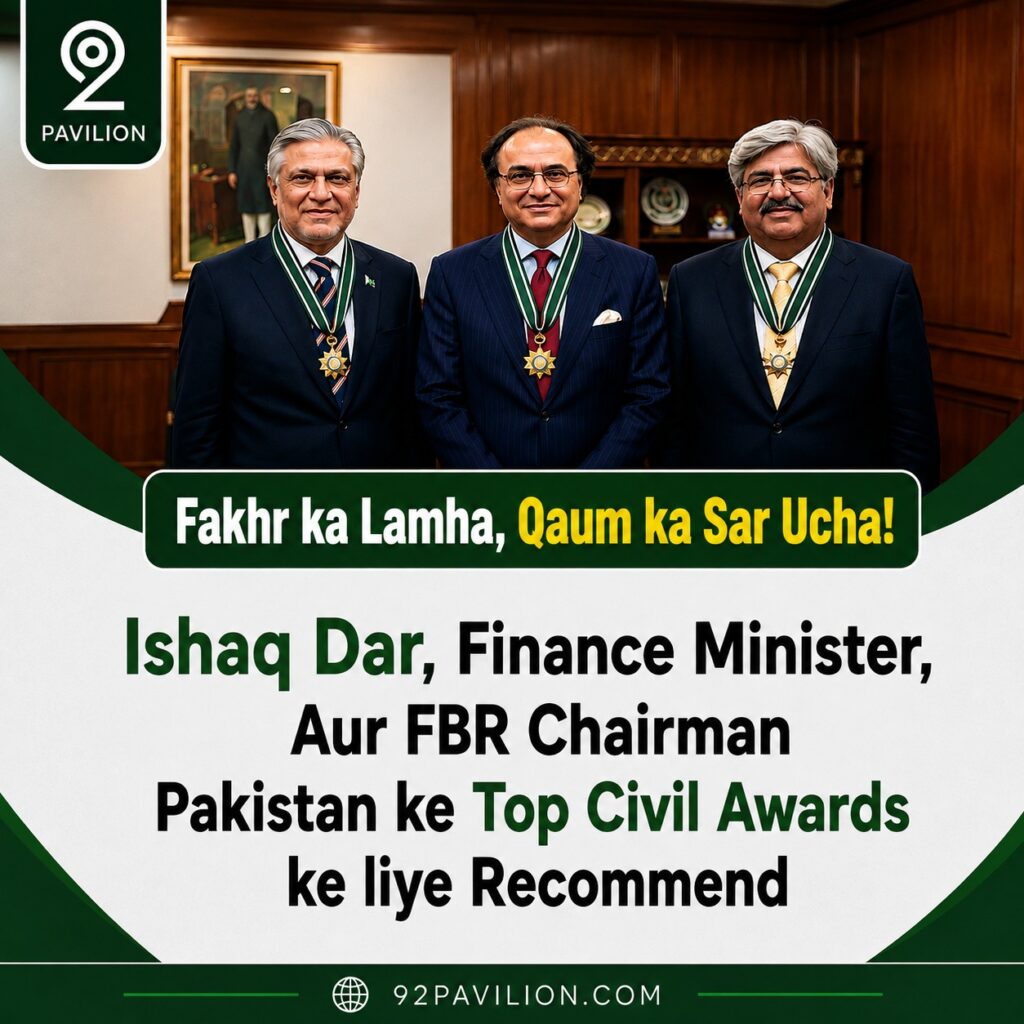
Quick Answer: President Asif Ali Zardari has approved civil awards for 355 individuals to mark Pakistan’s Independence Day. Deputy Prime Minister Ishaq Dar and Finance Minister Muhammad Aurangzeb have been recommended for the Nishan-i-Imtiaz, the country’s highest civil honour. FBR Chairman Rashid Mahmood Langrial has been recommended for the Hilal-i-Imtiaz. The list spans science, education, medicine, arts, literature, sports, journalism, and public service.
A Wide-Ranging List of Honourees
President Zardari approved civil awards for 355 individuals in recognition of their contributions across multiple fields. The list draws from science, engineering, education, medicine, arts, literature, sports, journalism, social welfare, philanthropy, public service, and gallantry. It includes federal ministers, senior government officials, academics, doctors, journalists, artists, writers, athletes, and foreign dignitaries.
Who Was Recommended for Nishan-i-Imtiaz
Several senior government figures made the list for Nishan-i-Imtiaz, Pakistan’s highest civil award. These include Deputy Prime Minister and Foreign Minister Ishaq Dar, Interior Minister Mohsin Naqvi, Finance and Revenue Minister Muhammad Aurangzeb, Federal Minister for Establishment and Economic Affairs Ahad Khan Cheema, and Minister of State for Finance Bilal Azhar Kayani.
Why the FBR Chairman Made the List
FBR Chairman Rashid Mahmood Langrial has been recommended for the Hilal-i-Imtiaz, recognising his role in modernising Pakistan’s revenue collection system. Under his leadership, the FBR pursued aggressive automation, anti-smuggling operations, and efforts to broaden the country’s tax net. Officials point specifically to the enforcement of a progressive customs penalty framework under SRO 136(I)/2026, which reduced intentional delays at ports and sped up clearance processes.
In addition, his administration concluded an agreement on mutual administrative assistance and intelligence sharing with Hong Kong Customs. Officials describe that deal as a meaningful step against trade-based money laundering and tax evasion.
Other Senior Officials Recognised
Beyond the ministers, several senior officials were recommended for the Hilal-i-Imtiaz, including Intelligence Bureau Director General Fuad Asadullah, Attorney General Mansoor Usman Awan, and Finance Division Secretary Imdadullah Bosal. Hafiz Muhammad Tahir Mehmood Ashrafi was recommended for the Tamgha-i-Imtiaz under the public service category.
Recognition Across Science, Education, and Medicine
The science category included six honourees. Shahid Mahmood received a recommendation for Hilal-i-Imtiaz, while Professor Dr Zafar Ilyas and Professor Dr Mudassar Israr were recommended for Sitara-i-Imtiaz. In education, Lieutenant General (Retd) Moazzam Ijaz was recommended for Hilal-i-Imtiaz, alongside several university leaders and academics recommended for Sitara-i-Imtiaz.
Literature, Journalism, and the Arts
In literature, writer and poet Asad Muhammad Khan was recommended for Nishan-i-Imtiaz, the country’s highest civil honour, for his contributions as a fiction writer, playwright, and poet. Poets Ejaz Rahim and Muhammad Khurshidul Hasan Rizvi were recommended for Hilal-i-Imtiaz. In journalism, Muhammad Saleh Zaafir and Haji Nawaz Raza were recommended for Sitara-i-Imtiaz.
Sports and Foreign Dignitaries
The sports category recognised athletes and coaches from boxing, wrestling, shooting, squash, and cricket. Boxing coach Atta Muhammad Kakar and martial artist Dr Waseem A. Tai were recommended for Sitara-i-Imtiaz, while Bashir Bhola, Kashmala Talat, Noor Zaman, Sultan Muhammad Golden, Muhammad Wasim, and Sadiq Muhammad were recommended for Pride of Performance.
The list also included foreign dignitaries. Her Highness Sheikha Fatima bint Mubarak was recommended for Nishan-i-Pakistan under the Services to Pakistan category, reflecting Pakistan’s diplomatic ties abroad.
What Comes Next
The formal conferment of these awards typically takes place during a ceremony held around Pakistan Day, following review and final approval. For now, the announcement of the recommended list has drawn attention to the breadth of contributions being recognised this year, spanning government service, academia, the arts, and international diplomacy.
Frequently Asked Questions
How many people were recommended for civil awards in 2026?
President Zardari approved recommendations for 355 individuals across multiple fields.
Who was recommended for Pakistan’s highest civil award?
Ishaq Dar, Mohsin Naqvi, Muhammad Aurangzeb, Ahad Khan Cheema, and Bilal Azhar Kayani were recommended for the Nishan-i-Imtiaz.
Why was the FBR Chairman recommended for an award?
Rashid Mahmood Langrial was recognised for reforms including customs automation, anti-smuggling enforcement, and an intelligence-sharing agreement with Hong Kong Customs.
Does the list include people outside government?
Yes. It spans science, education, medicine, literature, journalism, sports, and includes foreign dignitaries as well.
This report is based on reporting from ProPakistani, Geo News, Dunya News, and Islamabad Post.
92Pavilion brings you Pakistan’s government and policy news as it happens. Stay with us for updates on this developing story.