
By: News Desk 92Pavilion | Updated: July 31, 2026
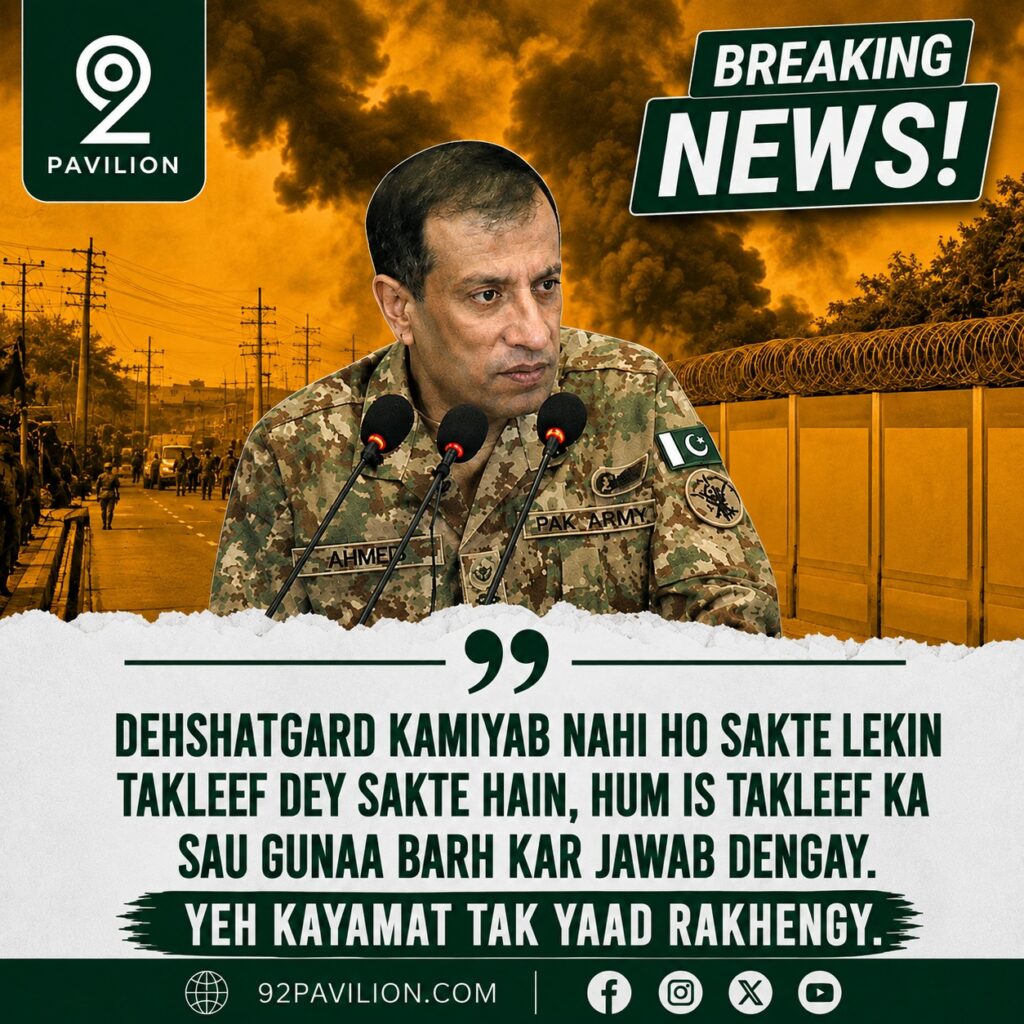
Quick Answer: DG ISPR warns terrorists in one of his strongest statements yet. Lt Gen Ahmed Sharif Chaudhry made the remarks at a Rawalpindi press conference on July 31, 2026. He said terrorists must surrender their weapons under the law or face complete elimination. The warning came alongside fresh data showing 819 people have died in terrorism-related incidents this year.
A Direct Message to Militant Groups
Lt Gen Ahmed Sharif Chaudhry left no room for ambiguity at ISPR’s press briefing. “The choice for terrorists is simple: surrender your weapons according to the law or we will eliminate you,” he told reporters, addressing militant networks operating across the country.
This statement marks one of the military spokesperson’s most direct warnings in recent months. It reflects what he called Pakistan’s uncompromising stance against terrorism.
The Scale of the Ongoing Campaign
A large-scale campaign sits behind the warning. Security forces have conducted 40,348 intelligence-based operations, known as IBOs, across Pakistan so far in 2026, Chaudhry revealed. That works out to roughly 194 operations every single day.
Security forces have also neutralized 2,084 confirmed terrorists this year, an average of nearly 10 eliminated daily. Chaudhry described the pace as an unprecedented operational tempo, driven by coordinated work between the Pakistan Army, intelligence agencies, police, and other law enforcement institutions.
The Human Cost on Both Sides
The briefing carried a somber note too. Pakistan has lost 819 people to terrorism-related incidents this year alone, Chaudhry said. That toll includes 303 soldiers from the Pakistan Army and 322 civilians killed in militant attacks.
Chaudhry called these losses a testament to the country’s resolve against terrorism, paying tribute to both security personnel and civilians. Suicide bombings remain a serious concern too, with 28 recorded across the country so far this year.
Rejecting Claims About Balochistan
Balochistan formed a significant part of the briefing, sitting at the center of Chaudhry’s remarks. He firmly rejected what he called a deliberate campaign to portray the province as slipping out of state control. Security forces remain fully engaged against militant elements there, he insisted.
Cross-border involvement in recent attacks also came up during the briefing. Chaudhry alleged Afghan nationals were connected to several major incidents, including attacks in Tank and Karachi, and said investigators had gathered evidence pointing to cross-border links in multiple cases.
What This Warning Signals
Statements like this one usually serve two purposes: reassuring the public that security forces remain in control, and sending a clear message to militant networks about the state’s current posture. Given the scale of operations described, the message this time was unambiguous. No negotiating table is being offered.
Whether this tougher rhetoric shifts militant activity on the ground remains to be seen, particularly in Balochistan and Khyber Pakhtunkhwa, where operations have been most heavily concentrated.
Frequently Asked Questions
What did DG ISPR say about terrorists?
Terrorists have a simple choice, he said: surrender their weapons under the law or be eliminated by security forces.
When was this statement made?
Lt Gen Ahmed Sharif Chaudhry made the statement at a press conference in Rawalpindi on July 31, 2026.
How many terrorists have been neutralized this year?
ISPR reported 2,084 confirmed terrorists neutralized so far in 2026.
How many people have died in terrorism-related incidents this year?
ISPR reported 819 deaths this year, including 303 soldiers and 322 civilians.
This report is based on statements from ISPR and reporting from Pakistan Observer.
92Pavilion brings you verified national security updates as they happen. Stay with us for continued coverage.