By: News Desk 92Pavilion
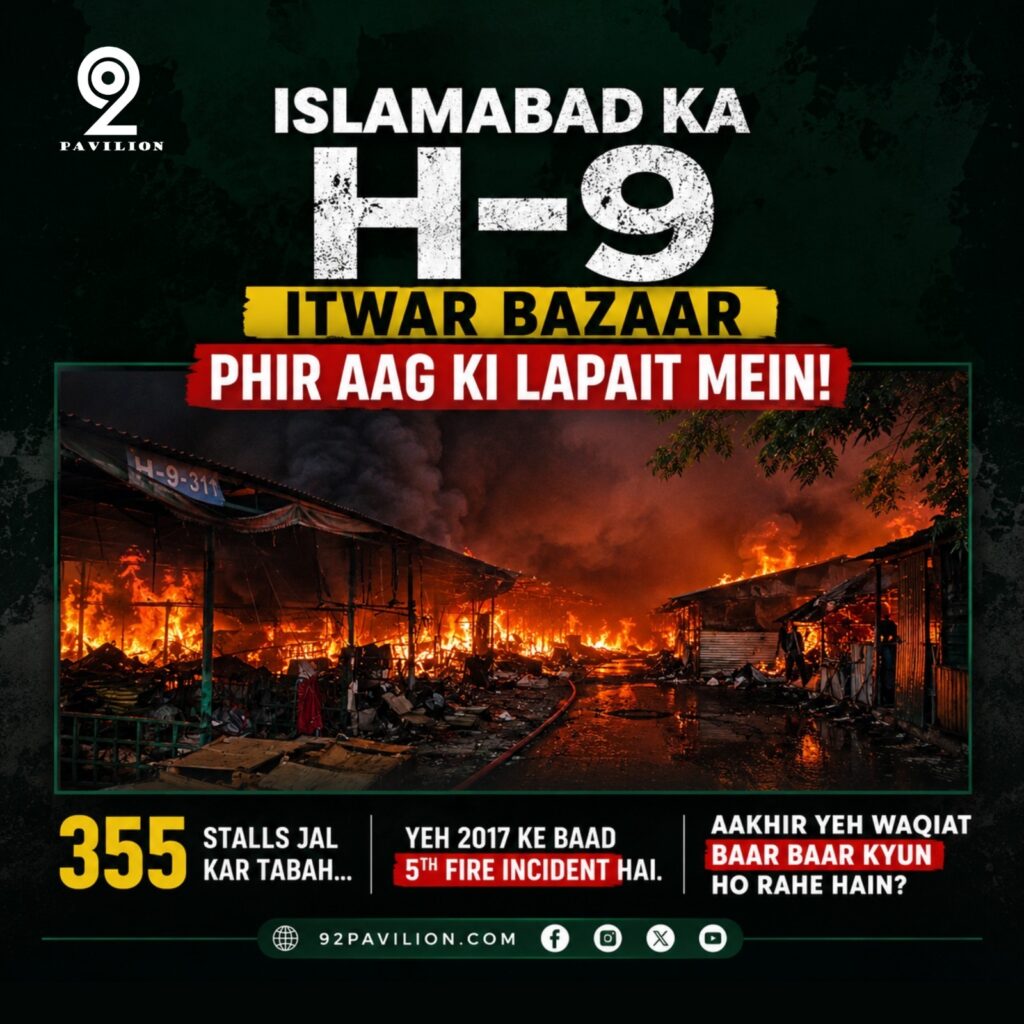
Islamabad: A massive fire tore through the H-9 Itwar Bazaar in Islamabad on Tuesday night, gutting hundreds of stalls and damaging close to a fifth of the sprawling market. The blaze, one of the worst in the bazaar’s history, sent thick black smoke over the federal capital and triggered a large-scale rescue operation that lasted for hours.
How the Fire Started
According to Islamabad’s district administration, the fire broke out inside the clothing section of the market and spread quickly through the tightly packed rows of wooden and canvas stalls. Officials said the blaze eventually engulfed nine separate sections of the bazaar before firefighters managed to bring it under control.
The H-9 Itwar Bazaar, also known as the Sunday Bazaar or Sasta Bazaar, is one of Islamabad’s largest budget shopping hubs. It draws thousands of shoppers every week and hosts more than 2,700 stalls selling clothes, shoes, household items and food.
Rescue Operation and Response
Rescue 1122 teams, Capital Development Authority (CDA) firefighters and police reached the site soon after the fire was reported. Because of the scale of the blaze, additional fire tenders were called in from neighbouring Rawalpindi to support the operation.
The Islamabad deputy commissioner’s office said in a statement that around 80 percent of the fire had been brought under control within a few hours, largely because of the district administration’s quick response. Officials confirmed that no deaths or injuries were reported, even though the fire caused heavy losses to traders’ goods and property.
Scale of the Damage
Preliminary assessments suggest that a substantial portion of the market, roughly 20 percent of its total stalls, was damaged or destroyed. Traders described watching years of stock go up in flames within minutes, with many unable to salvage anything from their shops.
This is not the first time the bazaar has caught fire. Similar incidents have struck the market repeatedly over the years, raising long-standing concerns about weak electrical wiring, a lack of fire-extinguishing equipment and poor safety planning at the site.
Investigation Ordered
A day after the fire, the Islamabad district magistrate formed an inquiry committee to determine the cause of the blaze and directed it to submit its findings within three days. The committee includes representatives from the Islamabad administration, the Metropolitan Corporation Islamabad, police, Rescue 1122, the CDA and civil defence authorities.
Traders’ representatives, including officials from the Islamabad Chamber of Commerce and Industry, have called on the government to compensate the affected shopkeepers and to finally install a proper fire-safety system at the market. They pointed out that despite repeated fires over the years, past inquiry reports were never made public and no one was held responsible.
What Happens Next
For now, the focus remains on helping traders recover and assessing the full financial toll of the fire. With Itwar Bazaar operating on Tuesdays, Fridays and Sundays, many shopkeepers say they cannot afford another prolonged closure. The coming days are expected to bring clarity on both the cause of the fire and the scale of support the government is willing to offer the traders who lost their livelihoods overnight.
This report is based on statements from Islamabad’s district administration and local trader representatives. Updates will follow as the inquiry committee’s findings become available.