By: News Desk 92Pavilion | Updated: July 2026
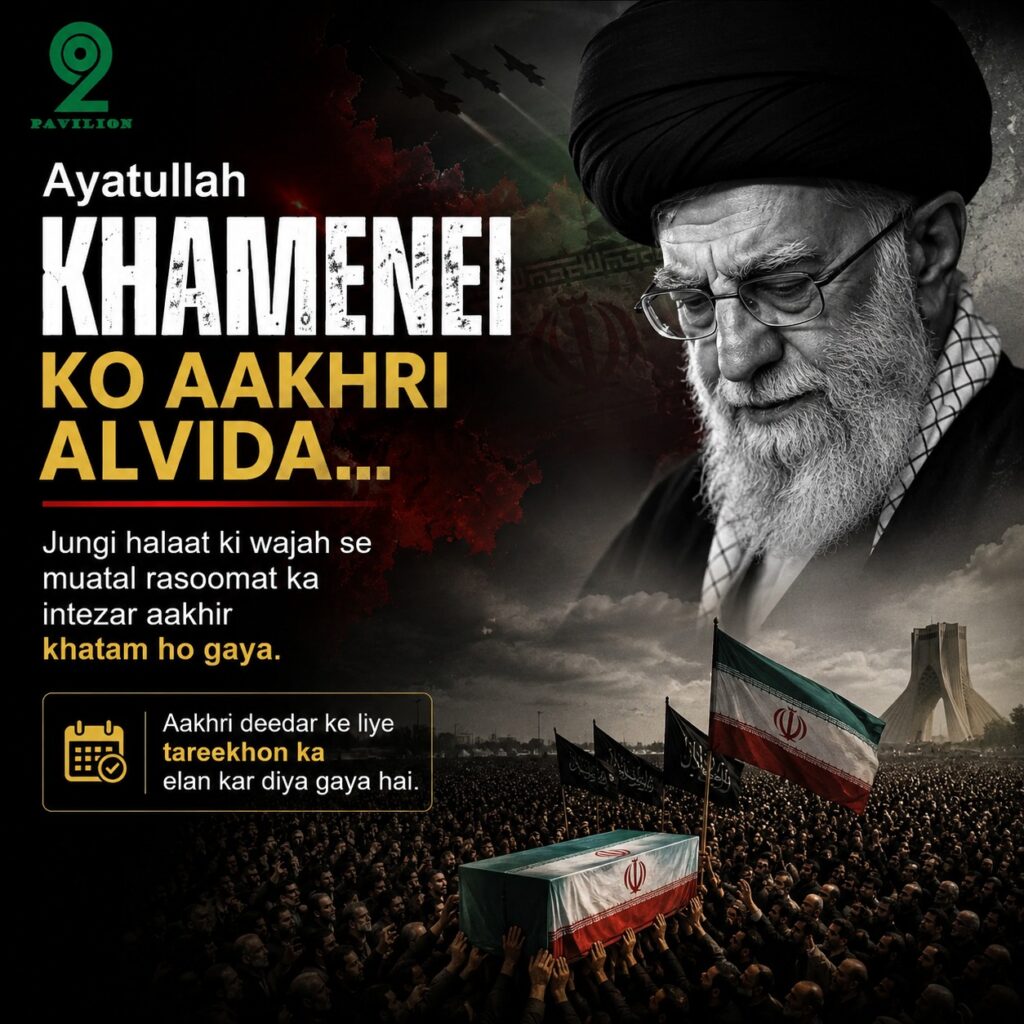
The Ayatollah Khamenei funeral took place from July 3 to July 9, 2026, nearly four months after Iran’s Supreme Leader Ali Khamenei was killed in US-Israeli strikes on February 28. The six-day state funeral moved through Tehran, Qom, Najaf, Karbala, and finally Mashhad, where Khamenei was buried. Iranian officials estimated that between 15 and 30 million people took part across the processions, making it one of the largest funerals in the country’s history.
Why the Funeral Was Delayed for Months
Khamenei, who led Iran for four decades, was killed alongside four family members when US and Israeli forces struck Tehran on February 28, 2026, the first day of that conflict. Islamic tradition typically calls for burial within days of death, so the nearly four-month gap before the funeral was unusual.
Rowena Abdul Razak, a lecturer in Middle Eastern history at London’s School of Oriental and African Studies, told CNN that multiple factors caused the delay. The ongoing war brought heavy displacement and destruction that made organizing a funeral of this scale difficult. Security was another major concern, especially after Israeli Defense Minister Israel Katz stated that the new Supreme Leader, Mojtaba Khamenei, was also “marked for death.”
A Six-Day Journey Across Two Countries
The Ayatollah Khamenei funeral unfolded across five cities:
- Tehran: The opening procession, where crowds dressed in black filled the streets as a vehicle carrying coffins draped in the Iranian flag moved through the capital.
- Qom: Iran’s spiritual center, where ceremonies were held between the Shrine of Fatima Masoumeh and Jamkaran Mosque.
- Najaf, Iraq: The body arrived on July 8, received by Iraqi President Nizar Amedi. Iraq declared the day a public holiday.
- Karbala: Final rites near the shrines of Imam Hussein and his brother Abbas.
- Mashhad: The final destination, where Khamenei was laid to rest.
Tehran’s mayor said the capital’s procession alone could draw up to 20 million people, potentially making it the largest gathering in the city’s history.
Grief Mixed With Calls for Revenge
Many mourners expressed anger alongside grief. Speaking to Reuters, 30-year-old Zahra Valaei said, “We will take revenge for the blood of our leader.” During the processions, participants took part in a symbolic “stoning the devil” ceremony, throwing pebbles at an image of US President Donald Trump, while chants of “Death to America” echoed through the crowds.
Former US Secretary of State Mike Pompeo criticized the choice of July 4, American Independence Day, as the funeral’s start date, calling it a deliberate show of hostility toward the United States.
Who Took Part
More than 30 countries officially requested to participate, according to Iranian state media. Pakistan confirmed its attendance, and a senior Chinese lawmaker, He Wei, also joined the ceremonies. No Gulf Arab government publicly confirmed senior-level participation.
Notably, Mojtaba Khamenei, the new Supreme Leader, has not appeared in public since succeeding his father, raising questions about his current whereabouts even as the nation mourned.
The Strait of Hormuz in the Background
Even during the funeral, the fragile calm around the Strait of Hormuz remained in focus. Maritime tracking data from MarineTraffic showed 108 vessels crossed the strait between Friday and Sunday, many hugging the Omani coastline, a sign that the truce between the US and Iran remains delicate.
Frequently Asked Questions
Q: When did Ayatollah Khamenei die?
A: On February 28, 2026, during US-Israeli strikes on Tehran.
Q: When was the Ayatollah Khamenei funeral held?
A: From July 3 to July 9, 2026, across Tehran, Qom, Najaf, Karbala, and Mashhad.
Q: How many people attended?
A: Iran’s Health Ministry estimated over 15 million participants, with some reports suggesting turnout could reach 30 million.
Q: Who is Iran’s new Supreme Leader?
A: Mojtaba Khamenei, who has not been seen publicly since his father’s death.
This report is based on coverage from CNN, Al Jazeera, BBC, Reuters, and the state funeral timeline documented on Wikipedia.