Latest Posts
Loading latest posts…

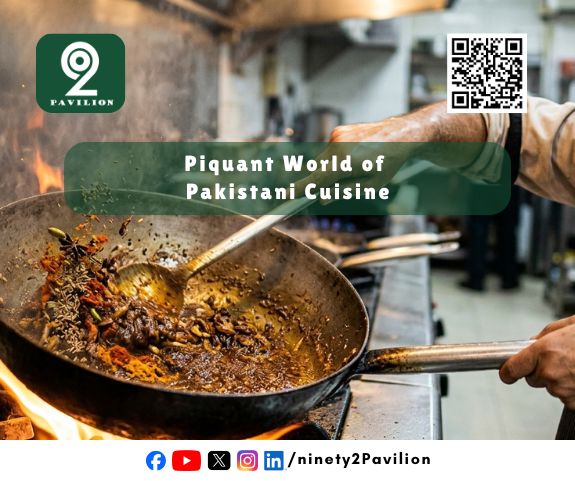
Piquant World of Pakistani Cuisine

Piquant World of Pakistani Cuisine

By: News desk 92Pavilion

To understand the spice level of Pakistani food is to understand the heart of its cultural identity—a bold, uncompromising, and deeply aromatic landscape that ranks among the most flavorful in the world. In 2026, as global palates become increasingly adventurous, Pakistani cuisine stands out not merely for “heat” in the sense of burning the tongue, but for the sophisticated and layered application of spices that create a complex sensory experience. While it is undeniably spicy by Western standards, the heat in Pakistani cooking is rarely one-dimensional; it is a carefully calibrated balance of pungency, earthiness, and fragrance that varies dramatically across the country’s diverse provinces.

The intensity of spice in Pakistan is largely a journey from west to east. In the rugged terrains of Balochistan and Khyber Pakhtunkhwa, the food is surprisingly mild. Here, the focus is on the natural quality of the meat, seasoned primarily with salt, cracked black pepper, and animal fat. However, as one moves toward the heartland of Punjab and the coastal metropolis of Karachi, the spice levels escalate significantly. In cities like Lahore, the use of red chili powder, crushed flakes, and fresh green chilies becomes a foundational element of the “Bhuna” process—a technique where spices are fried in oil until they release their essential oils, creating a deep, resonant heat that permeates the entire dish.

The “spiciness” of a typical Pakistani curry, such as a Goat Karahi or a Chicken Jalfrezi, is built upon a base of “Garam Masala”—a literal “warm spice” blend. This mix includes black pepper, cloves, cinnamon, and cardamom, which provide a warming, internal heat rather than a superficial burn. This is then layered with generous amounts of red chili for kick and turmeric for earthiness. However, the true “fire” often comes from the garnishes. It is standard practice in Pakistani households and street stalls to top a finished dish with a handful of razor-thin slivers of ginger and finely chopped green bird’s-eye chilies. This adds a fresh, sharp piquancy that cuts through the richness of the gravies, offering a multi-layered heat profile that evolves with every bite.

For the uninitiated, the heat can be formidable, but Pakistani cuisine offers built-in cooling mechanisms. The ubiquitous “Raita”—a yogurt-based dip infused with cumin and mint—serves as a fire extinguisher for the palate, while the heavy use of fats like ghee or butter helps to dissolve the capsaicin, making the spice more manageable. In 2026, even as modern fusion trends take hold in urban centers, the demand for authentic, high-heat dishes remains a point of national pride. Ultimately, the food in Pakistan is as spicy as the country’s history is rich. It is a heat that invites the diner in rather than pushing them away, creating a culinary experience that is as invigorating as it is delicious


Share

Introduction

Pakistan’s political environment in 2026 remains dynamic and highly influential in shaping the country’s future. From parliamentary debates and economic policy decisions to opposition movements and electoral reforms, recent developments are playing a crucial role in determining national direction.

In this report by Eye of Pakistan, we analyze the latest political developments, government strategies, and opposition responses.

Government’s Policy Priorities in 2026

The federal government has emphasized:

  • Economic stabilization

  • Institutional reforms

  • Energy sector restructuring

  • Strengthening foreign diplomatic ties

Recent cabinet meetings focused on controlling inflation, stabilizing the Pakistani Rupee, and implementing fiscal discipline under ongoing economic reform programs.

Officials claim these measures aim to restore investor confidence and ensure sustainable growth.

Opposition’s Response and Political Strategy

Major opposition parties have intensified criticism of government policies, particularly regarding:

  • Rising inflation

  • Unemployment

  • Tax reforms

  • Utility price increases

Opposition leaders argue that economic pressure on the public has increased and demand greater transparency in parliamentary proceedings.

Political rallies and public gatherings have increased across major cities including Karachi, Lahore, and Islamabad.

Parliamentary Developments

Recent National Assembly sessions have seen heated debates over:

  • Budget allocations

  • Electoral reforms

  • Accountability laws

  • Provincial autonomy issues

Lawmakers from both treasury and opposition benches continue to exchange strong viewpoints, reflecting a vibrant yet tense political atmosphere.

Election Reforms and Democratic Process

Discussions around electoral transparency and digital voting mechanisms remain central to political discourse.

The Election Commission is reportedly reviewing:

  • Voter verification systems

  • Polling station security

  • Overseas voting procedures

Analysts believe these reforms could significantly impact future general elections.

Public Reaction and Political Climate

Public opinion appears divided. While some citizens support structural reforms and long-term stabilization plans, others express concerns over economic hardships and governance challenges.

Political analysts suggest that the coming months will be critical in determining whether current policies translate into tangible relief for the public.

Conclusion

Pakistan’s political landscape in 2026 is marked by active debate, institutional reforms, and strategic maneuvering from both government and opposition parties. As policy decisions continue to unfold, their impact on economic stability and democratic processes will remain under close observation.

Stay connected with Eye of Pakistan for reliable and timely political updates.