
By: News Desk 92Pavilion
Pakistani cuisine is a vibrant and aromatic reflection of the country’s diverse geography, rich history, and deep-rooted traditions of hospitality. In 2026, the food culture of Pakistan continues to flourish, blending ancient Mughal influences with regional specialties that range from the spicy, coastal flavors of the south to the hearty, meat-centric traditions of the north. At the heart of this culinary world is a profound respect for spices, slow-cooking techniques, and the communal act of sharing a meal, making Pakistani food not just a source of nourishment but a powerful symbol of identity and generosity.
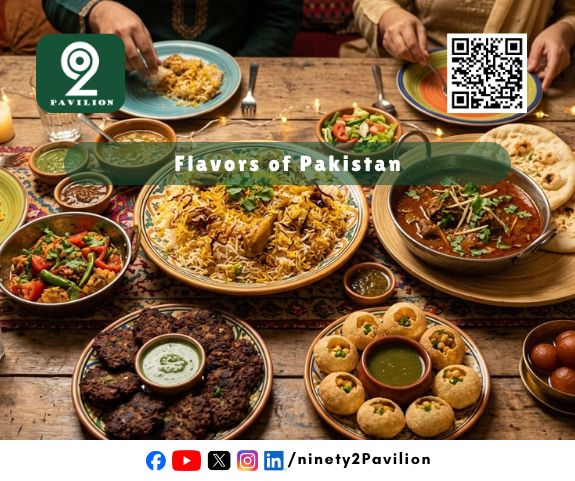
No discussion of Pakistani food is complete without mentioning Biryani, the undisputed king of festive meals. This layered rice dish, particularly the Sindhi and Karachi varieties, is a masterclass in spice layering and aromatic complexity. Marinated meat is cooked with whole spices—cloves, cardamom, and cinnamon—and layered with saffron-infused basmati rice before being sealed for “dum” (slow steam). The result is a fragrant, colorful explosion of flavor that is often served with a cooling yogurt raita. Parallel to Biryani is Nihari, a slow-cooked beef stew that traces its lineage back to the royal Mughal kitchens. Traditionally simmered overnight to break down tough cuts of meat into a silky, collagen-rich gravy, Nihari is a breakfast staple served with ginger slivers, lemon, and hot tandoori naan.
The street food of Pakistan offers a more visceral, immediate experience of the country’s palate. In Karachi and Lahore, the air is often thick with the scent of Chapli Kebab, a Pashtun-style patty made from minced meat and a bold mix of pomegranate seeds and green chilies. Similarly, Gol Gappa (or Pani Puri) remains a beloved snack; these crispy, hollow shells are filled with chickpeas and potatoes and dipped into tangy tamarind water. For those seeking something heartier, the Karahi—named after the wok-like vessel it is cooked in—is a hallmark of freshness. Unlike heavier curries, a Karahi focuses on the natural juices of meat, tomatoes, and green chilies cooked over an intense flame, creating a bold and clean taste that is best enjoyed with hot, buttery kulcha or roti.
As we look toward the regional diversity of the 2026 food scene, the simplicity of the north stands in stark contrast to the richness of the plains. In Balochistan and Khyber Pakhtunkhwa, dishes like Sajji (whole roasted lamb or chicken) and Kabuli Pulao emphasize the natural flavors of the meat with minimal spicing. Meanwhile, the fertile plains of Punjab offer comforting staples like Saag served with Makki ki Roti (cornbread) and an array of lentil-based Daals. To conclude any meal, Pakistani desserts like the milk-based Gulab Jamun or the creamy Ras Malai provide a sweet, cooling finish. Ultimately, the famous foods of Pakistan are a testament to a culture that values patience in the kitchen and warmth at the table, ensuring that every bite tells a story of heritage and home