
PAKISTANI MUSIC
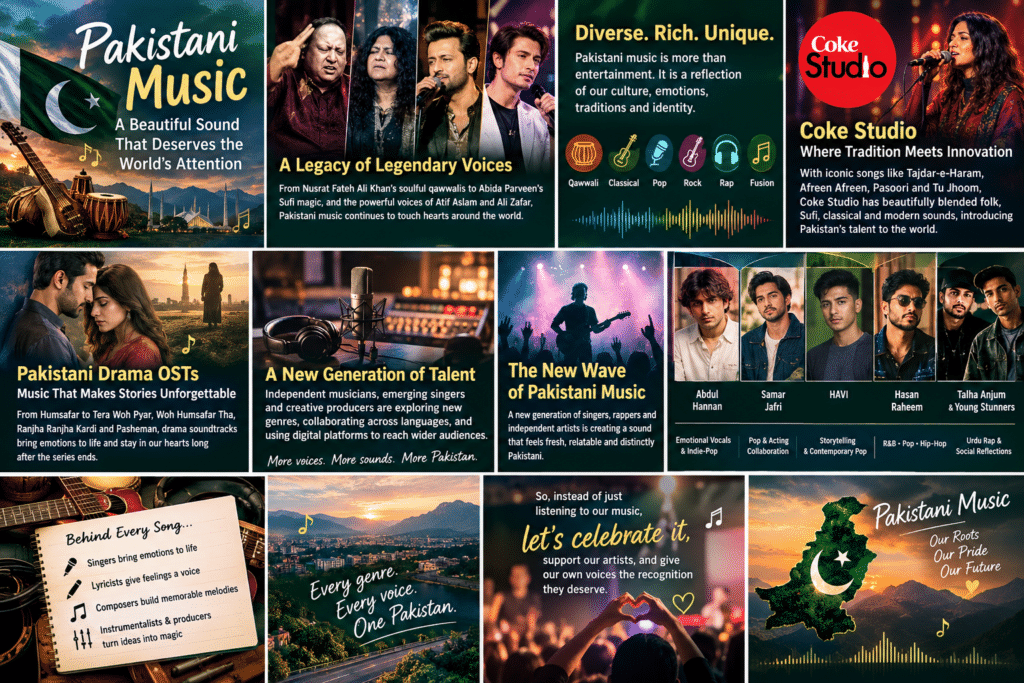
Pakistani music is more than entertainment. It is a reflection of our culture, emotions, traditions, and identity. From soulful qawwali and classical melodies to energetic pop, rock, rap, and contemporary fusion, Pakistan has a musical heritage that continues to evolve while staying connected to its roots.
One of the most beautiful things about Pakistani music is its diversity. The timeless qawwalis of Nusrat Fateh Ali Khan introduced generations of listeners around the world to the spiritual power of South Asian music. Artists such as Abida Parveen continue to mesmerize audiences with their soulful interpretations of Sufi poetry, while Atif Aslam and Ali Zafar have helped Pakistani pop reach listeners far beyond the country’s borders.
From Coke Studio to Heart-Touching OSTs:
Pakistani music is one of the country’s most beautiful forms of artistic expression. From soulful melodies and traditional folk music to modern pop, independent artists, and unforgettable drama soundtracks, Pakistan continues to produce music that connects with people across generations. Despite the challenges faced by the music industry, there is so much talent, creativity, and meaningful work worth celebrating.
Coke Studio: Where Tradition Meets Innovation
One of the biggest highlights of Pakistan’s music scene is Coke Studio, a platform that has brought together traditional sounds and contemporary music in remarkable ways. By blending folk, Sufi, classical, pop, and regional influences, it has introduced audiences to fresh interpretations of Pakistan’s musical heritage.
Songs such as Tajdar-e-Haram, Afreen Afreen, Pasoori, and Tu Jhoom demonstrate how Pakistani music can honour its roots while appealing to modern listeners. The platform has also given talented vocalists and musicians opportunities to collaborate, experiment, and reach international audiences.
What makes Coke Studio special is its ability to create something new without losing the emotional depth of the original musical traditions. It reminds us that our cultural heritage is not simply something to preserve — it is something we can continue to reinvent.
Pakistani Drama OSTs Music That Makes Stories Unforgettable
Another remarkable part of Pakistan’s music industry is its original soundtrack, or OST, culture. Pakistani dramas are known not only for their storytelling and performances but also for the songs that give their stories an emotional identity.
From the haunting melody of Humsafar to the emotional depth of Tera Woh Pyar from Mann Mayal, drama soundtracks often become memorable long after a series ends. Songs such as Woh Humsafar Tha, Ranjha Ranjha Kardi, and Pasheman show how music can express feelings that dialogue alone cannot fully capture.
The success of drama OSTs reflects the combined creativity of singers, composers, lyricists, and music producers. Their work helps audiences connect more deeply with characters, relationships, heartbreak, hope, and personal struggles. A powerful OST can become part of a drama’s identity, turning a memorable scene into an experience that stays with viewers.
A New Generation of Musical Talent
Beyond Coke Studio and television soundtracks, Pakistan’s music scene continues to grow through independent musicians, emerging singers, and experimental producers. Artists are exploring different genres, collaborating across languages, and using digital platforms to reach new listeners.
This diversity is one of the industry’s greatest strengths. Pakistani music can move from a traditional Sufi performance to contemporary pop, from regional folk melodies to acoustic storytelling, without losing its distinctive character.
Behind every successful song are creative people whose work deserves recognition. Singers bring emotions to life, lyricists give feelings a voice, composers build memorable melodies, and instrumentalists and producers transform ideas into complete musical experiences.
The New Wave of Pakistani Music:
Pakistani music is experiencing an exciting transformation. A new generation of singers, rappers, and independent artists is changing the way people discover, enjoy, and connect with music. From songs playing on repeat in headphones to emotional tracks trending on social media, these artists are creating a sound that feels fresh, relatable, and distinctly Pakistani.
Names like Abdul Hannan, Samar Jafri, HAVI, Hasan Raheem, and Talha Anjum have become part of conversations among young music lovers. Their growing popularity reflects something bigger than a passing trend: audiences are embracing new voices, experimenting with different genres, and connecting deeply with music that speaks to their own experiences.
Abdul Hannan has established a strong identity through his emotional vocals, thoughtful songwriting, and mellow indie-pop sound. Songs such as Bikhra and Iraaday have resonated with listeners who enjoy music about love, longing, and relationships. His collaborations also demonstrate how artists can create something special by bringing different musical personalities together.
Samar Jafri is another name attracting attention through both acting and music. His collaboration with Abdul Hannan on Khasara reflects the growing appeal of emotional, contemporary Pakistani pop. The enthusiasm surrounding these artists shows how audiences increasingly appreciate performers who bring personality and sincerity to their music.
HAVI represents an emerging voice in Pakistan’s contemporary music scene. His emotionally driven storytelling and songs such as Andaz E Karam, Na Milay, and Farz have helped him connect with an expanding audience. His selection for Spotify’s RADAR Pakistan programme in 2026 further highlighted the growing visibility of emerging Pakistani artists.
Hasan Raheem, meanwhile, has helped popularise a distinctive blend of R&B, pop, and hip-hop. Tracks such as Aisay Kaisay, Joona, and Peechay Hutt showcase his playful style and willingness to experiment. His music demonstrates that Pakistani artists can create sounds that feel internationally contemporary while retaining their own cultural identity.
No conversation about Pakistan’s modern music movement feels complete without mentioning Talha Anjum and Young Stunners, the rap duo he forms with Talha Yunus. Their music has helped bring Urdu rap into the mainstream, combining personal storytelling, poetic expression, ambition, and social observations.
Every generation brings a new sound, but the emotion remains the same. And perhaps that’s the real beauty of our music: it connects our roots to our future and reminds us that Pakistani talent has no boundaries.
So, instead of just listening to our music, let’s celebrate it, support our artists, and give our own voices the recognition they deserve.