By: News Desk 92Pavilion
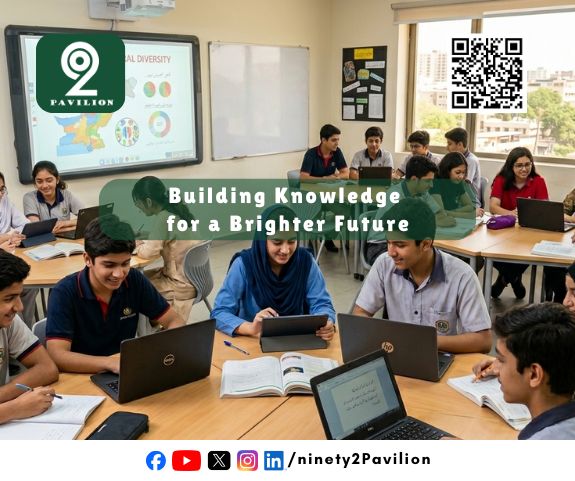
Pakistan has made remarkable strides in expanding its educational infrastructure. New schools, colleges, and universities are being established across urban and rural areas, ensuring that quality education is accessible to more communities than ever before. Modern campuses equipped with libraries, laboratories, and digital learning facilities are reshaping the academic landscape.
- Government and private initiatives are introducing smart classrooms and online learning platforms.
- E-learning programs and digital libraries are empowering students to access knowledge beyond traditional boundaries.
- Pakistan’s youth are increasingly engaging with global educational resources, enhancing competitiveness in the digital age.
Leading universities in Pakistan are gaining recognition for research and innovation.
International collaborations and exchange programs are opening doors for students to learn and contribute globally. Specialized institutes in science, technology, engineering, and medicine are producing skilled graduates ready to drive progress.
Teacher training programs are improving classroom quality and teaching standards.Scholarships and merit-based opportunities are enabling talented students to pursue higher education.A growing emphasis on creativity, critical thinking, and innovation is preparing students for modern challenges.
Pakistan’s education sector is increasingly recognized for its potential. With a youthful population eager to learn, the country is positioning itself as a hub of talent and knowledge in South Asia.
Pakistan’s educational journey reflects resilience, innovation, and ambition. With expanding infrastructure, digital transformation, and a strong commitment to empowering youth, the nation is building a foundation for a brighter, knowledge-driven future.
Introduction
Pakistan’s political environment in 2026 remains dynamic and highly influential in shaping the country’s future. From parliamentary debates and economic policy decisions to opposition movements and electoral reforms, recent developments are playing a crucial role in determining national direction.
In this report by Eye of Pakistan, we analyze the latest political developments, government strategies, and opposition responses.
Government’s Policy Priorities in 2026
The federal government has emphasized:
Recent cabinet meetings focused on controlling inflation, stabilizing the Pakistani Rupee, and implementing fiscal discipline under ongoing economic reform programs.
Officials claim these measures aim to restore investor confidence and ensure sustainable growth.
Opposition’s Response and Political Strategy
Major opposition parties have intensified criticism of government policies, particularly regarding:
Rising inflation
Unemployment
Tax reforms
Utility price increases
Opposition leaders argue that economic pressure on the public has increased and demand greater transparency in parliamentary proceedings.
Political rallies and public gatherings have increased across major cities including Karachi, Lahore, and Islamabad.
Parliamentary Developments
Recent National Assembly sessions have seen heated debates over:
Lawmakers from both treasury and opposition benches continue to exchange strong viewpoints, reflecting a vibrant yet tense political atmosphere.
Election Reforms and Democratic Process
Discussions around electoral transparency and digital voting mechanisms remain central to political discourse.
The Election Commission is reportedly reviewing:
Analysts believe these reforms could significantly impact future general elections.
Public Reaction and Political Climate
Public opinion appears divided. While some citizens support structural reforms and long-term stabilization plans, others express concerns over economic hardships and governance challenges.
Political analysts suggest that the coming months will be critical in determining whether current policies translate into tangible relief for the public.
Conclusion
Pakistan’s political landscape in 2026 is marked by active debate, institutional reforms, and strategic maneuvering from both government and opposition parties. As policy decisions continue to unfold, their impact on economic stability and democratic processes will remain under close observation.
Stay connected with Eye of Pakistan for reliable and timely political updates.