Introduction
Every time regional tensions escalate whether it’s a strike on Iran, cross-border fire with Hezbollah, or Houthi attacks in the Red Sea headlines about an Israeli stock market decline start circulating, and investors around the world ask the same question: is Israel’s economy cracking under the weight of prolonged conflict? The reality is more nuanced. The Tel Aviv Stock Exchange (TSE) has actually shown remarkable resilience since October 2023, repeatedly hitting record highs even during active fighting. But that headline strength hides real strain underneath soaring military spending, a widening fiscal deficit, and a debt-to-GDP ratio that keeps climbing. This article breaks down how regional conflicts, defense costs, and geopolitical risk are actually shaping Israel’s stock market and broader economy separating short-term volatility from the deeper structural story.
Overview of the Israeli Stock Market Decline
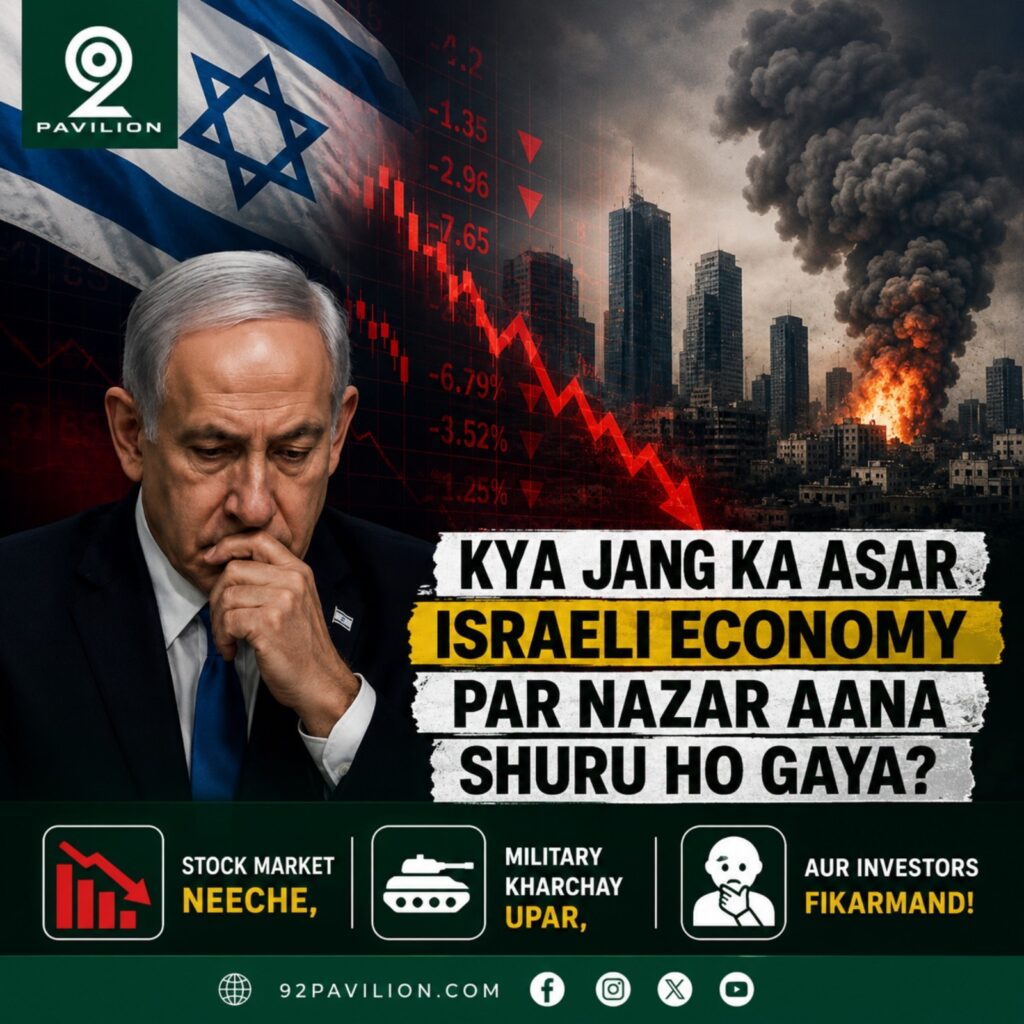
The phrase “Israeli stock market decline” usually refers to sharp, short-lived drops rather than a sustained downtrend. The benchmark TA-125 index and blue-chip TA-35 have seen sudden single-day corrections around specific shock events a missile barrage, an assassination, or a surprise military operation followed by quick rebounds once markets price in the outcome. For example, periods of intense fighting with Iran triggered brief sell-offs, but each time, the index recovered and pushed to new highs within weeks, driven by strong hi-tech earnings, defense-sector gains, and record foreign investor inflows.
That said, the underlying economy tells a more cautious story. GDP contracted sharply in the immediate aftermath of October 7, 2023, and has since moved in fits and starts strong headline growth numbers that economists say are partly inflated by heavy government spending rather than organic private-sector expansion. So while the Tel Aviv Stock Exchange itself has been a story of resilience and even outperformance, the phrase “decline” is more accurately applied to specific volatility episodes, investor risk premiums, and civilian economic hardship not the index’s long-term trajectory.
How Regional Conflicts Affect Investor Confidence
Investor confidence in Israel doesn’t move in a straight line it reacts to the direction of conflict news more than the conflict itself. When escalation appears to reduce a long-term threat (for instance, a decisive strike seen as weakening Iran’s capabilities), markets often rally rather than fall, because investors interpret it as risk removal. Conversely, when conflict appears open-ended or unpredictable with no clear resolution capital becomes more cautious, and volatility spikes.
Several factors shape this investor psychology:
- Perceived escalation control — markets punish uncertainty more than actual violence.
- Sector rotation — capital flows into defense, cybersecurity, and energy stocks during conflict, while tourism, retail, and construction stocks underperform.
- Currency and bond market signals — a weakening shekel or rising bond yields (Israel’s “risk premium”) often reflect investor anxiety even when the stock index itself is climbing.
- Global risk appetite — Israeli equities are also swept up in broader emerging-market and Middle East conflict economy sentiment, sometimes disconnected from domestic fundamentals.
This explains why Israel’s financial market can simultaneously show record stock prices and rising borrowing costs two indicators pulling in opposite directions.
Military Spending and Its Impact on Israel’s Economy
This is where the real economic cost of the conflict shows up. Israel military spending has surged from around 4.2% of GDP before the war to close to 8% of GDP at its 2024–2025 peak nearly double the pre-war burden. The defense budget for 2026 has been repeatedly revised upward, reaching roughly NIS 175 billion when including reserves for war-related needs, and now consumes close to a quarter of the entire state budget, up from about 16% in 2022.
This level of defense spending Israel now carries has direct economic consequences:
- Crowding out civilian spending — health, education, infrastructure, and welfare budgets face growing pressure as defense absorbs a larger share of national resources.
- Labor market strain — the extended mobilization of reservists, many from the tech and skilled-services sector, has created workforce shortages in exactly the industries driving Israel’s growth.
- Sector-specific stimulus — defense and cybersecurity companies (like Elbit Systems) have benefited directly, attracting investment and pushing related stocks higher even as the broader economy absorbs the cost.
- Long-term structural risk — economists at institutions like the Israel Democracy Institute and Taub Center warn that sustained high defense spending, without matching revenue growth, risks a “vicious cycle” of slower growth and shrinking fiscal room.
In short, military spending has become both a market driver (via defense stocks) and a macroeconomic burden (via the state budget) the two effects often pulling the economy in different directions at once.
Effects on Government Debt, Inflation, and GDP
Israel’s government debt-to-GDP ratio climbed from roughly 60% before the war to around 68–69% by 2025–2026, reversing over a decade of fiscal consolidation. The fiscal deficit ballooned from a surplus in 2022 to a peak deficit of around 6.8–8.3% of GDP in 2024, before easing modestly to roughly 4.5–5.3% in 2025–2026 as consolidation measures including a VAT hike to 18% and reduced tax exemptions took effect.
On the growth side, the Bank of Israel projects GDP growth around 3.5–4% for 2026, but analysts caution this partly reflects delayed consumption and government stimulus rather than a genuine rebound in private investment. Inflation has remained relatively contained, hovering near the central bank’s 1–3% target band, helped by interest rate cuts as the economy normalizes.
The bigger concern for economists isn’t the headline growth number it’s per-capita GDP, which hasn’t returned to its pre-war trajectory, meaning many Israelis are experiencing a real decline in living standards even as aggregate indicators look stable. Rising government debt also means a growing interest burden, which further squeezes the budget in future years an economic slowdown risk that could persist well after active fighting ends.
Foreign Investment and Market Outlook
Despite the war, foreign investment in Israel has held up better than many expected. Early 2026 saw Israel successfully raise $6 billion in international bond markets its first global issuance since the 2023 Gaza ceasefire with strong demand from around 300 investors across more than 30 countries, including some from Abraham Accords states. Pricing spreads on these bonds have narrowed closer to pre-war levels, signaling renewed confidence in Israeli sovereign debt.
The hi-tech sector remains the backbone of this resilience, contributing roughly 20% of GDP and around 50–60% of exports, with continued strong venture capital interest in AI, cybersecurity, and defense-tech startups sectors directly boosted by wartime demand. Average daily trading volume on the Tel Aviv Stock Exchange has hit record levels, nearly doubling year-over-year, reflecting sustained retail and institutional participation.
That said, risks remain on the horizon: a persistent “Iran premium” keeps Israel’s borrowing costs elevated, and US tariffs of around 15% on select Israeli exports have created friction with Israel’s largest trading partner. Investors are increasingly treating conflict risk as “priced in,” shifting focus instead to corporate earnings and structural reform progress.
Expert Analysis and Future Economic Risks
Economists broadly agree on one point: Israel’s stock market strength should not be mistaken for economic invulnerability. The IMF’s 2026 Article IV assessment noted that while consolidation measures have helped contain the deficit, public debt is still projected to rise without further fiscal adjustment. The Taub Center’s State of the Nation Report similarly warned that without accelerated growth, rising defense needs could “crowd out” civilian spending in a self-reinforcing cycle.
Key risks flagged by analysts for the remainder of 2026 include:
- Renewed escalation with Iran, Hezbollah, or the Houthis reigniting sharp market volatility.
- A widening gap between headline GDP growth and real per-capita economic wellbeing.
- Continued brain drain, as skilled workers emigrate amid prolonged uncertainty.
- Political instability ahead of Israel’s scheduled 2026 general election, which could affect fiscal policy continuity.
- Trade friction with the US over tariffs on Israeli exports.
Conclusion
The relationship between geopolitical tensions, military costs, and Israel’s market performance is more complicated than a simple “war causes decline” narrative. On the surface, the Tel Aviv Stock Exchange has defied expectations, posting record highs even during active conflict, buoyed by defense and tech sector strength and resilient foreign investment. But beneath that resilience lies a genuine economic strain soaring defense spending, a heavier debt burden, and a widening fiscal deficit that limit the government’s room to maneuver. Going forward, Israel’s economic outlook will likely hinge less on whether conflict continues and more on how effectively the government manages the fiscal tradeoffs it has created between security needs, civilian services, and long-term growth. Investors and policymakers alike will be watching whether market optimism can hold if fiscal pressures intensify, or whether the next major escalation finally tests the resilience that has defined Israel’s financial market since 2023.