By: News Desk 92Pavilion | Updated: July 2026
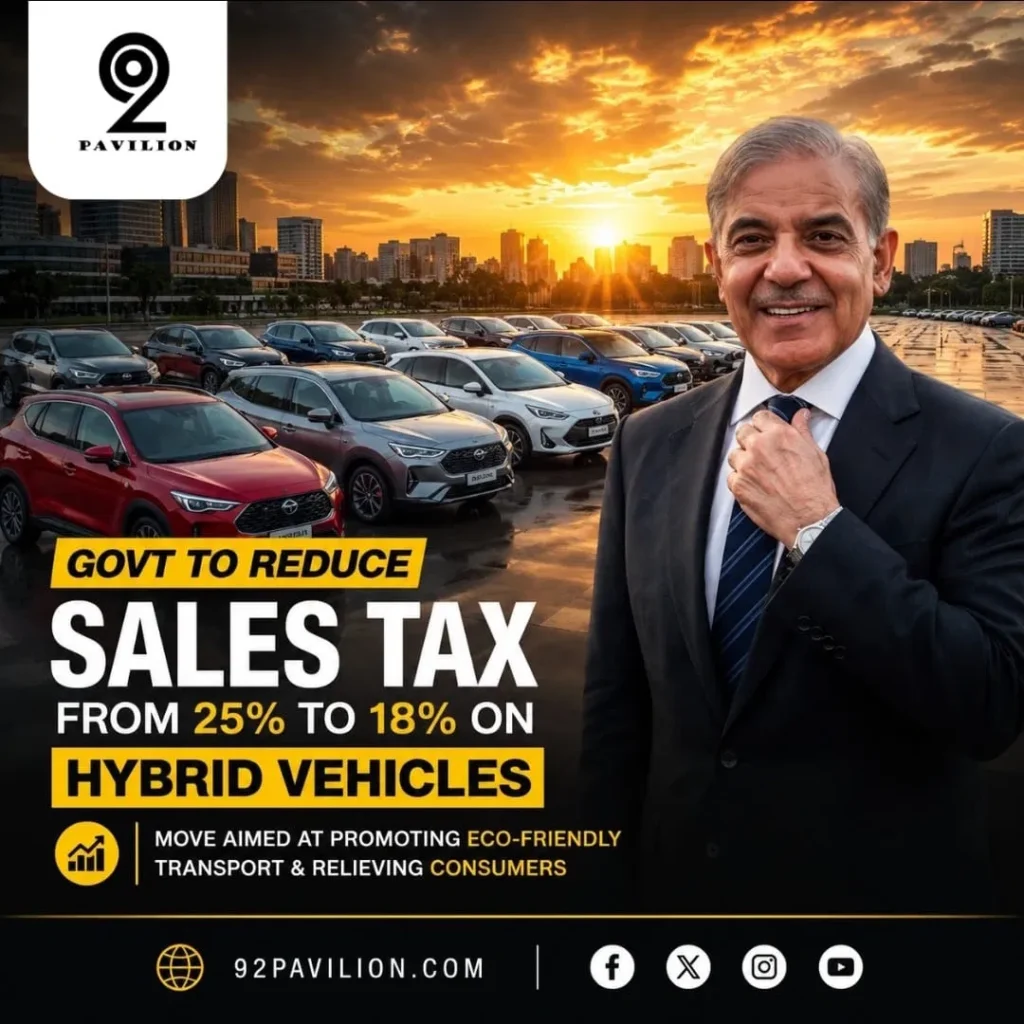
Quick Answer: A hybrid vehicle sales tax cut is now under review in Pakistan. The government has sent a summary to the Finance Division, proposing a reduction from 25 percent to 18 percent. The plan still needs approval from the federal cabinet. It follows weeks of confusion after hybrid car taxes jumped sharply on July 1, 2026.
How the Tax Jump Happened
The story starts with a deadline that quietly passed. Hybrid vehicles used to enjoy reduced sales tax rates. Cars up to 1,800cc paid just 8.5 percent. Larger models paid 12.75 percent. This concession was always temporary, and it expired on June 30, 2026.
No extension was announced. No new policy was ready to take its place. When the deadline passed, hybrid vehicles automatically moved into the standard tax category. That meant a jump to 25 percent, the same rate charged on regular petrol cars.
The Finance Act 2026-27 confirmed this shift when it took effect on July 1.
Industry Pushback Forces a Rethink
The sudden increase caused problems fast. Car buyers faced sticker shock, with some models rising in price by over Rs2.5 million. Manufacturers were left confused too. Several halted invoicing altogether, unsure which tax rate to apply.
By mid-July, some hybrid vehicle production lines had stopped completely. Manufacturers said they couldn’t issue invoices without knowing the final tax rate. That pressure appears to have pushed the government to act.
What’s Being Proposed Now
According to sources, a new summary has been sent to the Finance Division. It proposes cutting the sales tax on hybrid vehicles from 25 percent to 18 percent. If the cabinet approves it, the lower rate would apply going forward.
This new rate would still be higher than the old concessional rates. But it offers real relief compared to the current 25 percent charge. For now, hybrid vehicles remain taxed at the higher rate until cabinet approval comes through.
The Bigger Picture: A New Auto Policy
This isn’t expected to be the final word on hybrid vehicle taxation. The government is working on a new Auto Policy for 2026-31. Officials say it will likely settle the long-term tax treatment for hybrid and electric vehicles.
The policy was expected in August 2026, though no exact date has been confirmed. Until it’s announced, uncertainty is likely to continue weighing on the auto industry.
What This Means for Buyers
If you’re planning to buy a hybrid vehicle, timing matters. Prices under the current 25 percent tax rate are notably higher than before June 30. An approved cut to 18 percent would lower that burden, though not back to previous levels.
Dealers and manufacturers are watching closely for the cabinet’s decision. Many are holding off on final pricing until there’s more clarity.
Frequently Asked Questions
What is the current sales tax on hybrid vehicles in Pakistan?
Hybrid vehicles are currently taxed at 25 percent, after a previous concession expired on June 30, 2026.
What is the proposed new hybrid vehicle sales tax rate?
The government has proposed reducing it to 18 percent, though this still needs federal cabinet approval.
When will the new tax rate take effect?
No date has been confirmed. It depends on cabinet approval and the release of Pakistan’s new Auto Policy, expected around August 2026.
Why did hybrid vehicle taxes increase in the first place?
A previous tax concession expired on June 30, 2026, and was not extended, automatically shifting hybrid vehicles to the standard 25 percent tax rate.
This report is based on reporting from Business Recorder, PakWheels, Pakistan Observer, and PhoneWorld.