Latest Posts
Building a Vibrant Cultural FutureA Journey Towards ProsperityArab nations face an inevitable declineBlogging Revenue in Pakistan’s 2026 EconomyWhy China is Investing in Pakistan’s Gwadar PortThe Rising Spirit of Pakistani SportsVoice-Over Economy in Pakistan 2026India’s Investment in Iran,Chabahar PortEvent Management Business in Pakistan 2026The Volatile Trajectory of Pakistan-Afghanistan Relations in 2026Why Pakistan Must Overhaul Its InfrastructureEvolution of Goods and Equipment in Modern SportsThe Current Situation of Sports in PakistanGovernment Initiatives for Sports in PakistanAssessing Sports Infrastructure and Facilities in PakistanSialkot and the Renaissance of Pakistan’s Sports Goods IndustryEmerging Sports Trends in 2026Legacy of Popular Traditional SportsJourney Through the Background of Sports in PakistanInfrastructure and Framework Deficits in Pakistani Sports InstitutionsLevelling the Field of SportsThe Roadmap for Pakistan’s Islamic Financial TransitionApartheid Structure in Occupied KashmirThe Strategic Role of the SCO in 2026Complexities of Illegal Immigrant RepatriationPakistan’s Strategic Role in Regional Power DynamicsPakistan’s Strategic Role in the South Asian Power PlayPakistan’s Strategic Tightrope in the US-China RivalryPakistan-China Relations in a Changing Geopolitical EnvironmentForeign Relation of Pakistan with Neighboring CountriesGlobal Response and the Reshaping World Order in 2026Impacts of International Structure on Pakistan’s Foreign PolicyEnduring Conflict Between India and PakistanAncient Roman and Modern EntertainmentCultivating Pakistan’s Future Tech WorkforceBuilding, Champions of the WorldDeciphering the Boundary Between Art and EntertainmentDevelopment of Pakistan’s Entertainment Industry

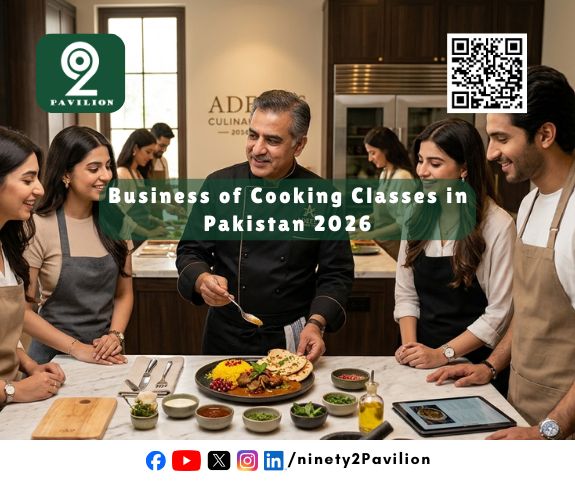
Business of Cooking Classes in Pakistan 2026

Business of Cooking Classes in Pakistan 2026

By: News Desk 92Pavilion

In the professional landscape of April 2026, the business of cooking classes in Pakistan has moved beyond simple domestic training to become a high-value sector within the country’s skill-based economy. As urban centers like Karachi, Lahore, and Islamabad see a rise in disposable income and a growing fascination with global culinary standards, the demand for structured culinary education has reached unprecedented heights. The running business situation is defined by a strategic intersection of traditional hospitality and modern digital entrepreneurship. Following the success of the Pakistan International Culinary Championship (PICC) in February 2026, which saw record participation from thousands of professionals and students, the market has matured significantly. Cooking classes are no longer just a hobbyist’s pursuit; they are a vital training ground for the next generation of culinary entrepreneurs and hospitality professionals.

To earn money in this environment, practitioners have adopted a “Hybrid Hybrid” revenue model. On one hand, physical culinary institutes are generating substantial income through “Professional Certification Tracks” endorsed by bodies like the Chefs Association of Pakistan (CAP) and international partners. These long-term courses, often lasting three to six months, provide students with the technical skills needed to work in the global hospitality market or launch their own “Cloud Kitchens.” On the other hand, a secondary revenue stream has emerged through “Experience-Based Workshops.” These are short-term, high-premium sessions—often priced between 5,000 to 15,000 PKR per person—targeting urban professionals and couples looking for a social, hands-on experience rather than a formal degree. This segment thrives on “Visual Appeal,” where the aesthetic quality of the kitchen and the celebrity status of the instructing chef drive premium ticket sales.

The 2026 market also features a robust “Digital Subscription” model. Successful Pakistani chefs and food influencers are now monetizing their expertise through private online academies. By offering high-definition, pre-recorded masterclasses and live weekly Q&A sessions, they can reach a nationwide audience that is physically distant but digitally connected. These platforms typically operate on a monthly recurring revenue (MRR) basis, providing students with constant access to proprietary recipes and techniques for a modest monthly fee. This model is highly scalable, allowing a single chef to educate thousands of students simultaneously with minimal overhead. Additionally, the rise of “Ingredient Kit Delivery” has opened a third front for profit. Some cooking schools now partner with grocery startups to deliver pre-portioned, high-quality ingredients to their students’ doorsteps, earning a commission on the product sales alongside the tuition fee.

Furthermore, the corporate sector has become a major client for event-based cooking classes. Following the recent push toward “Corporate Wellness” and “Team Bonding” in Pakistan’s tech and banking industries, event managers are frequently hiring cooking institutes to conduct team-building workshops. These B2B contracts are particularly lucrative as they involve large groups and allow for higher margins on catering and logistics. To stay profitable in the current year, successful business owners are also integrating sustainability into their curriculum—teaching waste reduction and seasonal sourcing—which aligns with the global “Green Gastronomy” trend and allows them to attract socially conscious corporate sponsors. In summary, the cooking class business in Pakistan in 2026 is a diverse and resilient industry. It rewards those who can provide a mix of technical skill, social experience, and digital accessibility, proving that the art of the kitchen has become a cornerstone of the modern Pakistani service economy

Share

Introduction

Pakistan’s political environment in 2026 remains dynamic and highly influential in shaping the country’s future. From parliamentary debates and economic policy decisions to opposition movements and electoral reforms, recent developments are playing a crucial role in determining national direction.

In this report by Eye of Pakistan, we analyze the latest political developments, government strategies, and opposition responses.

Government’s Policy Priorities in 2026

The federal government has emphasized:

  • Economic stabilization

  • Institutional reforms

  • Energy sector restructuring

  • Strengthening foreign diplomatic ties

Recent cabinet meetings focused on controlling inflation, stabilizing the Pakistani Rupee, and implementing fiscal discipline under ongoing economic reform programs.

Officials claim these measures aim to restore investor confidence and ensure sustainable growth.

Opposition’s Response and Political Strategy

Major opposition parties have intensified criticism of government policies, particularly regarding:

  • Rising inflation

  • Unemployment

  • Tax reforms

  • Utility price increases

Opposition leaders argue that economic pressure on the public has increased and demand greater transparency in parliamentary proceedings.

Political rallies and public gatherings have increased across major cities including Karachi, Lahore, and Islamabad.

Parliamentary Developments

Recent National Assembly sessions have seen heated debates over:

  • Budget allocations

  • Electoral reforms

  • Accountability laws

  • Provincial autonomy issues

Lawmakers from both treasury and opposition benches continue to exchange strong viewpoints, reflecting a vibrant yet tense political atmosphere.

Election Reforms and Democratic Process

Discussions around electoral transparency and digital voting mechanisms remain central to political discourse.

The Election Commission is reportedly reviewing:

  • Voter verification systems

  • Polling station security

  • Overseas voting procedures

Analysts believe these reforms could significantly impact future general elections.

Public Reaction and Political Climate

Public opinion appears divided. While some citizens support structural reforms and long-term stabilization plans, others express concerns over economic hardships and governance challenges.

Political analysts suggest that the coming months will be critical in determining whether current policies translate into tangible relief for the public.

Conclusion

Pakistan’s political landscape in 2026 is marked by active debate, institutional reforms, and strategic maneuvering from both government and opposition parties. As policy decisions continue to unfold, their impact on economic stability and democratic processes will remain under close observation.

Stay connected with Eye of Pakistan for reliable and timely political updates.

Education in Pakistan 2026

By: News Desk 92Pavilion Education in Pakistan stands as a complex paradox of modest statistical gains and deep-rooted systemic crises. As of 2026, the national

Share
Read More »