
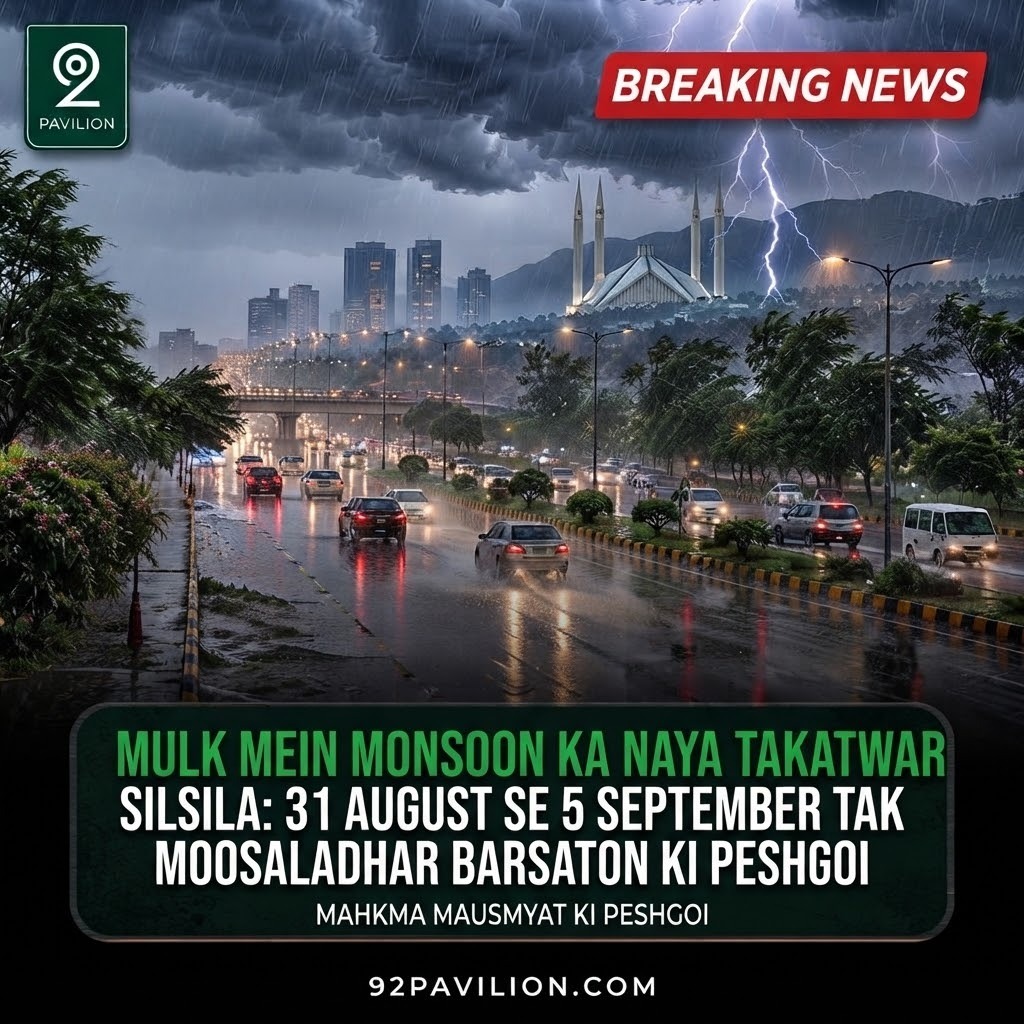
Quick Answer: The Pakistan Meteorological Department (PMD) has forecast a fresh spell of monsoon rain, windstorms, and thundershowers affecting upper and central Pakistan from August 31 to September 5, 2026, warning of urban flooding, flash floods, and landslides in vulnerable areas.
What PMD Has Forecast
According to PMD, monsoon currents are entering the region alongside an approaching westerly weather system from August 31, which is expected to sustain rainfall until September 5. Isolated heavy falls are likely in several areas, raising the risk of urban flooding.
Areas Likely to Be Affected
- Kashmir: Rain, wind, and thundershowers expected from the evening of August 28 until September 6 (with breaks), affecting Neelum Valley, Muzaffarabad, Rawalakot, Poonch, Hattian, Bagh, Haveli, Sudhanoti, Kotli, Bhimber, and Mirpur.
- Islamabad and upper Punjab: Wet and windy weather forecast from August 29 to September 5 in Islamabad, Rawalpindi, Murree, Galiyat, Jhelum, Chakwal, Talagang, Attock, Lahore, Sialkot, Sheikhupura, Narowal, Mandi Bahauddin, Gujrat, Gujranwala, Wazirabad, and Hafizabad.
- Central and southern Punjab: Rainfall expected between September 1 and 5.
Risks Highlighted by PMD
- Urban flooding: Possible in low-lying areas of Islamabad, Rawalpindi, Mardan, Swabi, Gujranwala, Gujrat, Sialkot, and Lahore between August 31 and September 5.
- Flash flooding: Local streams and nullahs in Kashmir, Murree, Galiyat, Islamabad, and Rawalpindi are at risk.
- Landslides: Hilly areas of Khyber-Pakhtunkhwa, Gilgit-Baltistan, Murree, Galiyat, and Kashmir face elevated landslide risk during this spell.
Advisory for Residents and Travelers
- Authorities have advised tourists and travelers heading to hill stations and northern areas to remain cautious during this period.
- Farmers have been asked to plan crop-related activities around the forecasted rainfall.
- All relevant departments have been directed to stay alert and take precautionary measures to avoid an emergency situation.
Why This Spell Matters
This forecast comes on the heels of an already active and, at times, record-breaking monsoon season in 2026, with Rawalpindi and Islamabad recently experiencing flooding that disrupted train services and forced school closures. Residents in flood-prone neighbourhoods are advised to stay updated through official PMD and district administration channels.
FAQs
Q: Which cities are most at risk during this monsoon spell?
Islamabad, Rawalpindi, Gujranwala, Gujrat, Sialkot, Lahore, Mardan, and Swabi are flagged for urban flooding risk between August 31 and September 5.
Q: Is it safe to travel to Murree or Galiyat during this period?
PMD has warned of rain, wind, and possible landslides in these hilly areas. Travelers should check road conditions and weather updates before heading out.
Q: How long will this monsoon spell last?
The spell is expected to bring rain from August 31 through September 5, with Kashmir seeing rain activity into September 6.
Q: What should residents in low-lying areas do?
Stay alert to district administration advisories, avoid unnecessary travel during peak rainfall hours, and keep emergency contacts handy in case of flooding.
Forecast details sourced from official PMD advisories. This article will be updated if PMD revises its outlook.