By: News Desk 92Pavilion | Updated: August 17, 2026
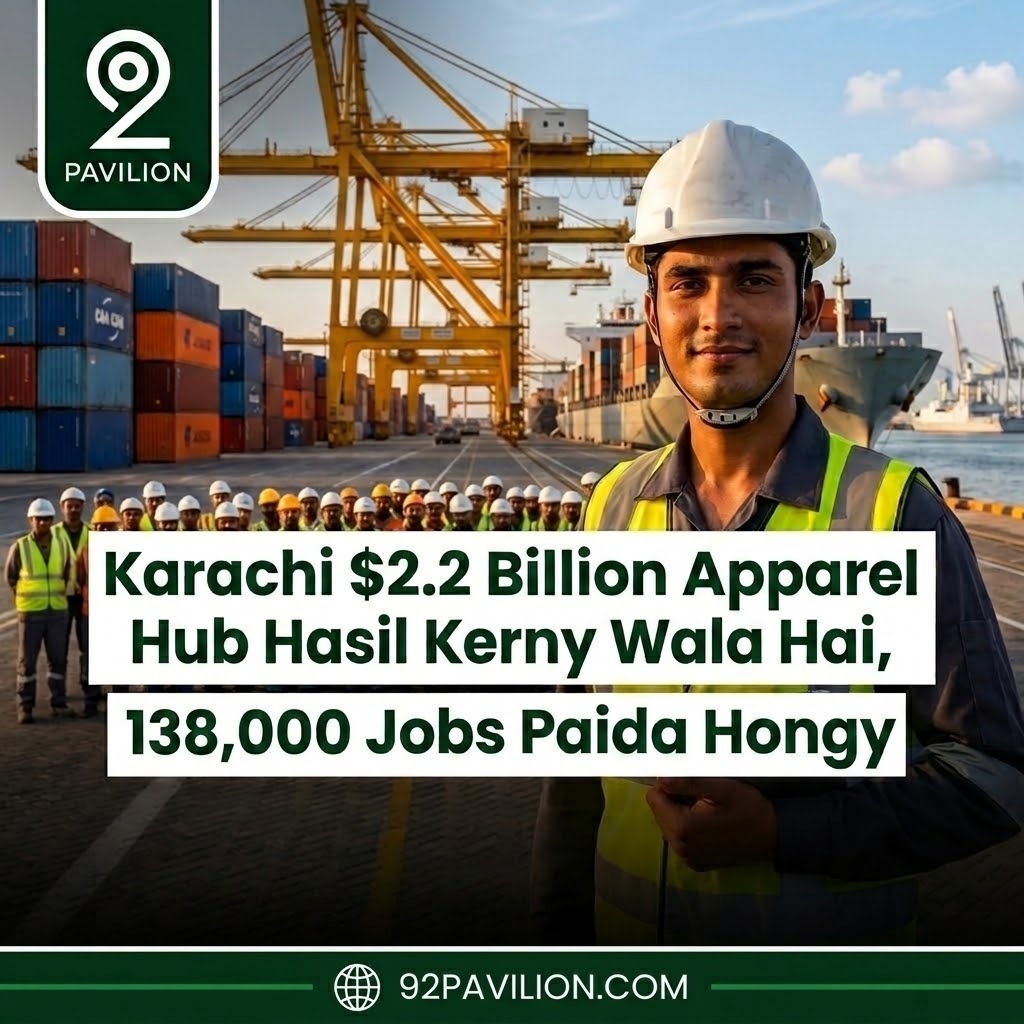
Quick Answer: Pakistan plans to build a 400-acre Garments City at Port Qasim in Karachi, with its first phase expected to create more than 138,000 jobs and generate around $2.2 billion in annual exports. Federal Minister for Maritime Affairs Junaid Anwar Chaudhry announced the project after chairing a planning meeting on Monday. Textile manufacturer Artistic Milliners has already committed over $18 million toward a manufacturing facility at the site.
A Major New Industrial Zone for Karachi
Pakistan’s Maritime Affairs Ministry has unveiled plans for a 400-acre apparel manufacturing zone at Port Qasim, one of the country’s largest seaports. Federal Minister Junaid Anwar Chaudhry chaired a meeting on the proposed Garments City project, describing it as an export-oriented manufacturing cluster focused on high-value apparel production.
According to projections presented at the meeting, the first phase of the project alone is expected to create 138,125 jobs and generate annual exports of approximately $2.2 billion. Officials also aim to raise the average export value of garments produced in Pakistan to around $8 per piece, up from current levels.
How the Project Will Be Structured
The first phase of the Garments City will cover 250 acres, with 35 percent of that land allocated to internal roads, utilities, and green areas. The remaining space will house 32 industrial plots of five acres each, though officials say plot sizes could be reduced to two or three acres to accommodate a larger number of investors and manufacturing units.
The project is being developed as a public-private partnership. Under this model, the Port Qasim Authority will provide the necessary infrastructure and utilities, while private companies invest directly in manufacturing operations within the zone.
What Infrastructure Will Be Available
Each industrial unit within the Garments City will have access to up to 400,000 gallons of water per day, two megawatts of on-grid electricity, and 23,100 pounds of industrial gas per day. Across the full project, planners have budgeted for a total utility capacity of 13 million gallons of water daily, 64 megawatts of electricity, and 750,000 pounds of industrial gas per day, reflecting the scale officials envision for the completed zone.
In addition, the Garments City will include a one-window system for exporters. This will feature streamlined export processing, specialised customs desks, and dedicated transport corridors, all designed to reduce logistical delays for manufacturers operating within the zone.
Private Investment Already Committed
Artistic Milliners, a Pakistani textile and denim manufacturing company, has already committed to establishing a manufacturing unit at the site with an investment of more than $18 million. The company’s planned facility will incorporate vertical integration and green technologies, according to a statement from the ministry.
Chaudhry said private sector participation would remain a key component of the broader project, as the government works to attract additional manufacturers to the zone once infrastructure development gets underway.
Why This Matters for Pakistan’s Textile Sector
Pakistan’s textile and garment sector remains the country’s largest export earner, but it has long struggled with high energy costs, outdated technology, and growing competition from regional rivals. Officials say the Garments City project reflects a broader push to develop specialised industrial zones and economic areas capable of attracting fresh investment and helping local manufacturers move up the value chain.
Port Qasim itself already plays a significant role in Pakistan’s economy, handling 51 percent of the country’s total sea trade and hosting the country’s largest existing industrial zone, spread across more than 15,000 acres with over 400 industrial and commercial units currently in operation.
What Comes Next
With planning underway and initial private investment secured, attention now turns to how quickly the Port Qasim Authority can develop the site’s infrastructure and attract additional manufacturers. If the project proceeds as projected, officials say it could mark one of the more significant expansions of Pakistan’s apparel manufacturing base in recent years.
Frequently Asked Questions
How many jobs will the Karachi apparel hub create?
The first phase alone is projected to create more than 138,000 jobs, specifically 138,125 positions.
How much will the project contribute to exports?
Officials project the first phase will generate around $2.2 billion in annual exports.
Who is investing in the project?
Artistic Milliners has committed more than $18 million to build a manufacturing facility at the site, with the government seeking further private investment.
Where will the Garments City be located?
It will be built on a 400-acre site at Port Qasim in Karachi, one of Pakistan’s largest seaports.
This report is based on reporting from Arab News, Business Recorder, ProPakistani, and the Associated Press of Pakistan.
92Pavilion brings you Pakistan’s business and industry news as it happens. Stay with us for updates on this developing story.